
Key facts
- 75% of catering orders are placed online, making the digital experience the sale according to industry research
- 97% of buyers expect delivery tracking, a critical trust signal for corporate planners per catering industry data
- 37% of workplaces now mandate sustainable packaging, driving demand for eco-friendly catering options per restaurant catering trends
- 66% of catering orders require dietary accommodations, making inclusivity a baseline expectation per industry statistics
- 48% of caterers cite corporate events as their largest growth driver, surpassing traditional wedding demand per 2025 catering trends report
- Only 50% of Canada's agricultural output is processed, revealing a 50% gap for value-added food innovation per Invest Nova Scotia analysis
- Plant-based dairy is growing at a 9.4% CAGR, reflecting rising consumer demand for alternative proteins per Agriculture and Agri-Food Canada
WANT RESULTS LIKE THIS?
Imagine a system doing all of this for your local business — every day, without you.
We build local businesses a custom website with a team of AI behind it: every lead captured and followed up, new content published monthly,customers finding you on Google — live in 7 days.
- 85+ pages at launch
- Every lead followed up, automatically
- Your whole business on one screen
Why Generic Catering Content Fails in Nova Scotia's Regions
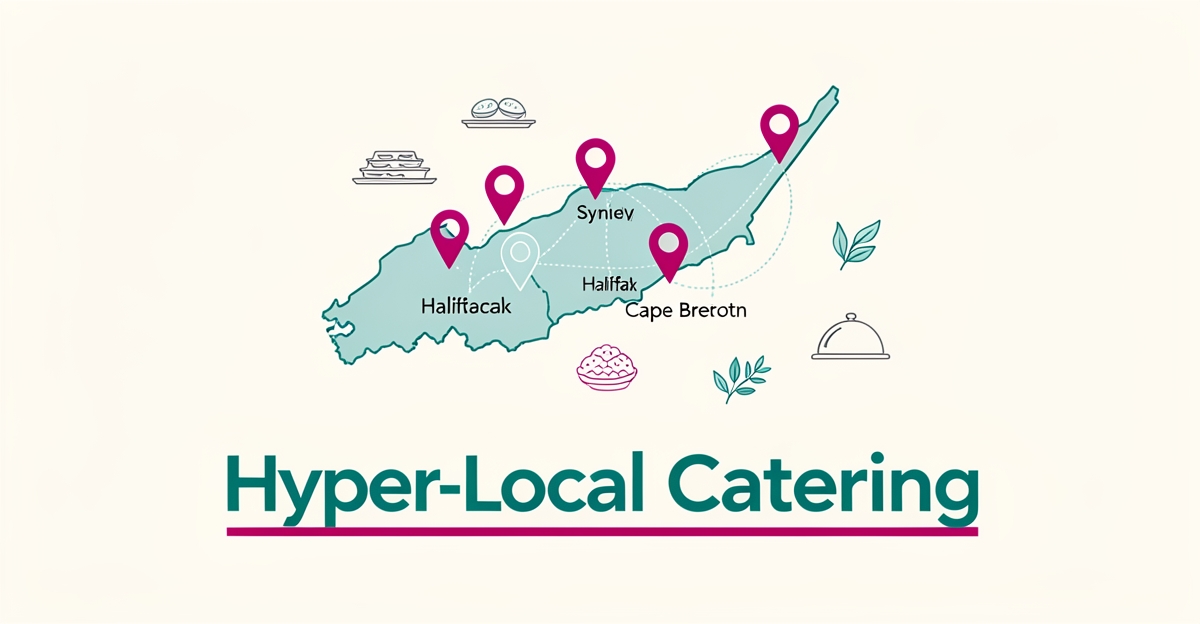
A catering company's website often treats every region the same — same menu, same pitch, same generic "we serve Nova Scotia" page. But the data tells a different story: 75% of catering orders are placed online, and 97% of buyers expect delivery tracking, meaning the digital experience is the sale. When a corporate buyer in Halifax lands on a page built for weddings, or a Cape Breton planner sees no mention of local sourcing, trust evaporates before the inquiry forms.
Halifax corporate buyers operate on 3–5 month booking windows and demand sustainability proof — 37% of workplaces now mandate sustainable packaging, and 43% of customers prefer it. They need real-time delivery tracking, labeled allergens (42% priority), and customization options (41%) baked into the ordering flow. Cape Breton planners, by contrast, seek cultural authenticity and hyper-local stories — ingredients from farms within miles of the event, Mi'kmaq and Acadian culinary traditions, and experience-driven elements like interactive stations or chef demonstrations. Sydney clients prioritize value and dietary inclusivity, with 66% of orders requiring accommodations and price sensitivity pushing buyers toward transparent, flexible packaging.
- Halifax: corporate speed, sustainability credentials, delivery transparency
- Cape Breton: hyper-local sourcing narratives, cultural authenticity, experience design
- Sydney: value-driven menus, dietary inclusivity, flexible ordering
One-size-fits-all content misses every signal that converts. AI Business Sites builds region-specific location pages that surface the right trust signals for each market — corporate sustainability badges for Halifax, farm-to-table storytelling for Cape Breton, inclusive menu filters for Sydney — because the research shows buyers decide on trust before they ever pick up the phone.
What the Data Says About Regional Catering Demand
What the Data Says About Regional Catering Demand
Catering businesses in Nova Scotia face a shifting landscape where corporate events now drive nearly half of industry growth, surpassing traditional wedding demand. According to industry research, 48% of caterers cite corporate events as their largest growth driver, with 53% of corporate buyers planning to increase spend and 80% ordering catering at least monthly. This structural shift creates a clear opportunity for localized content that speaks directly to corporate planners’ recurring needs.
Canada’s immigration-driven diversity and rising plant-based preferences further shape regional opportunities, especially when aligned with Nova Scotia’s local strengths. With 500,000 new immigrants annually fueling demand for culturally-inspired offerings and plant-based dairy growing at a 9.4% CAGR, caterers can leverage regional assets like Annapolis Valley produce, Cape Breton coastal fisheries, and Halifax’s urban markets. As noted by Invest Nova Scotia, the province’s food sector is well-positioned for value-added innovation, yet only 50% of Canada’s agricultural output is currently processed — revealing a 50% gap that represents both a challenge and a content opportunity.
For catering businesses in Halifax, Cape Breton, and Sydney, this data underscores the need for region-specific pages that highlight local sourcing, cultural inclusivity, and corporate-friendly features. AI-generated location pages can weave together these national trends with hyper-local narratives — such as partnering with Valley farms or Cape Breton fisheries — to build authority and relevance in local search. By aligning content with corporate booking cycles (3-5 months out) and emphasizing flexible menus, sustainable packaging, and dietary accommodations, caterers can attract planners actively searching for trusted, regionally attuned partners. This approach transforms broad market trends into actionable, location-based storytelling that resonates with Nova Scotia’s unique event landscape.
How AI Builds Hyper-Local Pages That Rank and Convert
AI transforms how catering businesses build hyper-local pages that rank and convert by automating research, content creation, and internal linking at scale. The AI workflow begins by identifying farms and producers within a few miles of event locations — a key differentiator since hyper-local sourcing enhances freshness, sustainability, and creates deeper connections between food and its origins. AI then maps cultural dietary needs specific to Nova Scotia, including halal, kosher, Mi'kmaq, Acadian, and African Nova Scotian requirements, ensuring menus reflect regional diversity and inclusivity — a growing expectation as 66% of catering orders now include dietary accommodations. From this data, the system generates experience-driven content such as interactive food stations and chef demonstrations, aligning with the trend where customers seek events that are as much about interaction as the food itself. Finally, AI automatically links these pages into topical clusters, strengthening site architecture and signaling relevance to search engines. AI Business Sites executes this through its platform — leveraging over 140 tools, automatic internal linking, a monthly SEO content engine, and Google Business Profile optimization — to produce and maintain region-specific pages for Halifax, Cape Breton, and Sydney without manual effort. This enables catering businesses to consistently surface in local searches for terms like “corporate catering Halifax” or “wedding catering Cape Breton,” attracting planners who prioritize local sourcing, cultural authenticity, and immersive experiences. By grounding every page in verified regional insights and linking content intelligently, the system turns location pages into lead-generating assets that work continuously — answering questions, capturing contacts, and reinforcing the business’s authority in Nova Scotia’s competitive catering landscape. The result is a self-optimizing web presence that scales with the business, delivering measurable visibility and conversions where it matters most.
Local business: doing this the old way?
One system replaces the whole pile.
All of it — the website, the follow-up, the content, the leads — built and run for you for $1,497 + $497/mo. Month-to-month, and you own everything.
See what your build includesContent Types That Capture Corporate and Social Planners
Corporate planners book differently than social clients — 78% of corporate events are secured 3–5 months out, with 36% locking in catering more than five months ahead, according to ICA survey data. That lead time demands content that answers questions before they're asked: FAQ pages addressing dietary accommodations (66% of orders include them), delivery tracking (97% of buyers want it), and sustainability requirements (37% of workplaces now mandate eco-packaging). AI-generated corporate FAQ clusters, published on a quarterly cadence aligned with planning cycles, capture these searchers when they're evaluating vendors.
- Corporate FAQ pages mapped to 3–5 month booking windows
- Sustainability certification pages for eco-mandated workplaces
- Culturally inclusive menu showcases for diverse teams
- Video-rich location pages featuring Halifax waterfront, Cape Breton ceilidh halls, Sydney harbour venues
Social planners operate on longer horizons — 80% of weddings book 5–12 months out — and they're searching for experience, not just menus. CloudKitchens identifies experience-driven catering as a top trend: interactive stations, chef demonstrations, live cooking. Video-rich location pages showing regional venues — Halifax historic properties, Cape Breton coastal halls, Sydney waterfront spaces — deliver that preview. AI Business Sites generates these pages with embedded AI-created promo videos, voiceovers, and imagery, publishing at the minimum 2x/week cadence Nuphoriq found necessary for algorithmic visibility. The result: location pages that rank for "Halifax corporate catering" and "Cape Breton wedding venues" while showing planners exactly what their event could look like.
From Launch to Leads: The Ongoing Local SEO Flywheel
Most catering websites launch and then sit static — missing the compounding returns that come from a system designed to feed itself. The businesses winning corporate contracts in Halifax, Cape Breton, and Sydney aren't just publishing pages; they're running a flywheel where every component reinforces the next.
AI-generated location pages attract planners searching for region-specific expertise — corporate events now book 3–5 months out, with 78% of caterers seeing that window, and 36% booking more than five months ahead. When a visitor lands, an AI assistant answers questions instantly through chat or voice, capturing the lead before they bounce. Research from Nuphoriq confirms that fast response and review generation are the two most skipped but highest-impact marketing basics — yet most catering companies are too event-focused to execute either consistently.
- Automated review requests post-event build Google Business Profile authority with regional keywords
- Competitor review monitoring surfaces gaps in menu flexibility, sustainability, or dietary accommodation
- New content fills those gaps monthly — service pages, FAQs, and blog posts grounded in local sourcing stories
- Internal linking strengthens topical clusters automatically, no manual effort required
This is the operational backbone AI Business Sites delivers at launch: GBP setup and optimization included, plus roughly 14 new SEO pieces published every month. The website doesn't just represent the business — it runs the flywheel that keeps the calendar full.
Frequently Asked Questions
Why does my catering website need different pages for Halifax, Cape Breton, and Sydney instead of one generic Nova Scotia page?
What percentage of catering orders now include dietary accommodations, and how does that affect my content strategy?
How far in advance do corporate clients book catering compared to wedding clients?
Is sustainable packaging actually a requirement for corporate catering contracts, or just a nice-to-have?
Can AI really create authentic hyper-local content about farms and cultural traditions in Cape Breton?
What's the minimum content publishing cadence needed to stay visible in local search for catering?
Key Takeaways
{ "title": "Your Next Catering Order Starts With the Right Page", "content": "Generic catering content fails because it ignores how differently Halifax corporate buyers, Cape Breton wedding planners, and Sydney event organizers actually search and decide. The data is clear: 78% of corporate even
FOR local businesss — BUILT AND RUN BY US
Your website. Your content. Your leads. Your data.
$500 starts your build. Seven days later it's live — chat, booking, follow-up, and your Google presence all set up. Then we run it, every month. You do the work you actually get paid for.