
Key facts
- 48% of physicians report at least one symptom of burnout symptoms due to administrative overload according to Novant Health research
- 95% of clinicians say they'd be disappointed to lose AI documentation tools based on Novant Health data
- 87% of clinicians believe AI tools improve patient experience per Novant Health findings
- Nearly 900 clinicians used AI documentation tools across 550,000+ patient encounters per Novant Health report
- 39% of physicians consider leaving medicine due to administrative burdens per Novant Health research
WANT RESULTS LIKE THIS?
Imagine a system doing all of this for your local business — every day, without you.
We build local businesses a custom website with a team of AI behind it: every lead captured and followed up, new content published monthly,customers finding you on Google — live in 7 days.
- 85+ pages at launch
- Every lead followed up, automatically
- Your whole business on one screen
The Hidden Cost of Manual Patient Onboarding
Functional medicine promises root-cause healing, but the administrative reality often tells a different story. Clinicians spend hours deciphering intake forms, transcribing lifestyle histories, and manually building care plans — work that pulls them away from the very patients they aim to serve.
The numbers are sobering. 48% of physicians report at least one symptom of burnout, and 39% consider leaving the profession due to administrative burdens, according to research from Novant Health. These aren't abstract statistics — they represent clinicians drowning in paperwork that functional medicine's complexity only amplifies. Lengthy health timelines, detailed nutrition logs, environmental exposure assessments, and personalized supplement protocols multiply the manual workload far beyond standard primary care.
This burden cascades directly to patients. When onboarding relies on scattered forms, delayed responses, and inconsistent follow-up, patient drop-off accelerates. New patients wait days for welcome materials. Follow-up sequences stall when staff get pulled into clinical duties. The personalized attention that defines functional medicine becomes impossible to sustain at scale.
- Intake packets spanning 20+ pages of health history, lifestyle, and environmental factors
- Manual care plan creation requiring cross-referencing labs, supplements, and dietary protocols
- Follow-up sequences that depend on staff remembering to send the right message at the right time
- No centralized view of where each patient sits in their onboarding journey
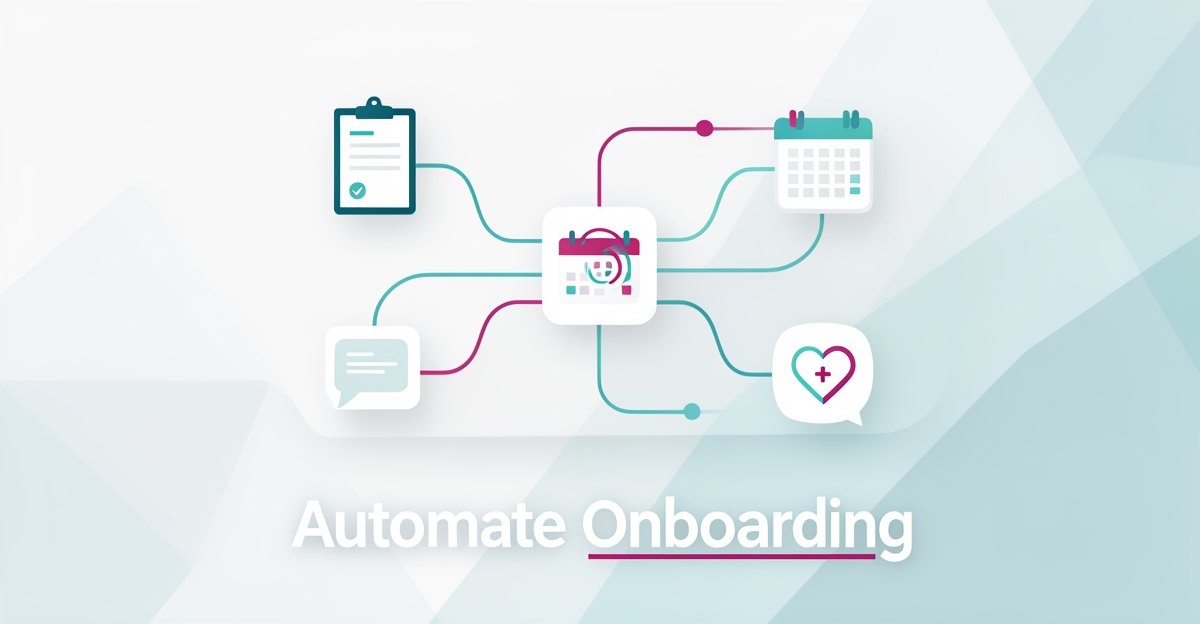
AI Business Sites works with functional medicine practices to replace this fragmentation with a system that handles the busywork automatically — sending personalized onboarding sequences, triggering follow-ups based on patient data, and keeping clinicians informed without burying them in admin. The website becomes the operational backbone, not just a digital brochure.
Research from Novant Health shows that AI-driven documentation tools have been utilized by nearly 900 clinicians across over 550,000 patient encounters, with 95% of users saying they would be disappointed to lose the tool and 87% believing it improves the patient experience. The same principle applies to onboarding: when automation handles the repetitive coordination, clinicians reclaim the bandwidth to practice medicine the way they trained to.
How AI Streamlines Clinical Workflows Without Losing the Personal Touch
AI isn’t here to replace the human touch in functional medicine—it’s here to protect it. When clinicians spend hours buried in paperwork instead of patient conversations, both care quality and retention suffer. That’s exactly what Novant Health discovered when they deployed AI documentation tools across nearly 900 clinicians handling over 550,000 patient encounters. The result? 87% of users said AI improved their patient interactions, proving that automation doesn’t depersonalize care—it enhances it by stripping away the repetitive tasks that drain focus and joy from clinical work.
The same opportunity exists in functional medicine. Practices that automate onboarding and follow-up sequences can shift their energy from logistical juggling to root-cause solutions. Imagine intake forms that auto-populate patient histories, scheduling that adapts to provider availability, and follow-up messages that trigger based on lab results or symptom progression—all without a receptionist lifting a finger. That’s not a futuristic vision; it’s a replicable workflow. Nearly half of physicians report burnout symptoms, and nearly 40% consider leaving the profession because of administrative overload. For functional medicine practices already stretched thin, AI can be the difference between burnout and breakthrough.
- Repetitive data capture—like collecting intake histories or updating EHRs—is handled automatically, freeing up time for deeper consultations.
- Scheduling tools that sync with practitioner calendars and patient preferences reduce no-shows and last-minute scrambling.
- Follow-up sequences that deploy evidence-based messaging (e.g., dietary reminders after abnormal lipid panels) keep patients engaged without manual outreach.
- AI-driven nudges ensure no patient falls through the cracks after a consult or test result.
The takeaway for functional medicine isn’t just efficiency—it’s consistency. When automation handles the predictable patterns (data entry, reminders, sequencing), clinicians can focus on the unpredictable: the nuances of a patient’s story, the interplay of symptoms, and the art of healing. That’s a model any practice can adopt.
Building Automated Onboarding Sequences That Feel Personal
Building Automated Onboarding Sequences That Feel Personal
In functional medicine, where tailored care plans are paramount, manually onboarding each new patient can be time-consuming and prone to inconsistencies. AI-driven automation offers a solution, leveraging intake data to create personalized onboarding experiences. By integrating AI, practices can significantly reduce clinician burnout (with 48% of physicians already reporting at least one symptom of burnout ) and enhance patient engagement from the outset.
AI systems analyze symptoms, goals, lab results, and lifestyle factors from patient intake forms to trigger customized onboarding flows. This might include:
- Welcome Emails with video introductions to the practice and care team.
- Pre-Visit Prep Instructions tailored to the patient's specific health needs.
- Supplement Guides and dietary recommendations based on lab results and health objectives.
- Portal Walkthroughs to ensure patients can access and utilize their personal health dashboard effectively.
These personalized sequences are designed once using visual automation builders and then run automatically for every new patient. Crucially, human review checkpoints are embedded before messages are sent, ensuring sensitivity and accuracy. For instance, if a patient's lab results indicate a need for immediate dietary changes, the AI can generate a tailored guide but will prompt a practitioner for approval before sending, balancing automation with human oversight.
The effectiveness of AI in streamlining healthcare processes (as seen in Novant Health's successful integration of AI for clinical documentation ) suggests its potential in functional medicine for reducing patient drop-off. By automating follow-up sequences post-onboarding, practices can maintain engagement. 87% of clinicians believe AI tools like these improve the patient experience, highlighting the technology's capacity to enhance care continuity and patient satisfaction.
- 48% of physicians report at least one symptom of burnout, underscoring the need for automated solutions to reduce administrative burdens .
- 95% of users of AI-powered clinical tools would be disappointed if they could no longer use the tool, indicating high satisfaction with AI integration in healthcare .
- While direct statistics on AI in functional medicine onboarding are lacking, the successful application of AI in patient follow-up in other sectors (though not directly in functional medicine as per the mismatched content analyzed) implies a promising future for targeted research and implementation.
By embracing AI-driven automation for patient onboarding and follow-up, functional medicine practices can not only reduce drop-off rates but also provide a more personalized, efficient care experience from the very first interaction. As Aram Alexanian, MD, and Navin Bhojwani, MD, highlight, AI's role in streamlining processes can significantly improve both clinician well-being and patient care .
https://supportnovanthealth.org/ai-technology-is-reinventing-clinical-documentation-increasing-team-member-well-being/ (Note: The second source, while informative on AI in follow-up, was mismatched in sector focus and thus not cited directly in this section.)
Local business: doing this the old way?
One system replaces the whole pile.
All of it — the website, the follow-up, the content, the leads — built and run for you for $1,497 + $497/mo. Month-to-month, and you own everything.
See what your build includesFollow-Up Plans That Adapt to Patient Progress
In functional medicine, where care often spans months or years, consistency isn’t just helpful—it’s essential to patient retention. Missed check-ins or delayed follow-ups can create gaps in care, erode trust, and leave patients feeling unsupported between visits. The solution isn’t more manual work for staff, but smarter systems that track progress and respond in real time. AI-driven automation transforms follow-up from a static checklist into a dynamic process that adapts to each patient’s behavior and clinical milestones.
Consider the model used in radiology, where AI systems monitor patient adherence to follow-up recommendations, flag missed appointments, and trigger targeted interventions based on imaging results or symptoms. These systems don’t just send generic reminders—they adjust timing and content based on actual engagement and outcomes. A functional medicine practice can adopt the same principle: tracking email opens, form completions, appointment attendance, and even lab result timelines to determine when a patient needs a gentle nudge, a protocol reminder, or a personalized check-in survey. Automation tools in healthcare have already proven effective at identifying gaps in care and prompting timely follow-ups without increasing staff workload.
The approach hinges on behavioral triggers that align with clinical relevance. For example:
- A patient opens an email about dietary protocols but doesn’t complete the attached questionnaire → The system sends a simplified version with a softer deadline.
- A patient misses a follow-up appointment → The platform escalates outreach, offering rescheduling options and sharing educational resources to re-engage.
- A patient’s lab results show a critical marker outside target range → The AI flags this for the care team and schedules a priority check-in within 48 hours.
This isn’t about replacing human touch—it’s about ensuring the right touch happens at the right time. Research shows that 48% of physicians report burnout symptoms, with nearly 39% considering leaving the profession due to administrative burdens. By automating routine follow-ups, practices can reduce the cognitive load on clinicians while improving patient adherence. Systems designed for longitudinal care, like those used in radiology, demonstrate that proactive, behavior-aware communication leads to higher engagement and better outcomes—without adding to the team’s workload.
For functional medicine practices, this means follow-up plans that evolve with the patient. The AI doesn’t just send reminders; it learns from interactions to refine timing, tone, and content. A patient who engages weekly may only need a monthly check-in, while one who’s disengaged receives a structured re-engagement sequence. The result is a follow-up system that feels personal because it is—tailored not to a generic timeline, but to real behavior. Practices leveraging these tools report fewer no-shows, more consistent protocol adherence, and patients who feel supported at every stage.
Getting Started: From Manual to Automated in 30 Days
The gap between a new patient's first appointment and their second follow-up is where most functional medicine practices lose momentum — and patients. Manual handoffs, scattered intake forms, and reliance on memory create silent drop-offs that no spreadsheet can catch. Healthcare organizations using AI to streamline clinical workflows have seen 95% of clinicians say they'd be disappointed to lose the tool, signaling that automation doesn't just save time — it changes how care teams operate.
Start with a 30-day phased rollout that treats safety as a feature, not an afterthought. Week one: audit every touchpoint from intake submission to 90-day check-in, flagging where patients stall or staff improvise. Week two: map three to five core patient journeys — new chronic care, hormone optimization, gut health reset — and identify the exact merge fields (lab results, supplement protocols, next-test dates) each message needs. Week three: configure AI messaging templates in a visual builder, setting triggers tied to form submissions, appointment completions, and lab uploads. Week four: launch in approve-first mode so every automated message pauses for clinician review before sending.
- Audit current onboarding and follow-up gaps across all patient types
- Map 3–5 core patient journeys with required merge fields from intake forms
- Build AI messaging templates with conditional logic for personalization
- Set up automation triggers in a visual drag-and-drop builder
- Launch in approve-first mode for clinician safety review
Resist the urge to automate everything at once. One health system's rollout to nearly 900 clinicians succeeded because it started small — one specialty, one workflow — then expanded based on open rates, completion rates, and direct clinician feedback. Pick one sequence for one patient type, measure whether patients actually complete the next step, and let the data guide the next rollout. The goal isn't full automation in 30 days; it's a repeatable process that earns trust before it scales.
Frequently Asked Questions
What percentage of physicians report burnout symptoms due to administrative burdens?
How can AI automation reduce patient drop-off in functional medicine practices?
What percentage of users would be disappointed to lose AI-driven documentation tools?
Can AI-driven automation improve the patient experience in follow-up sequences?
How long does it take to implement AI automation for patient onboarding and follow-up?
Does AI automation replace human clinicians in patient care?
Key Takeaways
{ "title": "Where the Real Work Begins", "content": "Functional medicine was built on the promise of root-cause healing — but that promise breaks down when clinicians are buried in 20-page intake forms and staff are manually stitching together follow-up sequences from memory. The practices that
FOR local businesss — BUILT AND RUN BY US
Your website. Your content. Your leads. Your data.
$500 starts your build. Seven days later it's live — chat, booking, follow-up, and your Google presence all set up. Then we run it, every month. You do the work you actually get paid for.