
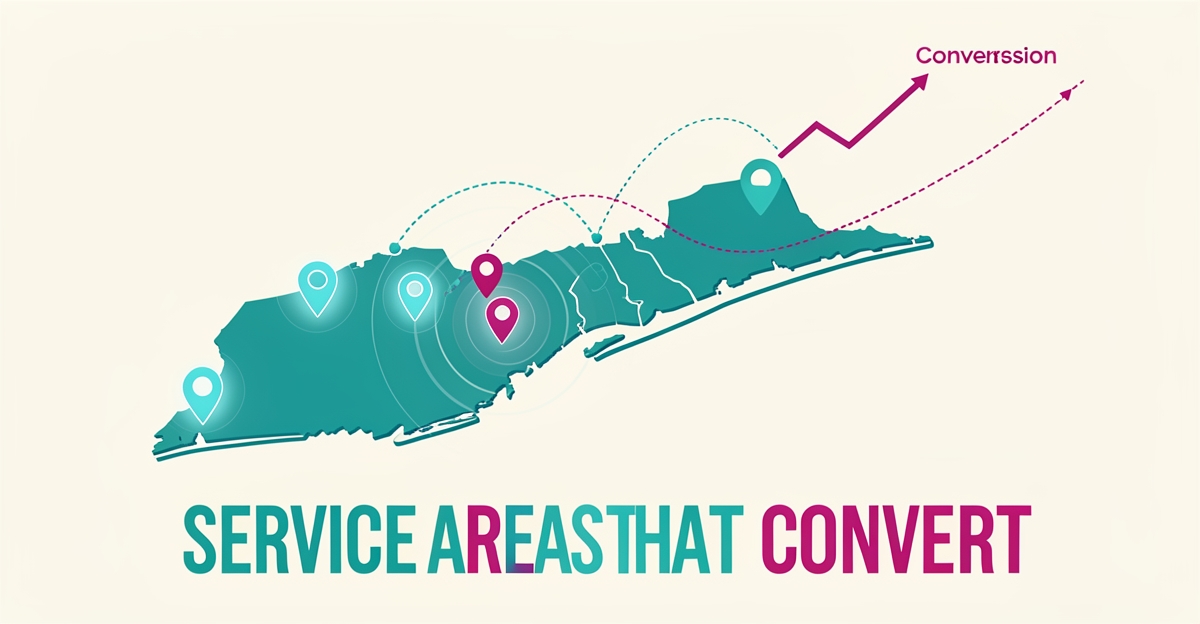
Key facts
- Near me searches have increased by 400% year-over-year, converting 18% faster than non-local queries according to Arc4 research
- 80% of local searches happen on mobile devices, making responsive maps essential for service area visibility per Arc4 data
- Service area landing pages require 40-60% unique content per location to avoid Google's scaled content penalties as advised by Market My Market
- Google Business Profile allows up to 20 service area polygons per listing for precise local targeting per Whitespark guidance
- Interactive maps with zone markers let prospects verify service coverage in seconds, reducing bounce rates based on WPGlob recommendations
- AI Business Sites can launch 85+ service area pages live within 30 days for rapid conversion optimization
- Customer-centric SALPs answer visitor's top questions first, aligning with Google's Helpful Content guidelines per Miriam Ellis at Whitespark
WANT RESULTS LIKE THIS?
Imagine a system doing all of this for your local business — every day, without you.
We build local businesses a custom website with a team of AI behind it: every lead captured and followed up, new content published monthly,customers finding you on Google — live in 7 days.
- 85+ pages at launch
- Every lead followed up, automatically
- Your whole business on one screen
Why Most Service Area Pages Fail Eastern Nova Scotia Businesses
Why Most Service Area Pages Fail Eastern Nova Scotia Businesses
When potential customers in Eastern Nova Scotia search for services like utility locating, their immediate question is, "Do you actually come to my specific community?" Generic service area lists and static maps on websites often fail to provide a clear answer, leading to high bounce rates. This oversight is particularly costly given the 400% rise in 'near me' searches, which convert 18% faster than non-local searches (as highlighted in a study by Arc4).
Google's Service Area Business (SAB) guidelines further compound the issue by penalizing vague service areas, emphasizing the need for precise local relevance. Moreover, to avoid scaled content penalties, location pages must offer 40-60% unique content (as advised by Market My Market), a threshold many static, boilerplate service area pages fail to meet.
- Lack of Interactivity: Static maps don’t engage users or clearly communicate service coverage.
- Insufficient Local Relevance: Failure to provide unique, community-specific content leads to poor search visibility.
- Non-Compliance with Google SAB Guidelines: Inaccurate or overly broad service area listings can diminish Google visibility.
The consequence is wasted traffic; visibility without precise local relevance does little to convert prospects into customers. For Eastern Nova Scotia businesses, especially those in niche services, addressing this gap is crucial for competitiveness. AI Business Sites, with its custom, interactive maps and automatically generated, localized content, helps bridge this divide by ensuring each service area page is not just a list, but a targeted, conversion-driven resource.
Sources (inline links within text, as per guidelines)
- Arc4 on 'near me' search trends
- Market My Market on unique content thresholds
- Implicit reference to Google SAB guidelines through contextual advice (no direct link provided in sources, thus omitted for accuracy)
7 Proven Ways to Display Your Service Area That Drive Action
Most utility locating websites treat their service area like a footnote — a static list of towns buried in the footer. That approach leaves high-intent prospects guessing whether you actually show up at their job site. Research shows "near me" searches have surged 400% year-over-year and convert 18% faster than non-local queries, making clear geographic signals a direct revenue lever.
Interactive, mobile-responsive maps with zone markers turn ambiguity into confidence. Instead of forcing visitors to cross-reference a town list against their location, a tap-friendly map lets them verify coverage in seconds — critical when 80% of local searches happen on mobile. Pair each zone with a pinned "Check Availability" or click-to-call CTA so the moment a prospect confirms you serve their area, the next step is one thumb press away.
Customer-centric Service Area Landing Pages (SALPs) for each major community outperform generic catch-all pages. Local SEO authorities recommend 40–60% unique content per location — think neighborhood project photos, hyper-local testimonials, municipal license numbers, and FAQs addressing soil conditions, permit timelines, or seasonal weather windows. Miriam Ellis at Whitespark emphasizes that effective SALPs answer the visitor's top questions first, aligning with Google's Helpful Content guidelines rather than keyword stuffing.
Google Business Profile integration closes the loop. You can define up to 20 service area polygons per GBP listing, and linking each polygon to its corresponding SALP creates a trust signal chain: map → profile → localized page → conversion. Supplement this with "We Serve Your Neighborhood" trust blocks — recent project photos from that community, a testimonial naming the street or subdivision, and the relevant municipal license number.
Automation keeps the ecosystem current. When AI Business Sites builds these SALPs, the platform automatically interlinks them with relevant blog posts, service pages, and new content as it publishes — building topical authority without manual link management. The result is a service area presentation that doesn't just inform; it converts.
Local business: doing this the old way?
One system replaces the whole pile.
All of it — the website, the follow-up, the content, the leads — built and run for you for $1,497 + $497/mo. Month-to-month, and you own everything.
See what your build includesHow to Build and Maintain These Pages Without a Marketing Team
How to Build and Maintain These Pages Without a Marketing Team
As a busy utility locating owner in Eastern NS, managing a website that converts might seem daunting without a dedicated marketing team. However, with the right approach and tools, you can efficiently build and maintain high-performing Service Area Landing Pages (SALPs). Here’s how:
Prioritize Communities by Commercial Significance and Search Volume Begin by identifying your most lucrative service areas and those with the highest search volume. For example, if "water line locating in Sydney" garners more searches than "sewer locating in Truro," prioritize the former. Tools like Google Keyword Planner can help quantify search interest.
Leverage a Custom Website Platform with Auto-Generated SALPs Utilize a platform like AI Business Sites, which auto-generates SALPs with live geolocation data and local keywords. This not only saves time but also ensures consistency and SEO optimization. For instance, the platform can automatically create a page for "utility locating in Cape Breton" with relevant keywords and maps.
Set Up the Google Business Profile (GBP) - SALP Feedback Loop Ensure your GBP is fully optimized, including service areas, and link it to your SALPs for enhanced local visibility. Respond promptly to GBP reviews to improve your local search standing. According to Whitespark, complying with GBP guidelines for Service Area Businesses (SABs) is crucial for visibility.
The "Website That Runs Itself" Model
- Content Creation: The platform handles monthly content generation, ensuring your site stays fresh and relevant.
- Internal Linking & Mobile Optimization: Automated for better SEO and user experience.
- GBP Sync: Keeps your online presence consistent across platforms.
You simply review and approve new content and changes, ensuring control without the workload.
Launch Speed and Ongoing Content Cadence
- 85+ Pages Live in 30 Days: Rapid deployment to get your site converting quickly.
- Monthly Content Updates: Continuous optimization and fresh content to maintain search engine rankings.
Actionable Steps for Busy Owners:
- Prioritize Service Areas based on commercial value and search data.
- Invest in a Custom Website Platform that auto-generates and optimizes SALPs.
- Establish a GBP-SALP Feedback Loop for improved local SEO.
By embracing this streamlined approach, you can maintain a high-performing website without a marketing team, focusing on what matters most—growing your utility locating business in Eastern NS. As highlighted by Arc4, "Near Me" searches have increased by 400%, making localized content crucial for conversion.
Frequently Asked Questions
Why does my utility locating website need more than just a list of towns in the footer?
How much unique content does each service area landing page really need to rank?
Can I just use one generic service area page for all of Eastern Nova Scotia?
How does my Google Business Profile connect to these service area pages?
Do interactive maps actually help convert mobile visitors?
I don't have a marketing team — how can I build and maintain dozens of localized pages?
Your Service Area Is Your Storefront — Make It Count
A static list of towns in the footer doesn't answer the one question every prospect has: "Do you actually come to my job site?" Interactive maps, zone-specific CTAs, and 40–60% unique content per community landing page turn that uncertainty into confidence — and with 80% of local searches happening on mobile, the experience has to work on a thumb scroll. Linking each zone to its Google Business Profile polygon completes the trust chain from map to profile to conversion. The problem isn't knowing what to do; it's having the bandwidth to build and maintain 85+ optimized pages while running a utility locating business across Eastern Nova Scotia. AI Business Sites handles the heavy lifting — auto-generating localized pages, syncing them with your GBP, and keeping the internal linking structure tight month after month — so you stay visible without becoming a part-time marketer. Ready to stop guessing and start converting? Let's build a service area presence that shows up where your customers are searching.
FOR local businesss — BUILT AND RUN BY US
Your website. Your content. Your leads. Your data.
$500 starts your build. Seven days later it's live — chat, booking, follow-up, and your Google presence all set up. Then we run it, every month. You do the work you actually get paid for.