
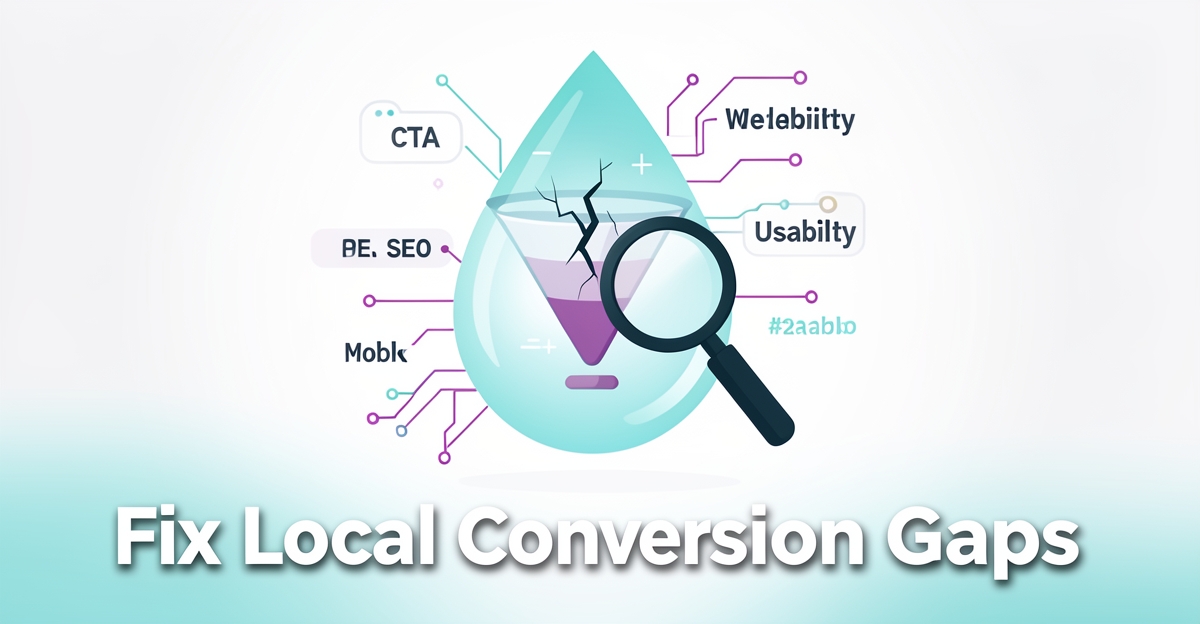
Key facts
- 71% of consumers expect personalization from local businesses according to 2025 lead generation trends.
- 30% higher conversion rate from geo-targeted CTAs seen in local lead generation studies.
- 61% of local searches occur on mobile devices highlighting mobile usability importance.
- Pages loading >3 seconds lose over half of mobile visitors as per mobile trends research.
- 76% of people visit a related business within a day of local search emphasizing Google Business Profile importance.
- AI-driven personalization boosts response rates by 25% according to lead generation trends.
- Businesses using AI chatbots see up to 40% more qualified leads as reported by a leading lead generation firm.
WANT RESULTS LIKE THIS?
Imagine a system doing all of this for your local business — every day, without you.
We build local businesses a custom website with a team of AI behind it: every lead captured and followed up, new content published monthly,customers finding you on Google — live in 7 days.
- 85+ pages at launch
- Every lead followed up, automatically
- Your whole business on one screen
Your Website Answers Questions But Misses the Calls-to-Action
Your website may answer every question a potential customer has—about filtration systems, installation timelines, or maintenance costs—but if visitors can’t find a clear next step, they’ll leave without converting. Research shows that even well-informed users abandon sites when calls-to-action (CTAs) are vague or buried, costing local businesses valuable leads. For water filtration companies, this means every page should guide visitors toward taking action, whether it’s requesting a quote, scheduling a consultation, or downloading a guide. Yet, many websites fail at this critical step.
A study on local lead generation highlights that businesses using geo-targeted and niche-specific CTAs see a 30% higher conversion rate from local traffic. When visitors land on your site after searching for “[City] water filtration systems,” they expect to see a CTA tailored to their location, like “Get a Free Water Test in [City] Today.” Generic CTAs—such as “Contact Us” or “Learn More”—don’t create urgency or relevance, leaving potential customers unsure of what to do next. A lead generation trends report notes that AI-driven personalization can boost response rates by 25% when CTAs adapt to user behavior, such as location or past visits.
Mobile usability gaps amplify the problem. A 2025 lead generation analysis found that 61% of local searches occur on mobile devices, yet many small business sites still use CTAs designed for desktop users. A poorly placed “Submit” button or a form that doesn’t auto-fill on mobile can frustrate visitors, increasing bounce rates by up to 50%. Even if your site answers every question, a CTA that’s hard to tap on a phone is effectively invisible.
Here’s what’s often missing in local lead capture:
- Location-specific CTAs—“Book a Free Consultation in [City]” instead of “Contact Us”
- Mobile-first buttons—large, tappable CTAs with clear action language like “Download Your Guide Now”
- High-contrast colors for CTAs to ensure visibility on all devices
- Multiple CTA placement—above the fold, at the end of service descriptions, and in pop-ups for users who scroll
- Instant follow-up automation to capture leads 24/7, turning every click into a potential sale
For local service businesses like water filtration companies, these tweaks aren’t optional—they’re the difference between a website that informs and one that converts. AI Business Sites designs every page to answer questions and guide action, ensuring no visitor leaves without a clear next step.
Local Customers Can’t Find You Because Your SEO Isn’t Localized Enough
Local Customers Can’t Find You Because Your SEO Isn’t Localized Enough
Imagine having a water filtration site that’s virtually invisible to your neighborhood. This isn’t a scenario of poor quality service or lack of demand, but rather, a critical oversight in your online strategy: localized SEO. For water filtration businesses, being found by locals is paramount, yet many sites fail to implement the basics that make this happen.
The Triple Threat of Poor Local SEO
- Missing NAP Consistency: Your business’s Name, Address, and Phone Number (NAP) might be scattered inconsistently across the web, confusing search engines and potential customers. For example, if your site says "123 Main St" but directories list "123 Main Street," search engines may treat these as two different locations.
- Lack of Localized Keywords: Failing to incorporate location-specific keywords (e.g., "[City] water filtration services") in your content and meta tags severely hampers your visibility in local search results.
- Unoptimized Google Business Profile (GBP): A neglected or incomplete GBP listing directly impacts your visibility in Google Maps and local search, where 76% of people who search for something near them visit a related business within a day according to local business lead generation insights.
The Consequences and the Fix
- Consequence: Reduced organic traffic, lower conversion rates, and a significant competitive disadvantage.
- Fix:
- Claim and Optimize Your GBP: Ensure accuracy, completeness, and regular updates with customer reviews.
- Embed Location-Specific Keywords: Naturally integrate "[Your City] water filtration" into your website’s content and SEO metadata.
- Uniform NAP Across the Web: Conduct an audit and correct any inconsistencies in directories and citations.
Why This Matters for Water Filtration Sites
In an industry where trust and proximity are key, being locally visible is not just beneficial—it’s essential. 71% of consumers expect personalization, which for local businesses, starts with being found where it matters most—in their backyard. By addressing these local SEO oversights, water filtration sites can significantly boost their online presence, driving more qualified leads and, ultimately, more customers through their doors.
AI Business Sites understands this challenge, offering custom websites optimized for local SEO from the outset, ensuring your water filtration business shows up where and when it matters.
Your Homepage Feels Like a Brochure, Not a Lead Machine
Your Homepage Feels Like a Brochure, Not a Lead Machine
Imagine visiting a water filtration website that looks sleek but tells you nothing about how their services solve your specific local water quality issues. No trust badges, outdated images of happy customers you don’t recognize, and a glaring absence of reviews from neighbors you trust. This isn’t a lead machine—it’s a digital brochure, and it’s failing to convert.
The Vague Service Description Trap
Websites that fail to clearly articulate their local value proposition lose. For instance, a generic "Water Filtration Services" heading doesn’t compete with "[City] Custom Water Filtration Solutions for Hard Water." 71% of consumers expect personalization source, yet many sites neglect to tailor their messaging to local needs.
Outdated Imagery: A Trust Killer
Stale, non-local stock photos undermine credibility. Local SEO strategies emphasize authenticity source. Featuring real, local customers and staff can boost trust, a crucial element for conversion.
The Absence of Social Proof
No reviews, testimonials, or case studies? You’re at a disadvantage. Encouraging customer reviews is pivotal for local trust source. A site without social proof appears untested and untrusted.
From Brochure to Lead Machine: The Fix
- Speak Directly to Your Locals: Use location-specific language in your services and meta descriptions.
- Refresh Your Visuals: Use local, relevant imagery and videos showcasing your work in the community.
- Showcase Your Community: Highlight local testimonials, reviews, and success stories prominently.
The Power of AI-Driven Personalization
Sites leveraging AI for personalization see significant lead quality improvements source. For water filtration, this could mean AI-driven chatbots offering instant, location-specific solutions or personalized content based on user interaction.
Example in Action
AI Business Sites transforms water filtration websites by:
- Optimizing for Local Trust: Ensuring consistent NAP and localized SEO.
- Integrating AI Chatbots: Providing instant, personalized responses to visitor inquiries.
- Enhancing Mobile Experience: Ensuring quick, easy navigation for mobile users, where most local searches occur.
By moving from a static, brochure-like approach to a dynamic, conversion-focused design, water filtration sites can significantly boost local lead generation. The key lies in combining the latest lead generation trends with timeless trust-building strategies.
Local business: doing this the old way?
One system replaces the whole pile.
All of it — the website, the follow-up, the content, the leads — built and run for you for $1,497 + $497/mo. Month-to-month, and you own everything.
See what your build includesMobile Visitors Are Bouncing Because Your Site Isn’t Built for Their Phones
Mobile visitors are bouncing because your site isn’t built for their phones—slow load times, tiny text, and buttons that won’t tap are driving local searchers away before they even see your offer. According to local business lead generation research, mobile usability is no longer optional; it’s a core factor in whether a visitor stays or leaves. For water filtration sites targeting homeowners in specific service areas, a poor mobile experience directly translates to lost leads, especially when competitors are just a tap away.
Google’s mobile-first indexing means your site’s mobile version is now the primary version used for ranking and evaluation—if it fails on mobile, it fails everywhere. Research shows that 71% of consumers expect personalization, but even the smartest AI-driven content won’t matter if the page takes more than three seconds to load or forces users to pinch and zoom to read your service descriptions. Local searchers are often on the go—checking your site from a phone while standing in their kitchen or driveway—and they won’t wait for a clunky interface to catch up.
- Pages that take longer than 3 seconds to load lose over half of mobile visitors
- Text smaller than 16px is difficult to read without zooming on most smartphones
- Buttons or links spaced less than 48px apart increase accidental taps and frustration
These aren’t just technical nitpicks—they’re conversion killers. A site that isn’t truly mobile-optimized sends a silent message: you don’t understand how your customers actually behave. AI Business Sites builds websites that are fast, mobile-first, and designed to convert—because every page exists to either answer a question or capture a contact, no matter what device someone’s using. When your site works seamlessly on mobile, you’re not just fixing a usability issue—you’re meeting local searchers where they are and giving them a reason to stay, engage, and reach out.
You’re Losing Leads to Competitors Who Use AI to Engage Instantly
You’re not just losing leads—you’re watching them walk straight to competitors who answer questions before you even hit “send.” In 2025, local customers expect instant, personalized engagement, and businesses that deliver it through AI-powered chatbots and tailored content are converting at twice the rate of slower, generic sites. According to a recent industry analysis, 71% of consumers now expect personalized experiences when researching local services. That doesn’t just mean using a name in an email—it means real-time conversations, location-specific offers, and content that reflects the exact needs of your visitors in their neighborhood.
What’s happening behind the scenes is the rise of AI-driven engagement tools that operate 24/7 without human oversight. A leading lead generation firm reports that businesses using AI chatbots see up to 40% more qualified leads than those relying on static contact forms. These systems do more than greet visitors—they qualify leads by asking targeted questions, book appointments, and even follow up with personalized emails based on real-time conversation data. The result? A faster path to trust and a shorter sales cycle for your water filtration services.
- Your site greets visitors with a one-size-fits-all form, while competitors use AI to answer questions instantly and book appointments in real time.
- Your content speaks to “water filtration” in general, while competitors tailor pages to [City] water quality issues with localized data and live chat triggers.
- Leads fill out your form and wait hours for a reply, while competitors automate personalized responses within minutes—cutting response time by 90%.
- You’re manually sending follow-ups, while competitors use AI to segment leads by urgency and send targeted emails at the perfect moment—based on behavior, not guesswork.
This isn’t just about being faster—it’s about matching the expectations of a market that’s increasingly shaped by AI. Local service websites that still treat engagement as a human-only process risk falling behind as automation becomes the norm. For businesses like yours, the choice is clear: either build AI-driven responsiveness into your site—or watch as the leads you worked hard to attract get captured by competitors who already have.
Frequently Asked Questions
Why aren't my water filtration leads converting even though my website answers all their questions?
How do I make sure my website shows up in local searches for water filtration services?
Why do mobile visitors keep bouncing from my water filtration site?
Do reviews really matter for a water filtration business?
How can I compete with water filtration companies that use AI chatbots?
What’s the biggest mistake water filtration sites make with their homepage?
How can AI help my water filtration business generate more leads automatically?
Your Website Should Work as Hard as You Do
Your water filtration website isn't just a digital business card — it's your hardest-working salesperson. When CTAs are vague, local SEO is inconsistent, mobile usability lags, or engagement relies on manual follow-up, you're not just losing clicks. You're handing qualified leads to competitors who show up faster, answer instantly, and speak directly to your neighbors' needs. The fix isn't a redesign for redesign's sake. It's aligning every page with how local customers actually search, decide, and reach out — location-specific CTAs, NAP consistency, mobile-first speed, and AI-driven responses that work while you're on a job site. 71% of consumers now expect personalized experiences, and that starts the moment they land on your site. AI Business Sites builds websites that capture leads, follow up automatically, and keep your calendar full — so you can focus on the work only you can do. Ready to turn your site into a lead machine? Let's build something that works for you.
FOR local businesss — BUILT AND RUN BY US
Your website. Your content. Your leads. Your data.
$500 starts your build. Seven days later it's live — chat, booking, follow-up, and your Google presence all set up. Then we run it, every month. You do the work you actually get paid for.