
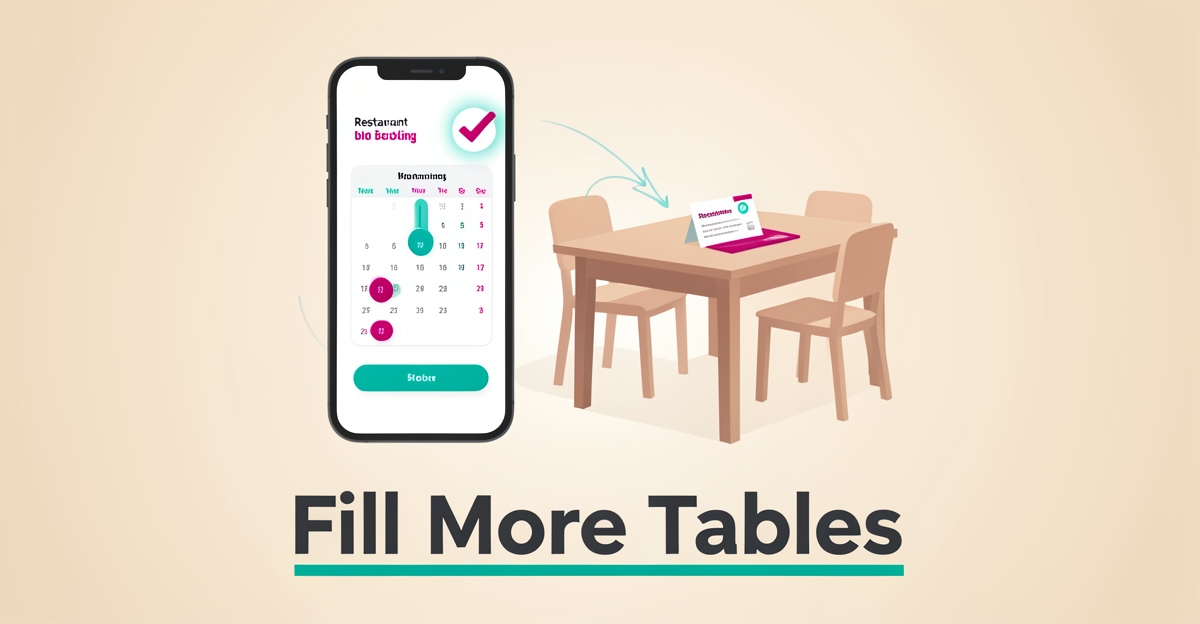
Key facts
- Food & Beverage ecommerce converts at 5.83% — the highest across all industries — yet generic website forms only convert at ~1.7% according to industry benchmarks.
- 65–75% of restaurant traffic arrives on mobile, but mobile visitors convert at just ~2.77% versus desktop's ~3.9% — a 30% conversion gap per conversion research.
- Email marketing converts at 19.3% — the highest-performing digital channel — while paid social (Instagram 17.9%, Facebook 13%) and Google Ads (~11.3%) trail behind per the Unbounce benchmark report.
- Simplifying checkout from four steps to two doubled conversions from 1.4% to 3.6% in controlled tests conversion research shows.
- Eat App offers a free reservation tier covering 30 covers per month with built-in CRM and table management reservation system analysis reveals.
- Square for Restaurants integrates with OpenTable and processes cards at 1.75% (chip/PIN) while providing real-time floor plans and guest spending history platform features confirm.
- Dynamic reservation prompts like "Only 2 tables left at 7 PM" create urgency and lift conversions by matching visitor intent reservation platform data shows.
WANT RESULTS LIKE THIS?
Imagine a system doing all of this for your local business — every day, without you.
We build local businesses a custom website with a team of AI behind it: every lead captured and followed up, new content published monthly,customers finding you on Google — live in 7 days.
- 85+ pages at launch
- Every lead followed up, automatically
- Your whole business on one screen
Your Website’s Reservation Flow Is Hiding Behind a ‘Contact Us’ Button
A hungry diner searches "Thai food near me" on their phone at 6:15 PM, finds your site, and taps "Contact Us." What happens next? They land on a generic form asking for name, email, and "how can we help?" — no table selection, no time slots, no confirmation. They close the tab and book the competitor down the street who shows real-time availability.
- 65–75% of restaurant traffic arrives on mobile, yet mobile converts at ~2.77% versus desktop's ~3.9% — a 30% gap that costs you covers every night industry benchmarks confirm.
- Generic website forms convert at ~1.7%, while checkout simplification (cutting steps from four to two) has doubled conversion rates in controlled tests conversion research shows.
- Food & Beverage ecommerce leads all categories at 5.83% conversion, but only when the booking path matches the visitor's intent benchmark data reveals.
A "Contact Us" button forces mobile users to type, wait, and wonder — three friction points that kill impulse bookings. Reservation platforms like Tableo prove that dynamic prompts ("Only 2 tables left at 7 PM!") create urgency and lift conversions. Square for Restaurants takes it further: real-time floor plans, guest history, and automated reminders turn a one-time booking into a repeat diner.
Your website should do this automatically. AI Business Sites builds reservation flows that adapt to visitor location, time of day, and past behavior — so the 6:15 PM searcher sees "Book your usual corner table for 7:30" instead of a contact form. The AI assistant handles the booking, confirmation, and follow-up while you focus on the kitchen. No extra software. No manual setup. Just a website that converts the traffic you're already paying for.
Mobile Visitors Are Ghosting Your Site—Here’s Why
Picture this: a hungry diner searches "Thai food near me" on their phone at 6:30 PM, lands on your site, and... vanishes. No booking. No call. Just a closed tab. Research shows 65-75% of restaurant traffic arrives via mobile, yet those visitors convert at roughly 2.77% versus desktop's 3.9%—a 30% conversion gap that quietly drains revenue every night according to industry benchmarks.
The culprit isn't your food. It's the friction between thumb and reservation. Tiny form fields that demand pinpoint tapping. Multi-step flows that feel endless on a 6-inch screen. Missing trust signals—reviews, guarantees, "only 2 tables left at 7 PM"—right where the "Book Now" button lives. CRO specialist Mario Kuren analyzed 800+ A/B tests and found checkout simplification is the highest-ROI optimization work, period. One case study cut steps from four to two and doubled conversions from 1.4% to 3.6% per the same research.
- Collapse booking to two taps: date/time → confirm
- Auto-fill location and time-based suggestions ("Dinner for 2 at 7 PM?")
- Place a recent 5-star review and "instant confirmation" badge directly beside the CTA
- Enable click-to-call as a fallback—some diners still prefer voice
Your website should handle this busywork automatically. AI Business Sites builds mobile-first reservation flows that adapt to the visitor's context—location, time of day, even past booking behavior—so the right prompt appears at the right moment without you lifting a finger. The result: fewer ghosts, more filled tables, and a website that actually works while you're in the kitchen.
Your ‘Book Now’ Button Works Only During Business Hours
Your phone stops ringing at 9 PM, but your customers don't stop searching. Research shows 65-75% of restaurant traffic arrives on mobile devices, often after hours when diners plan tomorrow's dinner or book a weekend celebration. A manual reservation system — paper books, spreadsheets, or a voicemail box — captures exactly none of that intent. The result? Empty tables that could have been filled by a 10 PM impulse booking.
- Manual systems create overbooking and double bookings that erode trust and revenue
- No 24/7 availability means missed off-hours reservations from mobile searchers
- Zero guest insights prevent personalized follow-up that drives repeat visits
Free and low-cost platforms solve this without a enterprise budget. Eat App offers a free tier covering 30 covers per month with built-in CRM and table management, while its Essential plan unlocks unlimited covers at $199 monthly. Square for Restaurants integrates directly with OpenTable, adding real-time floor plan visibility and guest spending history that helps optimize turnover — all at a 1.75% card-present processing rate. Both capture reservations while you sleep, tag guests automatically, and feed data into automated reminder sequences that reduce no-shows.
AI Business Sites takes this further by embedding the booking engine directly into a website that personalizes reservation prompts based on visitor location, time of day, and past behavior — showing "Only 2 tables left at 7 PM" to a nearby searcher at 6:45 PM, or "Welcome back, your favorite corner table is open" to a returning guest. The website handles the busywork: instant confirmation emails, SMS reminders, and CRM tagging that triggers loyalty offers automatically. No extra software to manage. No leads slipping through because nobody checked the voicemail.
Static CTAs Are Ignoring Your Best Customers
Your Thai restaurant’s website might be missing a golden opportunity to turn visitors into repeat diners—especially if your call-to-action buttons are stuck in the past. The problem? Static CTAs treat every visitor the same, whether they’re a first-time guest in your neighborhood or a loyal regular craving your pad thai at 8 PM on a Saturday.
Research shows that email marketing converts at 19.3%, the highest among all digital channels, proving that personalization isn’t just a nice-to-have—it’s a revenue driver. Yet many websites default to generic prompts like “Book Now,” ignoring the power of context. Imagine a visitor from the next town over seeing a vague CTA, when a simple tweak like “Only 2 tables left at 7 PM—reserve yours today” could nudge them over the edge.
The real magic happens when your website adapts in real time. Dynamic reservation prompts based on location, time of day, or past behavior can transform a static button into a personalized invitation. For example:
- A visitor searching from their phone at 5 PM on a Friday sees “Still seats available for 6:30 PM—click to claim.”
- A returning guest gets “Welcome back! Your favorite corner table is open at 8 PM.”
- A local food blogger checking your site at noon sees “Lunch specials available now—reserve in 2 clicks.”
These aren’t just hypotheticals—they’re proven tactics from reservation systems like Square for Restaurants, which uses diner insights to tailor offers and boost repeat visits. The best part? Your website can automate this entire process, turning every visit into a tailored experience without lifting a finger.
For Thai restaurants, where ambiance and timing matter just as much as the food, ignoring personalization means leaving money on the table. After all, mobile visitors (65–75% of your traffic) convert at just 2.77%—a gap that widens when your CTAs don’t speak to their specific needs. The fix? Let your website do the heavy lifting: greet locals with familiar warmth, tempt newcomers with urgency, and reward regulars with recognition. Because in the end, a reservation isn’t just about a table—it’s about making every guest feel seen.
Local business: doing this the old way?
One system replaces the whole pile.
All of it — the website, the follow-up, the content, the leads — built and run for you for $1,497 + $497/mo. Month-to-month, and you own everything.
See what your build includesYou’re Losing Repeats Because There’s No Follow-Up Strategy
You’re Losing Repeats Because There’s No Follow-Up Strategy
A startling reality for Thai restaurants is that losing repeat business due to a lack of follow-up strategy can cost them up to 30% of potential recurring revenue. Without automated reminders and loyalty programs, no-shows and lost repeat business become inevitable.
According to industry research, email marketing converts at 19.3%, the highest-performing channel for restaurants, yet many Thai restaurants fail to leverage this for post-booking engagement source. A simple automated email/SMS reminder with a loyalty incentive, such as "Your reservation is confirmed! Here’s a 10% discount for your next visit", can significantly reduce no-shows and encourage repeats.
- Untagged Guests: Failing to tag guests by visit frequency misses the chance to target high-value customers with exclusive offers.
- No Loyalty Incentives: Not offering discounts for repeat diners leaves money on the table, with personalized specials based on order history proven to increase repeat visits source.
- Manual Follow-Ups: Relying on manual communication wastes staff time and often fails to reach guests in time.
AI Business Sites addresses this gap by automating email sequences and CRM tagging, ensuring no guest falls through the cracks. For example, the platform can automatically send a "Welcome back" message with a tailored offer based on a diner’s order history and past spending, encouraging repeat bookings. By integrating with tools like Eat App or Square for Restaurants, Thai restaurants can access advanced CRM and guest profile management, enabling targeted follow-ups.
Implement these fixes:
- Send automated reminders with loyalty incentives.
- Tag guests for targeted promotions based on visit frequency and spending patterns.
- Leverage AI-driven CRM to personalize follow-ups and offers, such as dynamic reservation prompts (e.g., "Book now—only 2 tables left at 7 PM!") that increase urgency and conversions source.
By closing the follow-up gap, Thai restaurants can turn one-time visitors into loyal, revenue-generating regulars.
Your Local SEO Is Non-Existent—So Is Your Foot Traffic
Your Thai restaurant might be missing out on a goldmine of walk-in traffic—and your website could be the culprit. If your site isn’t ranking for local searches like "best Thai food near me" or "authentic Thai restaurant in [your city]", Google isn’t sending you the customers who are actively hunting for a reservation. The data is brutal: Food & Beverage ecommerce sites convert at 5.83%, but restaurants with weak local SEO see a fraction of that traffic turning into tables. Meanwhile, generic website forms convert at just 1.7%—yet email marketing smashes that with a 19.3% conversion rate. The difference? Intent. Visitors searching locally aren’t browsing; they’re ready to book.
What happens when your Thai restaurant doesn’t show up in those searches? Foot traffic dries up. Without optimized Google Business Profiles or local keyword targeting, your website becomes invisible to the 65-75% of visitors arriving via mobile who are most likely to convert. And here’s the kicker: mobile conversion rates (~2.77%) lag desktop (~3.9%) by 30%, meaning every unoptimized page is costing you real dollars.
- Missing local keywords like "Thai lunch specials in [City]" or "romantic Thai dinner near me" mean losing high-intent diners to competitors who *do* rank.
- Unoptimized Google Business Profiles (no photos, incorrect hours, or sparse reviews) drop your visibility in local packs and Maps—where 46% of all Google searches happen.
- No location pages for areas you serve (e.g., "Thai restaurant in Brooklyn" or "vegan Thai food in Queens") dilute your ability to rank for neighborhood-specific searches.
The fix isn’t just about slapping "best Thai restaurant" into your meta tags. It’s about matching what hungry diners are typing into Google and ensuring your site is the answer. A website from AI Business Sites automatically builds localized service pages and optimizes your Google Business Profile from launch—so your site doesn’t just exist, it shows up when locals are searching for Thai food.
Your Website Is a Static Brochure, Not a Lead Machine
Your website shouldn’t just sit there like a digital brochure collecting dust—it should work as hard as your hostess on a Friday night. Yet most Thai restaurant sites do the opposite: they offer a static menu, a phone number buried in the footer, and maybe a "Contact Us" form that disappears into nothingness. Meanwhile, your competitors’ tables fill up while yours stay empty. The problem isn’t your cooking—it’s your website’s lack of automation and personalization.
Diners today expect instant answers. Research shows that 65–75% of website traffic comes from mobile devices, but these visitors convert at just 2.77% compared to desktop’s 3.9%—a 30% drop in revenue per visit that many Thai restaurants can’t afford to ignore (industry benchmarks). Yet most sites still rely on manual systems: a phone that rings during dinner service, a form that sits unchecked, or a "Book Now" button that leads to a generic inbox. That’s not a lead machine—it’s a bottleneck.
A truly effective Thai restaurant website doesn’t just display information—it captures, converts, and follows up automatically. That means 24/7 reservation availability, even when your staff is busy cooking tom yum. It means dynamic prompts like "Only 2 tables open tonight at 7:30 PM—book now!" based on real-time availability and visitor location. It means personalized reminders and loyalty nudges sent without you lifting a finger. And it means every lead—whether from your site, Google, or a walk-in referral—lands in one system that follows up on its own.
Most Thai restaurants are stuck managing reservations manually, juggling spreadsheets and phone calls, while AI-powered platforms handle the busywork behind the scenes. These systems:
- Answer questions instantly—even at 2 AM—so no diner leaves without a booking
- Personalize prompts based on where visitors are searching from, what time it is, and even past booking behavior
- Automate follow-ups with email and SMS, reducing no-shows and boosting repeat visits
- Capture leads from every channel—your site, Google, social media—and funnel them into one system
- Send instant, branded responses so no lead ever feels ignored
The result? Your website stops being a passive menu and becomes a 24/7 greeter, concierge, and reservation agent—all without hiring a single extra staff member. The contrast isn’t just aesthetic. It’s operational. A brochure waits for customers. A lead machine attracts, converts, and grows them automatically.
Frequently Asked Questions
Why do so many customers book with competitors instead of using my Thai restaurant's website?
How can I make booking tables easier for mobile users?
Why aren’t my website visitors booking during off-hours?
Should I use a generic 'Book Now' button or change it based on who’s visiting?
How often should I follow up with guests after they book to reduce no-shows?
Why isn’t my website showing up when people search 'Thai food near me'?
What’s the biggest mistake Thai restaurants make with their website?
Turn Your Website Into a 24/7 Reservation Machine—Before Another Table Goes Empty
Your Thai restaurant’s website isn’t just a digital menu—it’s the most powerful sales tool you already own. Yet for every diner searching ‘Thai food near me’ on their phone at 6:15 PM, a clunky ‘Contact Us’ form or a static ‘Book Now’ button stands between them and your tables. The result? A 30% drop in mobile conversions, lost revenue, and a website that works harder for your competitors than it does for you. The good news is that fixing these issues isn’t about hiring a designer or mastering SEO—it’s about automating the busywork. A reservation system that captures leads while you’re in the kitchen, dynamic CTAs that speak to each visitor’s intent, and automated follow-ups that turn one-time guests into loyal regulars can all run seamlessly behind the scenes. The best part? Your website can handle it all, no extra software required. Start by simplifying your booking process, personalizing your prompts, and leveraging local SEO—then let your site do the rest. Because in the end, a website that converts isn’t just a pretty page—it’s a reservation engine that never sleeps.
FOR local businesss — BUILT AND RUN BY US
Your website. Your content. Your leads. Your data.
$500 starts your build. Seven days later it's live — chat, booking, follow-up, and your Google presence all set up. Then we run it, every month. You do the work you actually get paid for.