
Key facts
- ["1.5+ billion "near me" searches occur monthly globally", "70% of pet-related searches are long-tail, converting at 36%", "Generic pet food queries declined 8% YoY", "Schema markup adoption is only ~30% among websites", "Pet supplements/wellness grew +38% YoY", "E-E-A-T signals correlate with 40-70% higher health query rankings", "Structured topic clusters rank 14 positions higher on average"]
WANT RESULTS LIKE THIS?
Imagine a system doing all of this for your local business — every day, without you.
We build local businesses a custom website with a team of AI behind it: every lead captured and followed up, new content published monthly,customers finding you on Google — live in 7 days.
- 85+ pages at launch
- Every lead followed up, automatically
- Your whole business on one screen
Why Your Pet Store Isn't Showing Up in Local Search
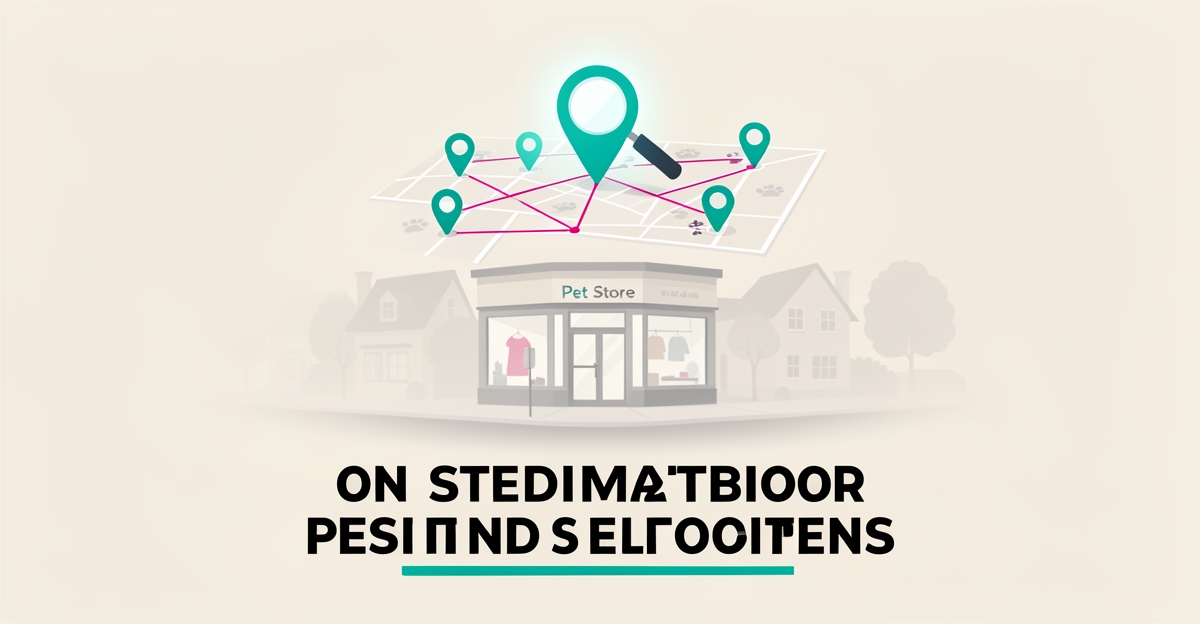
Your pet store might be invisible in local search not because you're lacking quality products or service, but because your website structure doesn't align with how Google now evaluates local businesses. With over 1.5 billion "near me" searches happening globally each month — a volume that has grown more than 500% in recent years — failing to optimize for local intent means missing a massive pool of ready-to-buy customers actively looking for pet supplies in your area. Google's 2025 algorithm changes have significantly raised the bar: Google Business Profile activity, such as weekly updates and review responses within 48 hours, is now a direct ranking factor, and review sentiment analysis reads the actual content of feedback, not just star ratings. A store with detailed praise like "excellent raw food selection for senior dogs" can outrank a higher-rated competitor with generic comments, even if their star score is lower.
At the same time, Google's Helpful Content Update has penalized sites with thin or generic content by 30-60%, while rewarding websites that demonstrate clear topical authority. For pet stores, this means that broad categories like "Dog Food" or "Cat Food" no longer perform well — especially when ~70% of all pet-related searches are now long-tail, condition- or breed-specific queries such as "grain-free food for diabetic cats" or "raw diet for large breed puppies." These specific searches convert at 36%, far outperforming generic terms, which have declined 8% year-over-year. If your product pages don’t reflect this level of specificity, you're not just losing rankings — you're losing high-intent traffic ready to purchase.
Small independent pet stores thrive by serving local markets with specialized expertise, whether that’s carrying niche raw food brands, offering breed-specific nutrition advice, or stocking wellness supplements that big-box retailers overlook. But to capture that advantage online, your website must mirror that specialization in its structure. That means creating service-area-specific pages for each neighborhood you serve, restructuring product categories around health conditions and breeds rather than just animal type, and building content clusters that establish your authority in high-growth areas like pet supplements (+38% YoY) or raw food (+29% YoY). Without this foundation, even the most knowledgeable store will struggle to appear in local search results — no matter how well you serve your community in person.
The 7 Red Flags Costing You Local Customers
Most pet store owners know their customers are searching locally — they just don't realize their website isn't showing up. The gap between where pet owners search and where stores appear comes down to seven structural blind spots that Google now penalizes directly.
1. No service area pages despite massive "near me" volume
Over 1.5 billion "near me" searches happen monthly worldwide, with 500%+ growth in recent years, yet most pet store websites have a single location page or none at all. Google Business Profile optimization now treats service area configuration as a direct ranking factor, meaning stores without dedicated neighborhood pages — "Lincoln Park pet supplies," "Wicker Park raw dog food" — are invisible to high-intent local shoppers.
2. Flat product categories ignoring condition and breed specificity
Generic queries like "best dog food" dropped 8% year-over-year while condition-specific and breed-specific searches surge. Long-tail keywords now represent ~70% of all queries and convert at 36%. Premium categories tell the story: supplements and wellness +38% YoY, raw and fresh food +29%, breed-specific care guides +22%. A category structure stuck on "Dog Food" and "Cat Food" misses every high-value search.
3. Inactive Google Business Profile missing weekly updates and 48-hour review responses
GBP activity — weekly posts, review replies within 48 hours, fresh photos — is now a direct ranking signal. Review sentiment analysis reads content, not stars: a 4.5-star store with reviews mentioning "great raw food selection" outranks a 4.8-star competitor with vague "nice store" comments. Stores treating GBP as a set-it-and-forget-it listing lose the local pack to competitors who treat it as a weekly marketing channel.
4. Missing schema markup — only ~30% adoption delivering 30% higher CTR
Roughly 30% of websites implement schema markup, yet those that do see up to 30% higher click-through rates. Sites cited in AI Overviews share structured data as a common trait. Product schema (price, availability, ratings), LocalBusiness schema (hours, service areas, payment types), and FAQ schema on condition-specific pages aren't optional — they're the baseline for both traditional local pack and AI Overview visibility.
5. No review sentiment strategy — specific service mentions outrank vague ratings
Google's review analysis now parses content for service and product specificity. Reviews mentioning "expert nutrition advice for my diabetic cat" or "best freeze-dried raw selection in the neighborhood" carry more ranking weight than dozens of five-star "great service" ratings. Stores without a system to encourage and surface specific feedback leave their most powerful local signal on the table.
6. Thin content failing YMYL and E-E-A-T scrutiny
Pet nutrition and health content falls under YMYL (Your Money or Your Life) standards. Sites with strong E-E-A-T signals — veterinary citations, author expertise, original data — see 40-70% higher rankings for health queries. Google's 2025 Helpful Content Update dropped thin-content Update traffic by 30-60% for sites lacking depth. A blog post on "transitioning to raw food" needs feeding schedules, vet-reviewed guidance, and case studies — not a 400-word summary.
7. Disconnected content lacking topical clusters
Analysis of 500 pet websites found structured topic clusters — pillar page plus 8-15 supporting articles with strategic internal linking — ranked 14 positions higher on average than unconnected posts. Companies publishing 16+ cluster-supporting pieces monthly earn 3.5x more traffic. Random blog posts about "summer safety tips" and "new toy arrivals" don't build authority; interconnected clusters around "senior dog nutrition" or "cat urinary health" do.
AI Business Sites builds these structural elements into every pet store website from launch — service area pages, condition-specific category architecture, schema markup, and automated topical clustering — so the site earns local visibility instead of hoping for it.
Local business: doing this the old way?
One system replaces the whole pile.
All of it — the website, the follow-up, the content, the leads — built and run for you for $1,497 + $497/mo. Month-to-month, and you own everything.
See what your build includesHow to Fix Your Site Structure for Local Visibility
Most pet store websites still organize products by brand or bag size, while shoppers search for "raw food for senior German Shepherd" or "grain-free dog food for sensitive stomach." That mismatch costs visibility — generic queries like "best dog food" fell 8% year over year, while condition-specific, breed-specific, and long-tail searches now represent roughly 70% of all queries and convert at 36%, according to pet industry SEO research. Google rewards sites that mirror this specificity with structural depth.
- Build neighborhood-specific location pages with NAP, embedded maps, and LocalBusiness schema for every community you serve
- Restructure flat categories into condition/breed hubs — Sensitive Stomach Dog Food, Senior German Shepherd Nutrition — that function as pillar pages for topical clusters
- Implement a weekly GBP protocol: posts, fresh photos, Q&A updates, and review responses within 48 hours mentioning specific products and services
- Deploy Product, LocalBusiness, FAQ, and Review schema sitewide — only ~30% of sites do, yet schema delivers up to 30% higher click-through rates
- Create E-E-A-T content clusters (pillar + 8–15 supporting articles with bidirectional internal linking) for high-growth wellness categories like raw food, supplements, and breed-specific care
Publishing 16+ cluster pieces monthly matches the 3.5x traffic benchmark seen across companies that sustain this cadence. Analysis of 500 pet websites found structured topic clusters rank 14 positions higher on average than unconnected posts. AI Business Sites builds this architecture into every launch — hand-built core pages, automated internal linking, and an AI content engine that publishes locally grounded cluster content each month so the structure keeps compounding without manual effort.
What a Search-Optimized Pet Store Website Looks Like in Practice
A search-optimized pet store website functions as a 24/7 local sales and service hub, where every page either answers a specific customer query or captures a qualified lead. Service area pages rank for hyper-local terms like "[neighborhood] raw dog food" by including NAP details, embedded maps, and neighborhood-specific inventory — critical given that 1.5+ billion "near me" searches occur monthly globally with 500%+ growth in recent years. Condition and breed-specific product hubs convert long-tail traffic at 36%, reflecting how 70% of all pet care queries now use detailed phrases like "grain-free food for sensitive stomach" or "senior German Shepherd nutrition." These hubs act as pillar pages in topical authority clusters, which rank an average of 14 positions higher than disconnected content after 8-12 weeks of consistent internal linking and AI-generated supporting articles.
The Google Business Profile drives map pack visibility through weekly activity — posting new arrivals, responding to reviews within 48 hours, and uploading fresh photos — while review sentiment analysis prioritizes specific mentions like "expert raw food guidance" over vague praise. Schema markup on product, service, and location pages enables rich results and AI Overview citations, addressing the fact that only ~30% of websites currently implement it despite its potential to boost click-through rates by up to 30%. Together, this structure eliminates the need for separate SEO agencies, content writers, or GBP management tools by automating content creation, internal linking, and local search maintenance within a single system. AI Business Sites builds websites that don’t just exist — they actively work to attract and convert local pet owners searching for exactly what you offer.
Frequently Asked Questions
Why isn't my pet store showing up in local 'near me' searches even though I have a Google Business Profile?
Do I really need separate pages for each neighborhood I serve, or is one location page enough?
My product categories are just 'Dog Food' and 'Cat Food' — is that hurting my local search rankings?
How important is schema markup for my pet store website, and what kind should I use?
Can responding to reviews really impact my local search rankings, or do star ratings matter more?
What kind of content should I create to rank for pet health and nutrition searches?
Your Website Should Work as Hard as You Do
The gap between where pet owners search and where your store appears isn't a marketing problem — it's a structural one. Google now rewards websites that mirror the specificity of real shopper intent: neighborhood-level service pages, condition- and breed-specific product hubs, active Google Business Profiles, schema markup, and interconnected content clusters that prove topical authority. The data is clear — long-tail searches convert at 36%, topic clusters rank 14 positions higher, and businesses publishing 16+ cluster pieces monthly earn 3.5x more traffic according to pet industry SEO research. Most independent pet stores already carry the specialized products and expertise these shoppers want. The missing piece is a website structured to surface that expertise in search. AI Business Sites builds that architecture into every launch — hand-built core pages, automated topical clustering, schema, and an AI content engine that publishes locally grounded pages each month so your site keeps compounding visibility without you managing it. If your current site isn't bringing in the local customers you know are searching, it's not because they don't exist. It's because your website isn't built to be found. Let's fix that.
FOR local businesss — BUILT AND RUN BY US
Your website. Your content. Your leads. Your data.
$500 starts your build. Seven days later it's live — chat, booking, follow-up, and your Google presence all set up. Then we run it, every month. You do the work you actually get paid for.