
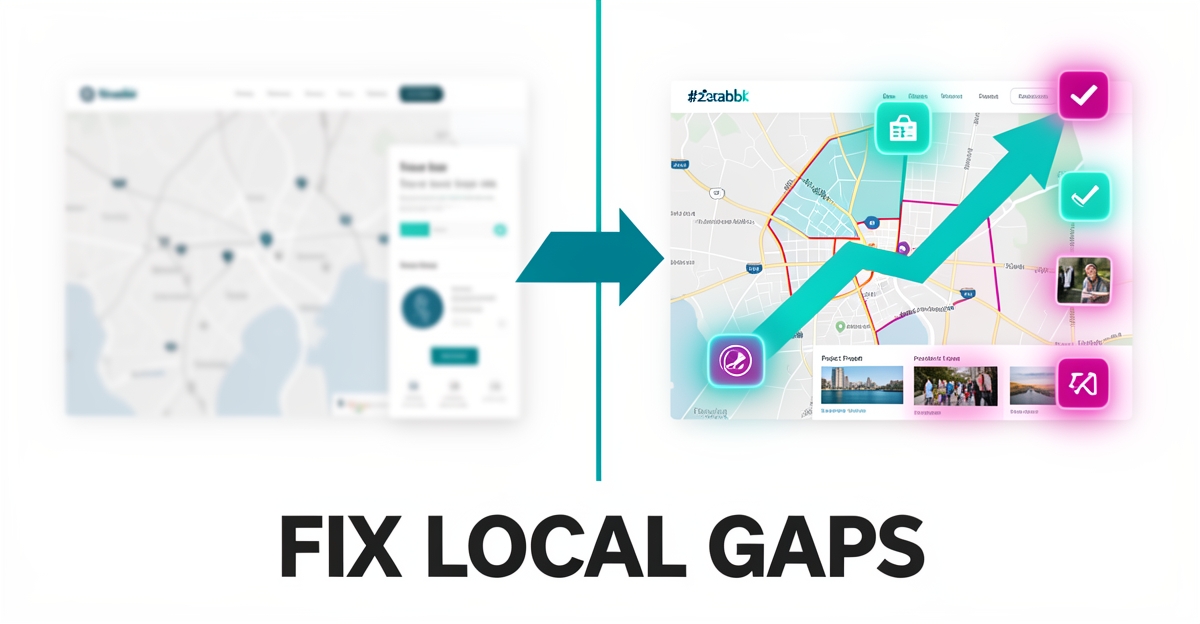
Key facts
- 30% of all mobile queries have local intent according to local SEO research
- 76% of local mobile searches lead to in-store visits or direct inquiries per Google data
- "Near me" mobile searches grew 200–250% annually from 2017–2019 based on Think With Google findings
- Businesses need a minimum of 6 Google reviews to display a star rating in local search results
- The Google 3-Pack captures the vast majority of local search clicks according to local SEO experts
- Black Label Grading ships orders within 1–2 weeks of receipt, setting a transparency benchmark for turnaround times
- Inconsistent NAP data across platforms signals untrustworthiness to both Google and potential customers per SEO best practices
WANT RESULTS LIKE THIS?
Imagine a system doing all of this for your local business — every day, without you.
We build local businesses a custom website with a team of AI behind it: every lead captured and followed up, new content published monthly,customers finding you on Google — live in 7 days.
- 85+ pages at launch
- Every lead followed up, automatically
- Your whole business on one screen
The Silent Revenue Leak: Why Local Prospects Choose Competitors
The Silent Revenue Leak: Why Local Prospects Choose Competitors
Imagine a silent, unnoticed drain on your grading company's revenue, where high-intent local leads slip away, not with a complaint, but with a simple click to the next search result. This leakage often stems from a fundamental failure of your website to address the three pivotal questions every local prospect asks: 'Do you serve my area?', 'How fast can you start?', and 'Can you prove you've done this work here?'.
The gravity of this issue is underscored by the stark reality of local search behavior: 30% of all mobile queries have local intent, and 76% of these searches lead to in-store visits (or, in the context of grading services, direct inquiries or submissions). For grading companies, where turnaround time and service area specificity are crucial, the absence of clear answers to these questions on your website directly translates to lost revenue.
- Undefined Service Areas:
- Leak: Prospects seek clarity on whether your services cover their location. Missing or vague service area definitions drive them to competitors who explicitly list their served regions.
-
Solution: Create a dedicated Service Areas page, clearly outlining the cities, counties, or regions you serve, as recommended for effective local SEO strategies source.
-
Vague Turnaround Times:
- Leak: Generic promises of "fast service" erode trust. Prospects prefer and trust competitors offering specific timelines (e.g., "3–5 business days").
-
Solution: Display guaranteed, service-tiered turnaround times (e.g., "Standard: 7–10 days, Express: 3–5 days") to build credibility, leveraging insights from industries where transparency in timelines boosts customer trust source.
-
Lack of Visual Proof:
- Leak: Without project examples or portfolios, prospects cannot visualize your work quality, pushing them toward competitors with robust case studies or before/after photos.
- Solution: Showcase local project examples with photos, descriptions, and testimonials to leverage social proof and trust-building strategies highlighted in website best practices for service-area businesses source.
Each unaddressed question on your website silently funnels potential customers to competitors. For grading companies, especially, the window of opportunity is narrow, given the industry's current challenges with delays and consumer frustration source. By failing to optimize for local search with consistent NAP data, Google Business Profile optimization, and structured data, you not only lose visibility in critical local searches but also undermine the trust necessary for conversion.
To stem this silent revenue leak, grading companies must prioritize:
- Clear Service Area Definition for immediate trust and relevance.
- Transparent Turnaround Times to manage expectations and outcompete vague promises.
- Visual Project Examples to provide tangible evidence of capability and quality.
By addressing these overlooked facets, your website can transform from a silent revenue leak into a robust, lead-capturing asset, equipped to retain high-intent local prospects and drive tangible business growth.
At AI Business Sites, we understand the nuances of converting website visitors into leads, especially for local service businesses. Our custom websites are designed to address these critical questions out of the box, ensuring your grading company's online presence not only attracts but also retains local prospects.
Stronger Online, Stronger Locally — with a website that speaks directly to your community's needs.
The 7 Red Flags Driving Prospects to Local Competitors
If prospects in your area can’t find clear answers about where you work, how fast you deliver, or proof you’ve done the job before, they’ll click away to a competitor who does—often before you even know they were looking. Local service searches like “grading near me” have surged 200–250% annually, and 76% of those mobile searches turn into in-store visits. Yet too many grading sites hide critical details behind vague language or missing pages, costing real calls every day.
Missing or unclear service zones top the list of red flags. Prospects expect to see exactly which towns, counties, or postal codes you cover—especially when major grading delays push collectors toward local options. Without this, they assume you don’t serve their area and move on. Vague turnaround language (“fast service”) erodes trust faster than concrete without a timeline. Competitors posting concrete windows like “3–5 business days” win the inquiry because customers weigh speed against cost. And when your site lacks a portfolio, prospects can’t visualize your work—so they click to a rival with before/after photos and case studies.
Your visibility in Google’s local 3-Pack matters more than you think. The top three listings in local searches capture the vast majority of clicks, and inconsistent NAP data—different addresses or phone numbers across your site, Google Business Profile, and directories—signals untrustworthiness to both Google and customers. No schema markup means search engines struggle to match your site with nearby queries, while weak trust signals—fewer than six Google reviews or no visible partnerships—leave prospects scanning for safer options.
- A dedicated Service Areas page with clear boundaries and a prominent footer link
- Specific turnaround times for every service tier (e.g., Standard: 7–10 days, Express: 3–5 days)
- A project portfolio with before/after photos, short descriptions, and client testimonials
- Consistent NAP data across your website, Google Business Profile, and third-party directories
- Schema markup for service areas, hours, and contact details to boost local search visibility
These aren’t just best practices—they’re the difference between a site that generates leads and one that quietly pushes prospects to competitors who’ve made the effort to get it right.
Local business: doing this the old way?
One system replaces the whole pile.
All of it — the website, the follow-up, the content, the leads — built and run for you for $1,497 + $497/mo. Month-to-month, and you own everything.
See what your build includesHow a Location-Smart Website Reclaims Local Market Share
Local prospects don’t just want a grading service—they want clarity from the first click. When your website ignores the reality of your service areas, hides turnaround times behind vague promises, or leaves prospect confidence to chance, you’re silently handing customers to competitors who do spell out the details. The fix? A website built around your actual service geography, not a generic template. Here’s how it reclaims local market share.
Start with dedicated service area pages that define clear geographic boundaries. Prospects searching “grading near me” expect to see exactly where you operate—down to the neighborhoods or counties you serve. Without this, they’ll click on competitors whose sites explicitly list service zones. AI Business Sites builds these pages so every town, city, and region you cover appears prominently, eliminating ambiguity that drives prospects away.
Next, publish guaranteed turnaround times for every service tier. Local customers compare timelines like they compare prices, and vague promises like “fast service” erode trust. Black Label Grading’s transparent 1–2 week promise sets a transparency benchmark that local prospects now expect. Display concrete timelines—“Standard: 7–10 business days, Express: 3–5 business days”—so visitors instantly trust your speed and choose you over competitors hiding behind empty phrases.
Your website must also prove your work in real time. Prospects convert faster when they see before-and-after photos of local projects, not stock images. AI Business Sites builds geo-tagged project galleries that showcase your most recent jobs—with location tags so Google Maps links connect your work to your service areas. Couple this with embedded review widgets and industry certifications, and you turn skepticism into confidence before the first conversation even starts.
Don’t wait for a prospect to dig for your contact details. NAP consistency isn’t optional—it’s a trust signal. AI Business Sites automates name, address, and phone updates across every platform, ensuring Google and customers see the same information everywhere. Pair this with LocalBusiness and ServiceArea schema markup, baked into your launch process, so your site ranks higher in local searches where the Google 3-Pack commands 76% of in-store visits from mobile searches.
Finally, integrate Google Business Profile optimization as part of launch, not an afterthought. A properly configured profile—complete with photos, service descriptions, and review management—puts you in the top three local results where clicks convert. That visibility alone can mean the difference between a prospect scrolling past your competitors and calling you first.
From Audit to Action: Your 30-Day Website Fix Plan
From Audit to Action: Your 30-Day Website Fix Plan
Is your grading website silently driving away local prospects? The answer likely lies in overlooked red flags. Transform your site from a lead-leaker to a lead-generator with our actionable 30-day plan, backed by industry research and tailored for service-area businesses like yours.
Week 1: Audit & Foundation Conduct a thorough site audit against the 7 key flags identified in our research, including missing service zones and vague turnaround times. Claim and optimize your Google Business Profile (GBP), as consistent NAP data and GBP optimization are crucial for local search visibility, with 30% of mobile queries having local intent source. AI Business Sites clients see immediate SEO benefits from this step, setting the stage for comprehensive website optimization.
Week 2: Service Area Clarification Build a dedicated Service Areas page with a clear list of cities and counties you serve. This page is essential, as missing or unclear service zones drive prospects to competitors source. Embed schema markup for service areas to enhance local search visibility.
Week 3: Visual Proof & Storytelling Publish 3-5 geo-tagged project case studies with before/after photos and client quotes. 76% of local mobile searches lead to in-store visits, emphasizing the need for local, visual content source. This step helps build trust and showcases your work quality.
Week 4: Trust & Efficiency Signals Add timeline guarantees to service pages (e.g., "7-10 business days") to counteract the trust erosion caused by vague timelines. Install review schema and set up NAP monitoring to ensure consistency across the web.
Why This Plan Works
- Local SEO Foundation: By optimizing your GBP and using schema, you improve visibility in local searches.
- Clear Communication: Defined service areas and timelines reduce confusion and build trust.
- Visual Proof: Case studies with photos directly address the lack of project examples that drive prospects away.
AI Business Sites streamlines this process, delivering 85+ live pages in 30 days, including SEO-optimized content, GBP setup, and schema integration. This comprehensive approach ensures your website not only attracts but also converts local prospects, leveraging the power of a smart, location-specific online presence.
Key Takeaways for Immediate Impact
- Explicitly define and showcase your service areas to attract targeted local traffic.
- Provide specific turnaround times to build credibility and trust with potential clients.
- Leverage visual project examples to demonstrate expertise and satisfy user expectations.
By following this structured plan, you'll address the critical shortcomings that are likely costing your grading website local leads, positioning your business for increased visibility and conversion in just one month.
Frequently Asked Questions
How do I know if my grading website actually serves my local area?
What’s the best way to show how fast my grading service really is?
Do I really need project photos on my grading website?
How does my grading website’s NAP data affect local search results?
What’s the #1 mistake grading companies make with their website that costs them local leads?
Can a grading website really generate leads without me doing anything?
Stop the Silent Revenue Leak Before Your Next Prospect Clicks Away
Your grading company's website is either answering the three questions every local prospect asks — do you serve my area, how fast can you start, and can you prove it — or it's quietly sending them to competitors who do. The seven red flags covered here aren't theoretical; they're the difference between a site that captures high-intent local leads and one that leaks revenue daily. With 76% of local mobile searches leading to in-store visits or direct inquiries (source), every missing service zone, vague timeline, or absent project photo is a prospect choosing someone else. The fix is straightforward: define your service areas explicitly, publish guaranteed turnaround times for every tier, and showcase geo-tagged project proof with reviews and schema markup baked in. AI Business Sites builds websites that handle all of this from launch — service area pages, transparent timelines, project galleries, GBP optimization, and ongoing local SEO content — so your site doesn't just exist, it converts. If you're ready to plug the leak and start winning the local searches your competitors are already capturing, let's talk about what your website should be doing for you.
FOR local businesss — BUILT AND RUN BY US
Your website. Your content. Your leads. Your data.
$500 starts your build. Seven days later it's live — chat, booking, follow-up, and your Google presence all set up. Then we run it, every month. You do the work you actually get paid for.