
Key facts
- Approximately 80% of detox center revenue comes from just 6% of website traffic according to industry research.
- 80% of web traffic to detox centers arrives on mobile devices per conversion optimization experts.
- 53% of mobile users abandon sites that take longer than three seconds to load according to industry data.
- The addiction treatment market is forecast to double in size by the end of the decade reports CBS News.
- Over 1.5 million people aged 12 or older were admitted to treatment centers in 2020 per Newsweek rankings.
- Strong E-E-A-T signals are crucial for detox centers to improve SEO rankings and conversions highlight industry SEO guides.
- Families ready to admit a loved one search with geo-specific phrases, insurance terms, and urgency signals like 'same day admission' notes a high-intent traffic specialist.
WANT RESULTS LIKE THIS?
Imagine a system doing all of this for your local business — every day, without you.
We build local businesses a custom website with a team of AI behind it: every lead captured and followed up, new content published monthly,customers finding you on Google — live in 7 days.
- 85+ pages at launch
- Every lead followed up, automatically
- Your whole business on one screen
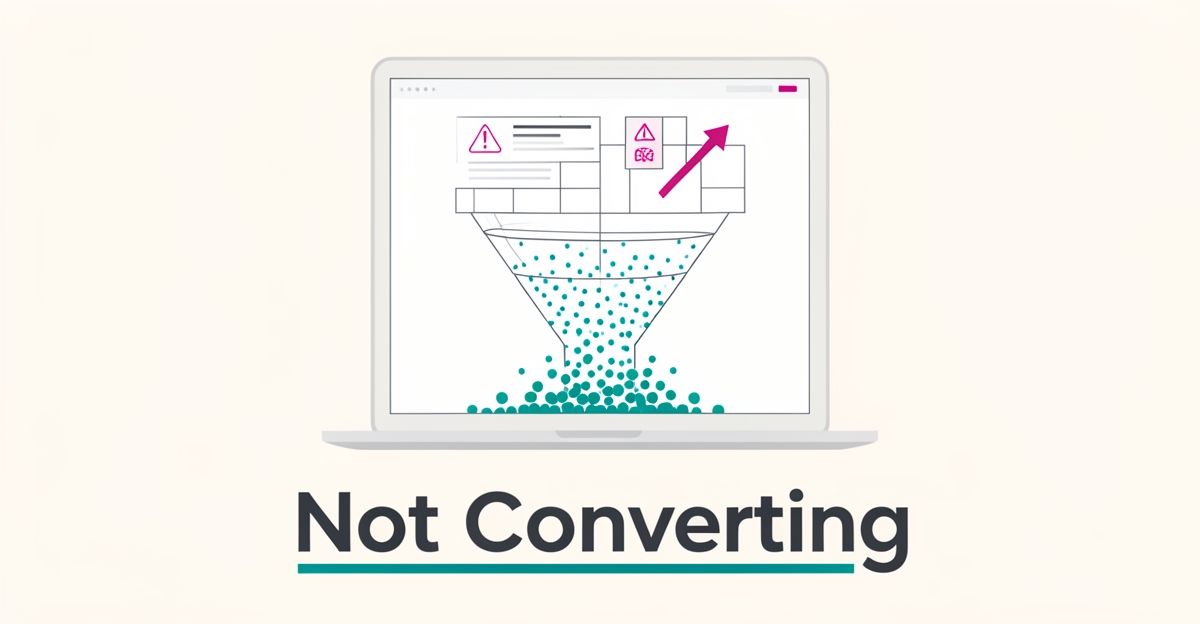
Why Your High Traffic Isn't Producing Admissions
You're staring at Google Analytics, watching the traffic numbers climb — sessions up, pageviews rising, bounce rate steady — and yet the admissions phone isn't ringing any more than it did last month. The disconnect isn't a mystery. Research from the addiction treatment space shows that approximately 80% of revenue comes from about 6% of website traffic, while the other 94% consists of researchers, students, job seekers, and people browsing at 2 a.m. who will never pick up the phone.
- Families searching "detox near me that takes Blue Cross tonight" have a loved one in crisis
- Someone typing "how long does withdrawal last" is still in the research phase
- A query for "substance abuse counselor jobs" signals zero admission intent
The problem isn't traffic volume — it's intent mismatch. Most detox centers optimize for broad keywords like "drug rehab" or "addiction treatment" because those terms show high search volume in keyword tools. But the families ready to admit a loved one right now search differently: they use geo-specific phrases, insurance-specific terms, and urgency signals like "same day admission" or "beds available today." Derek Hyman, a specialist in high-intent traffic for treatment centers, emphasizes that focusing on overall traffic volume distracts from the specific search behaviors that actually drive admissions.
Meanwhile, 80% of web traffic to detox centers comes from mobile devices, yet many sites still bury the call button below the fold or require three taps to reach a human. A mother standing in a hospital parking lot at midnight doesn't navigate hamburger menus — she taps the biggest, most obvious button on the screen. If that button goes to a contact form instead of a direct dial, you've lost her.
AI Business Sites builds detox center websites around this reality: every page targets a specific intent tier, mobile CTAs are thumb-reachable and action-oriented, and the AI assistant qualifies visitors in real time so your admissions team spends time only on the 6% who are ready to say yes.
Missing Trust Signals That Stop Families From Calling
Missing Trust Signals That Stop Families From Calling
When families search for a detox center, their decision hinges on trust. A website lacking clear credibility indicators can be an immediate turn-off. According to SEO experts, strong E-E-A-T signals (Expertise, Experience, Authoritativeness, Trustworthiness) are crucial for detox centers to improve SEO rankings and, more importantly, convert visitors into callers as highlighted in industry SEO guides.
-
Absent Accreditation Badges: The absence of recognizable accreditation logos (e.g., JCAHO, CARF) on the homepage can deter potential clients. Rankings by Newsweek emphasize the importance of such credentials in patient selection.
-
Hidden Staff Credentials: Failing to display staff qualifications, experience, and photos undermines the center's expertise. Transparent team pages are not just best practice but a visitor expectation.
-
Lack of Treatment Philosophy Transparency: Unclear or generic descriptions of treatment approaches can confuse and deter decision-makers. Families seek specific, evidence-based methods.
-
Generic Content: Website content that could apply to any detox center (e.g., overly broad testimonials, non-specific program details) fails to build a unique trust bond with potential clients.
-
Display Credentials Prominently:
- Ensure accreditation badges are visible on the homepage.
-
Dedicate a page to staff bios, including certifications and experience.
-
Transparent Treatment Information:
- Clearly outline unique treatment philosophies and approaches.
-
Use patient testimonials that highlight specific aspects of care.
-
Third-Party Verification:
- Encourage and display Google My Business reviews prominently.
-
Utilize trust badges for secure payment processing, if applicable.
-
High Bounce Rates: Trust issues often lead to high bounce rates, especially on mobile devices, which account for 80% of detox center website traffic.
-
Low Conversion: Approximately 80% of revenue comes from just 6% of website traffic highlighting the need for targeted trust signals to capture high-intent visitors.
By addressing these E-E-A-T deficiencies, detox centers can significantly enhance their website's conversion rate, building the trust necessary for families to take that critical first step and call.
For detox centers, integrating an AI-powered website solution can streamline the process of maintaining up-to-date, trustworthy content and ensure mobile responsiveness, directly impacting conversion rates. Such solutions can automate content updates, ensure consistent staffing information, and optimize the site for high-intent keywords, all while maintaining the transparency and credibility that families seeking treatment demand.
The Mobile Experience Failures Costing You Admissions
When someone searches for help at 2 a.m., they're not sitting at a desktop. They're holding a phone with a cracked screen, shaking hands, and zero patience for friction. Yet most detox center websites still treat mobile as an afterthought — shrinking a desktop layout until phone numbers become unclickable text, contact forms bury themselves below the fold, and CTAs require pinching and zooming just to tap.
The numbers make this impossible to ignore. Industry research shows that 80% of web traffic to detox centers arrives on mobile devices, while approximately 80% of revenue comes from just 6% of total visitors. That 6% is high-intent traffic — people actively looking to admit themselves or a loved one right now. When your mobile experience forces them to hunt for a clickable phone number or wait for a sluggish page to load, you don't just lose a visitor. You lose the specific visitor most likely to convert.
- Phone numbers that display as plain text instead of
tel:links, forcing manual dialing - Contact forms pushed below three scrolls of generic content
- Page load times exceeding three seconds — the threshold where 53% of mobile users abandon the site entirely
- CTAs clustered too close together, triggering accidental taps on the wrong element
- No sticky header with a persistent call button as the user scrolls
These aren't design preferences. They're conversion killers that disproportionately hit the highest-value traffic. A conversion optimization expert in the addiction treatment space emphasizes that mobile-first CRO isn't optional — it's the primary battleground for admissions. Every second of delay, every extra tap required, every moment of confusion filters out the people who need help most urgently.
AI Business Sites builds every website mobile-first from the ground up — not as a responsive afterthought. That means tap-to-call buttons fixed in the viewport, contact forms accessible within one thumb-reach, and page speeds that keep high-intent visitors from bouncing before they ever see your admissions number. The website handles the technical friction so your team can focus on the human conversation that follows.
Local business: doing this the old way?
One system replaces the whole pile.
All of it — the website, the follow-up, the content, the leads — built and run for you for $1,497 + $497/mo. Month-to-month, and you own everything.
See what your build includesKeyword Strategy That Attracts Browsers, Not Buyers
Keyword Strategy That Attracts Browsers, Not Buyers
A common pitfall for detox center websites is employing a keyword strategy that attracts mere browsers rather than genuine buyers. Broad, low-intent keywords such as "drug rehab" or "addiction treatment" may drive high volumes of traffic, but they often fail to convert, as they appeal to individuals in early stages of research or those not ready to commit to treatment.
The Consequence of Low-Intent Keywords According to recovery.com, approximately 80% of revenue for detox centers comes from just 6% of their website traffic, highlighting the inefficiency of chasing bulk, low-intent visitors. Moreover, with the addiction treatment market forecast to double in size by the end of the decade (CBS News), the opportunity cost of misdirected SEO efforts is substantial.
Shifting to High-Intent, Conversion-Driven Keywords
Effective detox center websites map keywords to stages of the admissions funnel, prioritizing high-intent, specific phrases that signal readiness to admit. Examples include:
- Geo-specific phrases (e.g., "Medicaid-covered drug rehab in New York")
- Insurance-specific terms (e.g., "Tricare-approved addiction treatment centers")
- Level-of-care-specific keywords (e.g., "Residential detox programs for opioids in California")
Why This Strategy Works
- Geo-Specific Keywords: Attract individuals seeking local treatment, increasing the likelihood of conversion due to proximity and relevance.
- Insurance and Level-of-Care Specificity: Speaks directly to the needs and concerns of potential patients who are further along in their decision-making process, as highlighted by SEO experts in the healthcare sector.
Capturing the 6%: Integration with the Admissions Funnel Unlike stuffing service pages with irrelevant keywords, a strategic approach involves integrating high-intent keywords across the website where they naturally enhance the user experience and funnel potential patients through the admissions process. This targeted strategy, combined with strong E-E-A-T signals (as emphasized by SEO for Addiction Treatment Centers), can significantly boost the conversion rate of the coveted 6% of high-intent visitors.
For detox centers, leveraging a custom, AI-powered website (like those designed by AI Business Sites) can automate the optimization process, ensuring that every page, from service descriptions to location-specific content, is tailored to attract and convert high-intent traffic efficiently. This approach not only streamlines the SEO strategy but also provides a seamless user experience, crucial for mobile-dominated traffic (where 80% of detox center website visitors originate, according to recovery.com).
How an AI-Powered Website Fixes the Conversion Gap
How an AI-Powered Website Fixes the Conversion Gap
For detox centers, a website that fails to convert visitors into leads is a significant missed opportunity. The harsh reality is that approximately 80% of revenue comes from just 6% of website traffic source, highlighting the need to optimize for high-intent visitors. An AI-powered website, designed with conversion in mind, can bridge this gap by addressing the operational inefficiencies that let high-intent leads slip away.
Instant Engagement, Automated Follow-Up
An AI assistant integrated into the website ensures instant responses to visitor inquiries, day or night, using the center's own knowledge base. This not only captures leads effectively but also reduces the likelihood of losing potential clients due to delayed responses. For example, if a visitor inquires about Medicaid-covered rehab programs, the AI can immediately provide relevant information and guide them through the next steps.
Seamless, 24/7 Admissions Inquiry Management
- Capture & Qualify Leads Automatically: Whether through web forms, voice calls, or chat, all inquiries are funneled into a unified system, ensuring nothing falls through the cracks.
- AI-Driven Follow-Up Sequences: Personalized, automated sequences nurture leads, with the option for human intervention at critical points, all managed within the website's backend.
- Voice Booking Integration: For the 80% of traffic coming from mobile devices source, voice booking capabilities ensure a frictionless experience, directly converting intent into appointments.
Key Benefits of an AI-Powered Detox Center Website
- Enhanced Trust Signals: Display clear clinical credentials and accreditation badges to improve E-E-A-T signals for better SEO source.
- Optimized for High-Intent Keywords: Focus on geo-specific and insurance-specific long-tail phrases to attract ready-to-convert traffic source.
- Unified Operational Hub: Consolidates lead capture, CRM, automation, and content generation into one platform, reducing complexity and costs.
The Result: More Conversions, Less Complexity
By leveraging an AI-powered website, detox centers can double down on what works—capturing, qualifying, and routing admissions inquiries 24/7 without adding staff or software complexity. This approach not only streamlines operations but also ensures that the website becomes a proactive tool in driving conversions, rather than a static entity. As the addiction treatment market is forecast to double in size by the end of the decade source, having a conversion-optimized website is more critical than ever. AI Business Sites crafts these bespoke solutions, ensuring detox centers can focus on providing care while their website works tirelessly to bring in more of the right leads.
Frequently Asked Questions
Why is my detox center getting lots of website traffic but not enough admissions?
What specific keywords should my detox center target to attract people ready to enroll?
How important is mobile optimization for my detox center's website?
What trust signals are missing on most detox center websites that prevent families from calling?
Can an AI-powered website really help my detox center get more admissions without hiring more staff?
What’s the biggest mistake detox centers make with their website call-to-action buttons?
Your Website Should Work While You Sleep
The gap between traffic and admissions isn't a mystery — it's a design problem. Families in crisis don't browse; they search with urgency, on mobile, at midnight, using phrases like "same day admission" or "Medicaid detox near me." If your site answers with generic content, buried phone numbers, and missing trust signals, you're not just losing visitors — you're losing the 6% of traffic that drives 80% of revenue according to industry research. The fix isn't more SEO or more ads. It's a website built around how high-intent visitors actually behave: mobile-first CTAs, geo-specific content, visible accreditations, and an AI assistant that qualifies and routes leads while your team sleeps. AI Business Sites builds detox center websites that do exactly that — custom, conversion-focused, and self-running. If your current site feels like a brochure instead of an admissions engine, it's time to see what a website that works for you looks like. Book a quick walkthrough and we'll show you the difference.
FOR local businesss — BUILT AND RUN BY US
Your website. Your content. Your leads. Your data.
$497 starts your build — your first month's payment, not a deposit. Seven days later it's live — chat, booking, follow-up, and your Google presence all set up. Then we run it, every month. You do the work you actually get paid for.