
Key facts
- Oral surgery websites average just 3–5% conversion rates, but top performers hit 8–15% with AI tools like real-time chat and personalized content Source.
- 53% of mobile visitors abandon sites if load times exceed 3 seconds—mobile optimization is critical for oral surgery practices Source.
- 40% of appointment requests for oral surgery practices come outside business hours, yet 64% of patients prefer instant responses over callbacks Source.
- Practices using AI chat assistants and voice agents see 27% higher conversion rates and 15–30% revenue increases by capturing after-hours leads Source.
- 90% of dental patients check reviews before booking, and 42% avoid practices with fewer than 3 stars—trust signals are non-negotiable Source.
- A 2–3 percentage-point conversion lift can double or triple patient volume without additional traffic investment—optimization pays off immediately Source.
- Video testimonials retain attention at 95% versus 12% for text, making them a powerful trust builder for oral surgery sites Source.
WANT RESULTS LIKE THIS?
Imagine a system doing all of this for your local business — every day, without you.
We build local businesses a custom website with a team of AI behind it: every lead captured and followed up, new content published monthly,customers finding you on Google — live in 7 days.
- 85+ pages at launch
- Every lead followed up, automatically
- Your whole business on one screen
The Conversion Crisis in Oral Surgery Websites
The Conversion Crisis in Oral Surgery Websites
Imagine a dental practice where nearly 95% of website visitors leave without taking any meaningful action—a stark reality for many oral surgery websites, plagued by an average conversion rate of just 3-5%. This translates to a significant loss of potential patients, with each missed lead costing between $200 to $500 in lifetime patient value source. The cost of these missed opportunities is compounded by the fact that 99% of medical and dental practices fail to conduct A/B testing, leaving substantial conversion potential untapped source.
- Low Conversion Rates: Top-performing dental websites achieve 8-15% conversion rates, but the majority struggle within the 3-5% range (https://dentalmarketingguy.co/blog/conversion-rate-optimization-dental-websites/, https://www.patientgain.com/average-conversion-rates).
- Mobile Dependence: With 60-70% of traffic coming from mobile devices, slow load times (>3 seconds) cause 53% of visitors to abandon sites (https://dentalmarketingguy.co/blog/conversion-rate-optimization-dental-websites/, https://www.nexhealth.com/resources/6-tactics-for-dentists-to-turn-website-traffic-into-more-new-patients).
- After-Hours Demand: 40% of appointment requests occur outside business hours, highlighting the need for 24/7 support source.
Given these challenges, oral surgery practices face an urgent need to optimize their websites. A mere 2-3 percentage point increase in conversion rates can double or triple patient volume without additional traffic investment source. The integration of AI-driven solutions, such as real-time chat support and content personalization, offers a promising pathway to addressing these conversion crises by providing instant responses, automating follow-ups, and guiding visitors seamlessly through the booking process.
| Red Flag | Impact | AI-Driven Solution |
|---|---|---|
| Poor Mobile Optimization | High Abandonment Rates | AI-Optimized, Fast-Loading Sites |
| Lack of Real-Time Support | Missed After-Hours Leads | 24/7 AI Chat and Voice Assistants |
| Generic Content | Failed Guidance to Booking | AI-Personalized, Procedure-Specific Content |
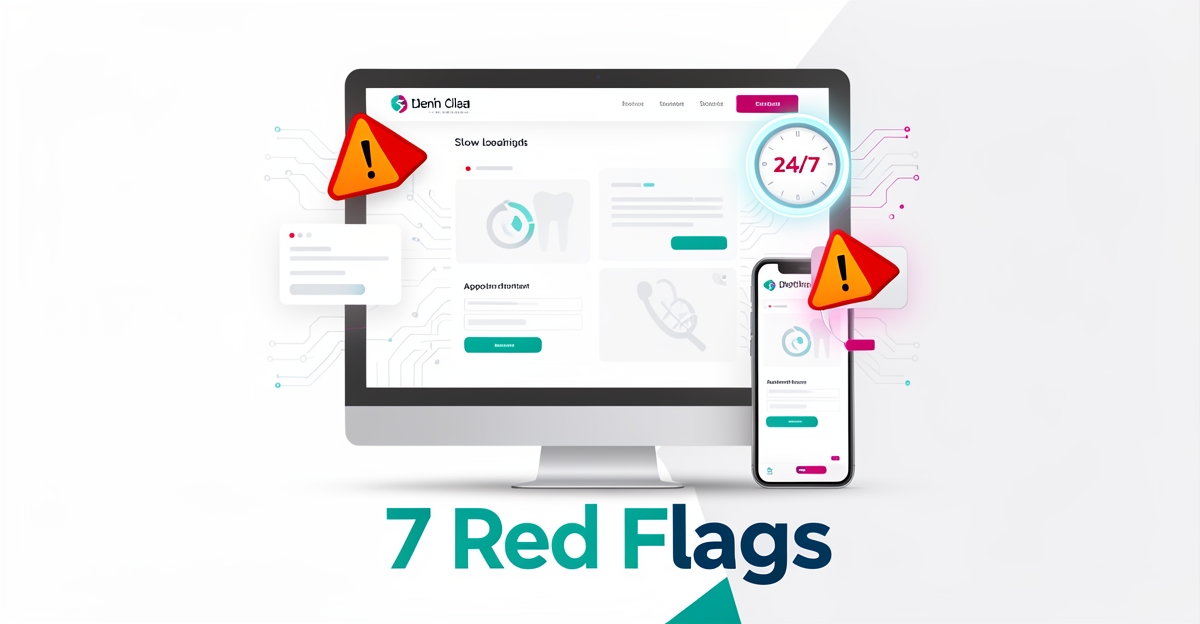
Diagnosing the 7 Conversion Killers (With Data)
The difference between a website that fills your schedule and one that just sits there often comes down to seven specific failures — each backed by data, each fixable.
Mobile optimization is the first hurdle. With 60–70% of dental traffic coming from phones and 53% of mobile visitors abandoning pages that take longer than three seconds to load, a slow or clunky mobile experience quietly turns away more than half your potential patients before they even see your services. Research on dental website CRO confirms the average mobile page loads 87% slower than desktop, directly dragging down conversion rates.
Generic calls-to-action are the second killer. Buttons labeled "Click Here" or "Learn More" don't tell a nervous patient what happens next. Conversion-focused dental marketing shows that specific, benefit-driven CTAs — "Book Your Emergency Consultation Today" or "Schedule Your Free Wisdom Teeth Evaluation" — guide visitors toward action instead of leaving them guessing.
Missing trust signals cost you credibility instantly. Patient behavior data reveals 90% of dental patients check reviews before booking, and 42% won't consider a practice with less than a 3-star rating. Video testimonials retain attention at 95% versus 12% for text, while prominent surgeon credentials and board certifications are non-negotiable for oral surgery.
- Slow load times — 53% abandonment after 3 seconds on mobile
- Generic or overwhelming CTAs that create choice paralysis
- Missing reviews, credentials, and video testimonials
- No real-time support for the 40% of requests that come after hours
- Content that doesn't address procedure-specific anxiety
The after-hours gap is massive. AI-driven conversion research shows 40% of appointment requests arrive outside business hours, yet 64% of patients prefer instant responses over callbacks. Practices adding AI chat and voice agents see 27% higher conversion rates and 15–30% revenue increases, capturing leads that would otherwise vanish.
AI Business Sites builds websites on Next.js and React — the same stack Netflix and Shopify use — so mobile speed and reliability come standard. The modular page builder lets you swap CTAs instantly, while the AI assistant handles chat, calls, and follow-ups 24/7 using your actual practice knowledge. The content engine generates procedure-specific pages and localized SEO pages monthly, automatically linking them into the topical clusters Google rewards. Every lead from every channel lands in one CRM with instant, personalized responses — no missed calls, no manual follow-up, no separate tools to manage.
Prescription for Success: AI-Driven Solutions for Oral Surgery Websites
Your oral surgery website isn’t just a digital brochure—it’s a 24/7 assistant, a patient’s first impression of your expertise, and your most powerful tool for filling the schedule. But too many practices leave this asset running on autopilot, unaware that invisible friction points are driving potential patients straight into the arms of competitors. The fix? A website that does the heavy lifting—answering questions at 2 a.m., guiding visitors through complex procedures, and turning curiosity into booked consultations without you lifting a finger.
Mobile-first design isn’t optional anymore. Over 60% of dental website visits happen on phones, and 53% of users bounce if a page takes more than three seconds to load source. A slow, desktop-focused site isn’t just inconvenient—it’s hemorrhaging leads. A Next.js-powered website built for speed and mobile responsiveness slashes load times and keeps patients engaged from the first tap.
Clear, compelling CTAs turn browsers into bookings. Generic buttons like “Click Here” don’t just underperform—they confuse. Replace them with direct, benefit-driven language:
- “Book Your Emergency Consultation Today”
- “Schedule Your Free Virtual Consultation”
- “See How Our Board-Certified Surgeons Can Help”
AI Business Sites’ modular page builder lets you update these in seconds, no developer needed.
Patients don’t just want information—they want answers now. After-hours inquiries account for 40% of appointment requests, and 64% prefer instant responses over callbacks source. An AI chat assistant on your site answers questions in real time using your practice’s own knowledge base, while a voice agent handles calls, books appointments, and captures details—even when your office is closed. Practices using these tools see 27% higher conversion rates and 15–30% revenue increases source.
Trust is the final barrier. Patients research thoroughly—90% check reviews before booking, and 42% avoid practices with fewer than three stars source. Dedicated procedure pages with surgeon credentials, before-and-after galleries, and video testimonials build credibility fast. AI-powered content engines can generate and update these pages automatically, keeping your site current and SEO-optimized without manual work.
The result? A website that runs itself—answering questions, following up on leads, and guiding visitors to the booking button—while you focus on delivering exceptional care.
Local business: doing this the old way?
One system replaces the whole pile.
All of it — the website, the follow-up, the content, the leads — built and run for you for $1,497 + $497/mo. Month-to-month, and you own everything.
See what your build includesImplementation Roadmap: Turning Insights into Bookings
Your website’s traffic numbers don’t mean much if visitors leave without booking. The research shows oral surgery practices average just 3–5% conversion rates, while top performers hit 8–15%—with the best practices achieving 20% or higher. The difference often comes down to what happens after a visitor lands on your site. Here’s how to turn insights into actual bookings, using a step-by-step roadmap tailored for oral surgery practices.
Start with a mobile-first audit. Over 60% of dental website visits now come from mobile devices, yet the average mobile page loads 87% slower than desktop—costing you conversions before a visitor even sees your content. Test your site on phones and tablets, then compress images, streamline navigation, and ensure every button is easy to tap. AI Business Sites builds custom Next.js sites with mobile-first performance baked in, so your pages load in under 3 seconds—the threshold where 53% of users abandon a site if it doesn’t respond fast enough.
Next, rebuild your CTAs. Generic phrases like “Click Here” don’t cut it when patients are deciding between multiple providers. Replace them with clear, benefit-driven language tied to urgency and outcomes:
- “Book Your Emergency Consultation Today” speaks to pain-driven urgency.
- “Schedule Your Free Consultation Online” removes friction by framing the first step as risk-free.
- “See What Patients Say About Their Dental Implants” leverages social proof directly on the button.
These small tweaks align with research showing tailored CTAs can boost conversions by 30% or more when messaging matches patient intent.
Deploy an AI-powered assistant to handle inquiries 24/7. 40% of appointment requests happen outside business hours, and 64% of patients prefer instant responses—yet most practices still rely on voicemail and delayed emails. An AI chat on your site can answer questions about sedation options, recovery timelines, and insurance in real time, while an AI voice agent answers calls and books appointments automatically. Together, these tools have been shown to lift conversion rates by 27% and increase revenue by 15–30%. AI Business Sites integrates both into its platform, so every interaction—web, phone, or form—lands in one system with instant, personalized follow-up emails that match your brand voice.
Finally, personalize content dynamically. Oral surgery patients need procedure-specific details, credential reassurance, and recovery guidance—but serving generic pages won’t cut it. Use AI to tailor content based on what visitors read or search for. Show sedation options to anxious patients, recovery timelines to those researching procedures, and insurance info to cost-conscious visitors. This targeted approach aligns with findings that localized, procedure-focused pages and video testimonials (with a 95% retention rate) are critical trust signals. AI Business Sites’ content engine can generate and update these pages automatically, keeping your site fresh and relevant without manual work.
The goal isn’t just traffic—it’s consistent, predictable bookings. With mobile optimization, clear CTAs, real-time AI support, and personalized content, you’re not waiting for patients to figure things out. You’re guiding them—step by step—toward the phone call or form submission that turns into a booked appointment.
Measuring Success: Tracking Your Website’s Transformation
Measuring Success: Tracking Your Website’s Transformation
Optimizing your oral surgery website for conversions is only the first step. To ensure long-term success, you must track improvements, identify areas for refinement, and adjust your strategies based on data. Here’s how to foster a continuous improvement loop:
With 60–70% of dental website traffic coming from mobile devices source, monitoring mobile engagement is crucial. Track mobile conversion rates, load times (aim for ≤3 seconds to prevent 53% abandonment), and user behavior to optimize the mobile experience.
Conversion Rate (CR) Analysis is paramount. Average dental websites convert at 3–5%, but top performers reach 8–15% source. Regularly compare your site’s CR against these benchmarks and investigate drops or plateaus.
Review Performance directly impacts bookings, with 90% of patients consulting online reviews before scheduling source. Monitor review ratings, respond promptly to feedback, and encourage satisfied patients to share their experiences.
- Mobile Engagement: Load times, conversion rates, and user drop-off points.
- Conversion Rate (CR) Analysis: Compare against industry benchmarks and track changes.
- Review Performance: Ratings, response rates, and patient feedback themes.
- Low Mobile CR? Audit and optimize mobile CTAs and page load times.
- Stagnant Overall CR? A/B test CTAs, refine content with AI-driven personalization source, and ensure clear, action-oriented messaging.
- Declining Review Ratings? Enhance patient service, respond to all reviews, and proactively solicit feedback from satisfied patients.
By continuously measuring these aspects and making data-driven adjustments, your oral surgery website can achieve and sustain a 30%+ conversion lift, as seen with practices leveraging AI tools for personalized content and real-time support source.
Frequently Asked Questions
Why is my oral surgery website getting traffic but no booked appointments?
How much does a slow mobile site actually cost me in lost patients?
Do patients really check reviews before booking oral surgery?
Is it worth adding AI chat to my website if I already have a contact form?
What kind of CTAs actually work for oral surgery patients?
Can AI really write procedure-specific content that sounds like my practice?
Key Takeaways
```json { "title": "Turn Your Oral Surgery Website from a Cost Center into Your #1 Lead Generator", "content": "Your oral surgery website isn’t just another digital placeholder—it’s either the most powerful tool in your practice’s growth arsenal or a quiet revenue killer. With dental websites av
FOR local businesss — BUILT AND RUN BY US
Your website. Your content. Your leads. Your data.
$500 starts your build. Seven days later it's live — chat, booking, follow-up, and your Google presence all set up. Then we run it, every month. You do the work you actually get paid for.