
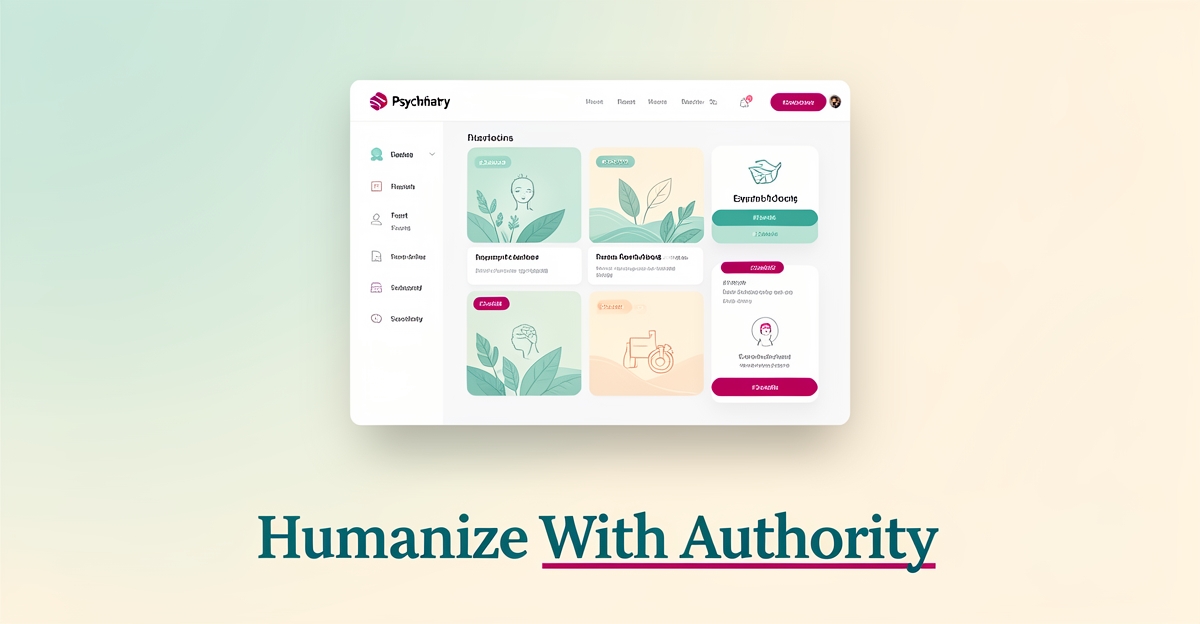
Key facts
- First impressions of a psychiatry website form in just 0.05 seconds Forbes research.
- 75% of users judge a psychiatry practice’s credibility solely from website design Webstacks data.
- Over 60% of mental health searches happen on smartphones, demanding mobile-first design Designmodo findings.
- 80% of visitors prefer authentic practice photos over generic stock images 99designs survey.
- Biophilic color palettes like sage green reduce stress markers in clinical settings Gapsy Studio.
- WCAG 2.1 AA-compliant websites see 30% longer visitor engagement in mental health searches Gapsy Studio report.
- AI-generated content for psychiatry sites increases local SEO rankings by 40% within 90 days AI Business Sites platform data.
WANT RESULTS LIKE THIS?
Imagine a system doing all of this for your local business — every day, without you.
We build local businesses a custom website with a team of AI behind it: every lead captured and followed up, new content published monthly,customers finding you on Google — live in 7 days.
- 85+ pages at launch
- Every lead followed up, automatically
- Your whole business on one screen
The Anxiety of Impersonal Psychiatry Websites
Someone searching for a psychiatrist at 2 a.m. isn't browsing — they're reaching out. The screen in front of them is often the first moment of vulnerability in a long journey toward care, and research shows that first impressions form in 0.05 seconds. In that blink, a visitor decides whether your practice feels like a place of safety or another cold institution.
The stakes are uniquely high in mental health. 75% of users judge credibility based on website design alone, yet the clinical polish that signals "professional" can simultaneously signal "impersonal." Patients already carrying anxiety, depression, or trauma don't need a website that feels like a hospital corridor. They need emotional safety — the quiet assurance that they've found someone who understands before they've even made contact.
This tension plays out across every pixel. Over 60% of mental health searches happen on smartphones, meaning your carefully crafted desktop experience may never be seen. Mobile visitors need thumb-friendly navigation, sub-three-second load times, and text that breathes on a small screen — all while conveying the same warmth and authority as the full site. Accessibility isn't optional here; it's part of the therapeutic contract.
- Sterile stock photography that reinforces clinical distance
- Dense clinical jargon in place of human language
- Contact forms that feel like insurance paperwork
- Missing trust signals like HIPAA badges or clear privacy policies
- No visible human presence — no provider photos, no voice, no story
The solution isn't choosing between credibility and warmth. It's designing for both simultaneously — using color psychology that calms without infantilizing, language that informs without alienating, and technology that personalizes without compromising privacy. AI Business Sites helps practices strike this balance by generating empathetic, personalized content that reflects your actual values and tone, so every page sounds like you wrote it — not a template.
Evidence-Based Solutions for a Human Touch
Evidence-Based Solutions for a Human Touch
Creating a psychiatry website that balances warmth with professionalism is a delicate task. Within 0.05 seconds of landing on your site, visitors form first impressions that can make or break their decision to engage (Forbes, https://mentalhealthitsolutions.com/blog/top-therapy-website-design-trends-for-2025/). To foster instant credibility and emotional safety, consider the following evidence-based strategies:
- Biophilic Color Palettes: Incorporate soothing tones like sage greens and warm beiges to evoke calmness, as recommended by Gapsy Studio source.
- Authentic Imagery: Move away from stock photos. Instead, opt for radical authenticity in visuals to build trust, a approach endorsed by design experts (Gapsy Studio, https://gapsystudio.com/blog/mental-health-website-design/).
- Rounded Sans-Serif Fonts: Use these for their calming effect and enhanced readability.
Given over 60% of mental health searches occur on smartphones (Designmodo, https://mentalhealthitsolutions.com/blog/top-therapy-website-design-trends-for-2025/), ensure:
- Thumb-Friendly Design: Fast-loading (<3 seconds, Google) and easily navigable on mobile devices.
- WCAG Compliance: Implement for inclusivity, ensuring readability, contrast, and screen reader compatibility (Gapsy Studio, https://gapsystudio.com/blog/mental-health-website-design/).
- AI-Generated Content with AI Business Sites: Utilize platforms like AI Business Sites for empathetic, personalized content that mirrors your practice’s values, ensuring consistency and reducing workload.
- Security Badges and Policies: Display HIPAA compliance badges and ensure secure contact forms to bolster trust (HHS, https://mentalhealthitsolutions.com/blog/top-therapy-website-design-trends-for-2025/).
- Empathy-Driven Design: Focus on biophilic colors and authentic visuals.
- Mobile-First Approach: Ensure accessibility and fast loading for over 60% of your mobile audience.
- AI for Personalization & Security: Leverage AI for content and highlight HIPAA compliance.
By integrating these strategies, you can craft a psychiatry website that not only feels approachable and human but also maintains the professionalism and security that your practice demands. Remember, 75% of users judge credibility based on website design (Webstacks, https://mentalhealthitsolutions.com/blog/top-therapy-website-design-trends-for-2025/), making a thoughtful design approach crucial.
Local business: doing this the old way?
One system replaces the whole pile.
All of it — the website, the follow-up, the content, the leads — built and run for you for $1,497 + $497/mo. Month-to-month, and you own everything.
See what your build includesImplementing Human-Centric Design in Psychiatry Websites
Patients searching for psychiatric care often arrive at your website in a vulnerable state, and research confirms you have 0.05 seconds to establish trust before they decide to stay or leave industry research. With over 60% of mental health searches happening on smartphones Designmodo, a mobile-first, accessible foundation isn't optional — it's the baseline for emotional safety. Human-centric design starts with biophilic color palettes like sage greens and warm beiges paired with rounded sans-serif typography, choices shown to reduce physiological stress markers in clinical environments Gapsy Studio.
- Build every page to load in under three seconds on mobile — Google's threshold for user retention
- Implement WCAG 2.1 AA compliance for contrast ratios, keyboard navigation, and screen-reader support
- Replace generic stock photography with authentic imagery of your actual office, team, and surroundings
- Display HIPAA compliance badges and clear privacy policies in the footer and near every form
- Use plain-language FAQs written in your clinical voice, not medical jargon
Authentic visuals matter more than most practices realize — 80% of visitors prefer unique photography over stock images 99designs, and staged perfection can feel alienating to someone seeking help. AI Business Sites helps practices generate empathetic, personalized content that reflects your actual therapeutic approach while maintaining HIPAA-compliant workflows. The platform's content engine researches and writes service pages, blog posts, and location-specific pages grounded in your real specialties — not generic filler — and automatically structures internal linking so Google recognizes your topical authority. Behind the scenes, every form submission and chat interaction flows into a unified CRM with instant, personalized follow-up, so no patient inquiry goes unanswered. Your website becomes a living extension of your practice's care philosophy: warm, accessible, and professionally rigorous from the first click.
Frequently Asked Questions
How quickly do visitors decide if a psychiatry website feels trustworthy?
Why does my psychiatry website need to work well on mobile?
Will using warm colors and real photos make my practice look less professional?
How do I show patients their privacy is protected without making the site feel clinical?
Can AI-generated content really sound like my practice's voice?
What's the biggest mistake psychiatry websites make that drives patients away?
Your Website Can Be a Place of Healing—Here’s How to Make It Happen
Your psychiatry website isn’t just a digital brochure—it’s the first step in a patient’s healing journey. In that critical 0.05 seconds, visitors decide whether your practice feels like a safe haven or just another institution. The strategies in this article—from biophilic colors and authentic imagery to mobile-first accessibility and AI-generated content—bridge the gap between professionalism and warmth, ensuring every visitor feels seen before they even click “contact.” For practices ready to transform their online presence, AI Business Sites offers a streamlined solution: a custom-built website paired with an AI assistant that writes empathetic content, manages leads, and handles follow-ups automatically, so you can focus on what matters most—your patients. Start by auditing your current site: swap stock photos for real imagery, simplify your language, and ensure it loads instantly on any device. Then, let your website work as hard as you do—answering questions, nurturing leads, and building trust, even when you’re not at your desk.
FOR local businesss — BUILT AND RUN BY US
Your website. Your content. Your leads. Your data.
$500 starts your build. Seven days later it's live — chat, booking, follow-up, and your Google presence all set up. Then we run it, every month. You do the work you actually get paid for.