
Key facts
- The global NEMT market is projected to reach $24.3 billion by 2030, growing at a 7.0% CAGR according to market research
- Transportation barriers cost the U.S. healthcare system $150 billion annually, affecting 5.8 million Americans per LivePlan
- ADA compliance and certified driver training are now trust signals, not just checkboxes, for facilities as noted in industry analysis
- Digital platforms with real-time GPS tracking and AI-driven routing reduce missed appointments and improve trust according to ResearchAndMarkets
- Over 55 million NEMT rides occur annually in the U.S. for various healthcare needs per LivePlan
- Facilities evaluate NEMT partners on transparent performance dashboards and digital documentation portals as highlighted in market research
WANT RESULTS LIKE THIS?
Imagine a system doing all of this for your local business — every day, without you.
We build local businesses a custom website with a team of AI behind it: every lead captured and followed up, new content published monthly,customers finding you on Google — live in 7 days.
- 85+ pages at launch
- Every lead followed up, automatically
- Your whole business on one screen
Why Hospitals Are Only Partnering with NEMT Providers Who Prove It
Healthcare facilities aren't just looking for a ride anymore — they're looking for a partner who can prove every mile matters. The shift toward value-based care has turned transportation into a measurable lever for patient outcomes, and hospitals are responding by demanding data, not promises.
According to market research, the global NEMT market is projected to reach $24.3 billion by 2030 as health systems transition from fee-for-service to outcome-based payment models. This means reimbursement now ties directly to metrics like no-show reduction and care continuity — and facilities are holding vendors accountable.
Industry analysis confirms that digital platforms with real-time GPS tracking, AI-driven routing, and automated notifications have become "a cornerstone of modern NEMT operations," improving trust and reducing missed appointments. Meanwhile, transportation barriers still cost the U.S. healthcare system $150 billion annually in delayed care and missed visits — with 5.8 million Americans affected each year.
Facilities now evaluate partners on:
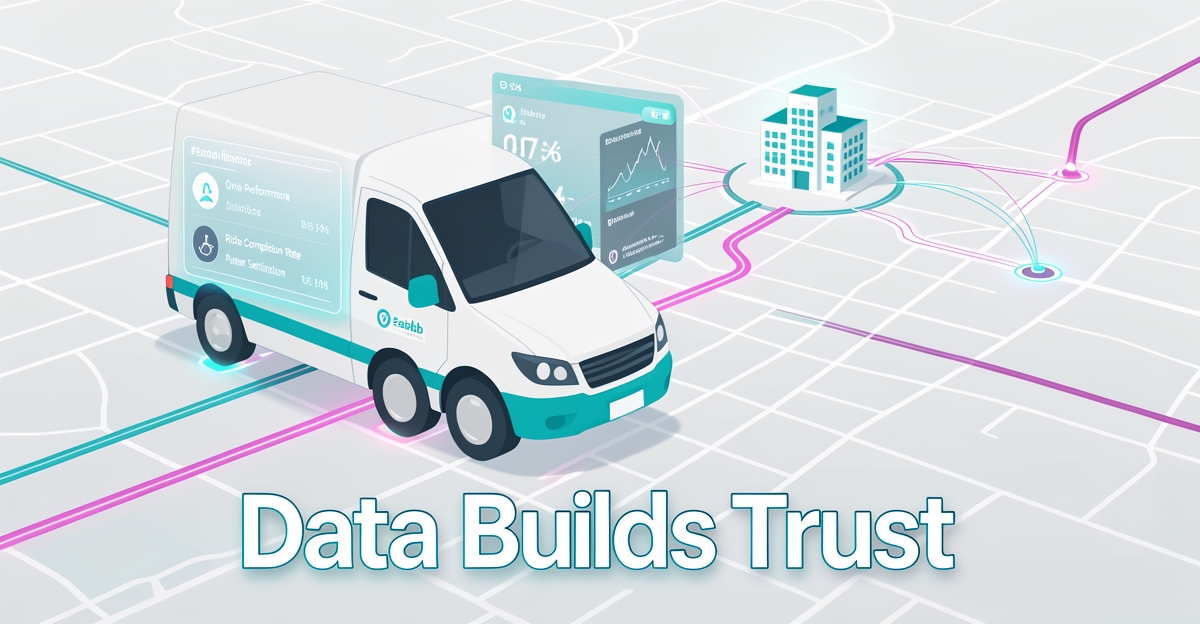
- Transparent performance dashboards showing on-time rates and no-show reductions
- Digital documentation portals for quotes, service agreements, and compliance records
- ADA-compliant fleets with certified driver training programs
- Integration capabilities with telehealth and chronic care management workflows
At AI Business Sites, we've seen how a professional client portal — where facilities can request quotes, sign agreements, and access compliance documentation — becomes a trust signal that separates serious providers from the rest. When your website handles the paperwork automatically, you're not just saving time. You're showing hospitals you operate at their level.
Turn Your Website into a Trust-Building Machine for Facilities
Hospitals and clinics need partners who move as fast as their patients do — and nothing signals reliability like a website that replaces paperwork with precision. When your NEMT website hosts a secure client portal where facilities can request quotes, sign service agreements, and track compliance documents in real time, you’re not just digitizing workflows — you’re proving you can handle high-volume contracts without the friction of paper trails or missed approvals.
Professional document generation through a branded portal builds credibility for facility contracts by showing you operate with the same transparency hospitals expect from tech-forward partners. According to LivePlan, organizations using digital document systems for quotes and agreements stand out as more credible when negotiating large-scale partnerships. That credibility isn’t just perception: it’s backed by the CMS push to eliminate paper workflows in favor of FHIR-based APIs and seamless digital check-ins across healthcare ecosystems.
Your website can become the nerve center of trust by integrating these key features:
- Secure client portals for instant quote requests, contract signing, and document uploads
- Automated approval workflows that notify facility coordinators at every stage
- Branded PDF generation for proposals, service agreements, and compliance certificates
- Real-time tracking links in every document so facilities can verify service status
- HIPAA-compliant storage with audit trails visible to authorized users
With over 55 million NEMT rides delivered annually and facilities under pressure to reduce no-shows, your ability to deliver professional, traceable documentation isn’t optional — it’s a competitive advantage. A streamlined digital portal turns your website from a static brochure into a trust-building machine that keeps facilities coming back.
Show Real-Time Proof That Your Rides Save Facilities Money
Show Real-Time Proof That Your Rides Save Facilities Money
In the shift towards outcome-based reimbursement models highlighted by ResearchAndMarkets, Non-Emergency Medical Transportation (NEMT) providers must demonstrate tangible value to healthcare facilities. By publishing performance dashboards with key metrics, NEMT companies can build trust and secure high-volume contracts. Here’s how:
1. On-Time Performance Metrics
Facilities prioritize reliability. A ResearchAndMarkets report emphasizes that technology, such as AI-driven routing, improves trust by reducing missed appointments. By showcasing a 95% on-time pickup rate (based on real-time GPS tracking data), NEMT providers can demonstrate their ability to support care continuity. For example, using live GPS visibility, one provider reduced late arrivals by 30%, directly impacting facility scheduling efficiency.
2. No-Show Rate Reduction
Missed appointments cost the U.S. healthcare system an extra $150 billion annually (LivePlan). By implementing automated reminder systems and real-time scheduling updates, NEMT providers can achieve a <5% no-show rate. This metric, visible on a facility-accessible dashboard, quantifies the financial savings for healthcare partners.
3. Safety and Compliance Transparency
Regulatory pressure drives investment in safety (ResearchAndMarkets). Publishing zero safety incident rates over a quarter, alongside 100% ADA compliance verification, reassures facilities of a provider’s professionalism. LivePlan notes ADA compliance as crucial for trust, and transparent reporting of these metrics strengthens partnerships.
Actionable Example:
- Dashboard Snapshot:
- On-Time Rate: 95% (avg. response time: 15 mins)
- No-Show Reduction: 87% (vs. industry average)
- Safety Incidents:** 0 (Q1-Q3, with 100% ADA compliance)
- Linked to Outcomes: "Our data shows a direct correlation between our on-time rates and a 12% reduction in facility rescheduling costs" (based on a market analysis).
Why This Works:
- Value-Based Care Alignment: Facilities see direct financial benefits (e.g., reduced rescheduling costs).
- Digital Transparency: Real-time dashboards build trust, a key factor in the shift toward tech-driven partnerships.
- Competitive Differentiation: Providers leveraging data stand out in a highly competitive NEMT market.
By making performance transparent and tying it to facility outcomes, local NEMT providers can secure trust and contracts in a value-driven healthcare landscape.
Local business: doing this the old way?
One system replaces the whole pile.
All of it — the website, the follow-up, the content, the leads — built and run for you for $1,497 + $497/mo. Month-to-month, and you own everything.
See what your build includesGo Beyond Compliance: Make Safety and ADA a Core Selling Point
Compliance used to be enough. Today, it’s just the starting line. Healthcare facilities don’t just want paperwork—they want proof that every ride is safe, accessible, and trackable. That’s why ADA compliance and certified driver training have shifted from checkboxes to trust signals, directly shaping whether your NEMT company gets the contract.
The stakes couldn’t be higher. Last year alone, healthcare systems spent $150 billion more because patients missed or delayed care due to transportation barriers. Facilities are under pressure to reduce no-show rates and improve outcomes, and they’re turning to partners who can demonstrate safety and accessibility—not just claim it. Regulators are tightening the screws too. Market research shows that “regulatory emphasis on accessible, safe medical transport continues encouraging investment in driver training and accessible vehicle fleets.” In other words, hospitals aren’t just watching—they’re auditing.
Here’s what earns their trust:
- Certified drivers who know wheelchair securement, basic emergency response, and HIPAA protocols—because facilities need partners who reduce risk, not add to it.
- ADA-compliant fleets with documented inspections and real-time accessibility data—because trust starts with the vehicle.
- Automated safety logs and incident reports delivered through a secure client portal—because transparency isn’t optional.
- Driver training records and certifications stored digitally and accessible to facilities—because compliance without proof is just paperwork.
- Accessibility features visible on your website and in every quote—because facilities want partners who make accessibility easy to verify.
This isn’t about meeting minimums. It’s about proving you exceed them—every time. As LivePlan notes, “ADA compliance is crucial for building trust with healthcare facilities,” and facilities are listening. The same technology that answers customer questions can also showcase your compliance status, track vehicle safety, and generate professional documentation—all from your website’s built-in admin. It’s not just a website; it’s the backbone of your credibility.
Bundled Care Partnerships: How to Become a Facility’s First Call for Transport
Bundled Care Partnerships: How to Become a Facility’s First Call for Transport
Positioning your NEMT service as an essential part of care continuity starts with integration. As healthcare systems shift toward outcome-based reimbursement, they prioritize partners who can demonstrate measurable impact on patient attendance and care coordination. ResearchAndMarkets notes that NEMT providers forming alliances with telehealth platforms enable "bundled care delivery," aligning transportation with remote monitoring or in-home nursing visits to support value-based goals. This approach transforms transport from a logistical necessity into a clinical touchpoint.
Facilities increasingly seek partners who can reduce no-show rates through seamless coordination. By embedding transportation scheduling into chronic care management workflows — such as linking dialysis appointments with remote vitals checks or post-discharge rides with telehealth follow-ups — NEMT providers become proactive contributors to care plans. This integration directly supports facilities’ financial incentives under value-based models, where reduced missed appointments translate to cost savings and improved quality metrics.
A professional digital presence reinforces this reliability. Using your website’s portal to generate and manage quotes, service agreements, and compliance documentation builds credibility for high-volume facility contracts. AI Business Sites enables this through automated document generation and client-facing portals that ensure transparency and auditability — key expectations in modern healthcare partnerships. When facilities can access signed agreements, tracking reports, and compliance records in one secure location, trust is established through consistency, not just promises.
Turn Trust Signals into Facility Partnerships: Your Next Move Starts Here
The message from healthcare facilities is clear: transportation is no longer just a ride, it’s a critical lever for patient outcomes and cost control. Facilities aren’t evaluating partners based on promises anymore—they’re demanding transparency, compliance, and measurable results, from real-time GPS tracking to ADA-compliant fleets and certified driver training. With the NEMT market projected to reach $24.3 billion by 2030 and facilities under pressure to reduce $150 billion in annual costs from missed care, your ability to demonstrate reliability through data and digital workflows isn’t optional—it’s your competitive edge. The providers winning contracts are those who turn their websites into trust-building machines: secure client portals that handle quotes, contracts, and compliance documents seamlessly, performance dashboards that prove on-time rates and no-show reductions, and bundled care partnerships that integrate transport with telehealth and chronic care workflows. If your current system can’t show facilities the proof they’re demanding, you’re already losing ground. Start by auditing your website—does it replace paperwork with precision, or is it just another static brochure? Then, pick one area to improve: launch a client portal, publish a safety dashboard, or align with a local care network. The facilities ready to partner with you are already searching for providers who can do these things today.
FOR local businesss — BUILT AND RUN BY US
Your website. Your content. Your leads. Your data.
$500 starts your build. Seven days later it's live — chat, booking, follow-up, and your Google presence all set up. Then we run it, every month. You do the work you actually get paid for.