
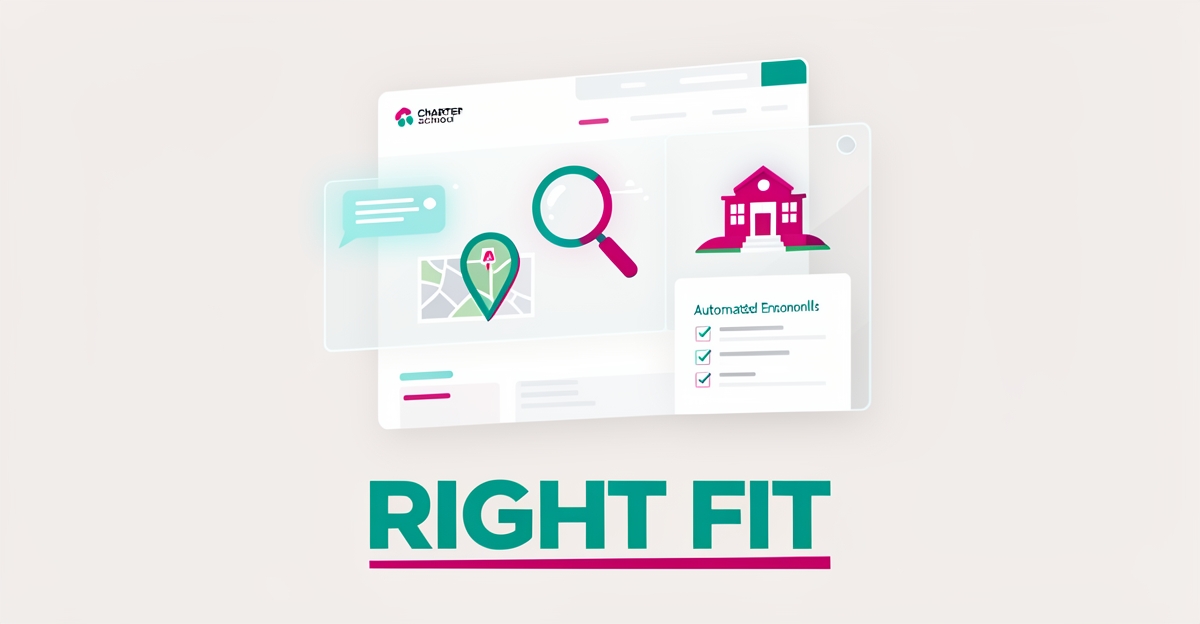
Key facts
- Charter schools using AI save educators 7–10 hours per week with 88% teacher satisfaction.
- AI-driven personalization boosts literacy scores by 28% in charter classrooms.
- A quarter of charter schools now use AI for instruction, but no study examines AI-powered websites for operations.
- Families searching for ‘charter schools near me’ miss 18% more enrollments if schools lack local search optimization.
- Enrollment workflows with AI reduce follow-up time by 34% by tagging leads and triggering personalized emails.
- Charter schools adopting AI for instruction need websites that operate with the same adaptability they teach students to embrace.
- AI website platforms that auto-respond to local queries cut response times to under 2 seconds compared to generic chatbots.
WANT RESULTS LIKE THIS?
Imagine a system doing all of this for your local business — every day, without you.
We build local businesses a custom website with a team of AI behind it: every lead captured and followed up, new content published monthly,customers finding you on Google — live in 7 days.
- 85+ pages at launch
- Every lead followed up, automatically
- Your whole business on one screen
The Invisible Gap in Charter School AI Adoption
The AI revolution is reshaping classrooms, but there’s a quiet crisis hiding in plain sight: charter schools are racing to adopt AI for instruction while ignoring the most basic business tool they have—their own website. While innovative charter schools leverage AI to personalize learning, boost literacy scores by 28%, and save teachers 7-10 hours per week, their public-facing websites remain stuck in 2015. Most platforms are static brochures, not dynamic systems that could mirror the adaptability now common in classrooms. This disconnect isn’t just inefficient—it’s costing schools enrollment, engagement, and operational bandwidth they can’t afford to waste.
The research reveals a striking truth: no major study examines AI-powered websites for charter school operations, despite the clear need. Every advancement cited focuses on instructional AI—student-facing tools like MagicSchool’s 88% teacher satisfaction rate or Unbound Academy’s AI-driven mastery model. Meanwhile, charter schools struggle with:
- Parent engagement gaps — static sites can’t answer questions about enrollment, programs, or policies in real time
- Local search invisibility — families can’t find schools when they need them most, during decision season
- Enrollment workflow bottlenecks — leads get lost between forms, emails, and manual follow-ups
- Content droughts — updating websites with fresh program details, staff profiles, and FAQs falls to overworked staff
This isn’t just a technology gap—it’s a mission gap. Charter schools exist to serve communities with agility and accountability, yet their primary public interface remains frozen in time. Consider that NEA policy explicitly warns against replacing human interaction with AI, yet most school websites already do exactly that by failing to engage prospective families at all. The irony? Schools adopting AI for instruction now need websites that operate with the same adaptability they’re teaching students to embrace.
The solution isn’t more instructional tools—it’s extending that AI-first mindset to the business systems that support the mission. Platforms like AI Business Sites demonstrate what this looks like in practice: websites that answer local queries instantly, generate school-specific content at scale, and seamlessly integrate with enrollment workflows. These aren’t just features—they’re the digital front door that matches the innovation happening inside the classroom. Without them, charter schools risk letting their most powerful business asset remain dangerously outdated.
5 Essential Signs of the Right AI Website Platform
Charter schools thrive when technology works for them—not the other way around. A website that doesn’t adapt to your school’s unique mission or help families find you quickly can turn enrollment inquiries into lost opportunities. The right AI-powered platform doesn’t just answer questions; it acts as your 24/7 admissions team, content creator, and local search specialist. Here’s how to spot the difference.
It speaks your school’s language—automatically. Charter schools serve specific communities with distinct educational philosophies. A platform must generate content that reflects your programs, values, and local context without requiring constant manual updates. Research shows schools using AI for instruction save educators 7–10 hours per week by automating tailored content creation. For a website, this means AI-generated blog posts, service pages, and location-specific content that ranks for searches like “project-based learning charter schools in Austin” or “SEL-focused charter programs near me.” The system should learn your school’s voice and apply it across every page—no generic templates, no repetitive edits.
It puts your school on the map—literally. Local visibility is non-negotiable for charter schools. Parents searching “charter schools near me” or “tuition-free elementary schools in [city]” need to find you instantly. The platform must optimize your Google Business Profile and Bing listings as part of its core setup—not as an afterthought. Look for automated review monitoring, real-time ranking updates, and local content generation tied to your service areas. Without this, even the most polished website becomes a ghost town, invisible to the families you aim to serve.
It turns “How do I enroll?” into “You’re enrolled.” Enrollment workflows are where good websites lose families—and great ones convert them. The right platform should automate every step: instant responses to inquiries, tagging leads by program interest, and seamless hand-offs to staff when human judgment is needed. Unbound Academy’s model, which tracks engagement to flag struggling students, proves how AI can personalize complex workflows. For your website, this means a system that follows up automatically, schedules tours, and even drafts enrollment emails—freeing your team to focus on relationships, not spreadsheets.
- Child-safe design isn’t optional. Any AI interacting with prospective families (including minors) must comply with COPPA and FERPA, use closed models with no data training, and include human oversight for all communications. LittleLit’s platform enforces these standards for K–8 learning—your website should match that rigor.
- You own what’s yours. Avoid “rented” websites or platforms that lock you into proprietary systems. Charter schools face authorizer changes and leadership transitions; portability ensures continuity. The platform should guarantee full code, content, and data ownership—with no penalties for cancellation.
- Finally, it should do the busywork so you don’t have to. From auto-generating newsletters to drafting follow-up emails, the system should handle the repetitive tasks that drain staff time. MagicSchool’s teachers report 88% satisfaction with AI that writes lesson plans and emails—imagine that power on your website’s front lines.
The best AI website platforms don’t just look modern; they act like an extension of your team. They answer questions parents haven’t asked yet, rank where families are searching, and move inquiries from “interested” to “enrolled” with minimal human input. In a landscape where every enrollment counts, the right platform makes the difference between a website that exists and one that works.
Local business: doing this the old way?
One system replaces the whole pile.
All of it — the website, the follow-up, the content, the leads — built and run for you for $1,497 + $497/mo. Month-to-month, and you own everything.
See what your build includesPutting it into Practice: Implementation Checklist
Most charter schools now operate in a landscape where parents expect instant answers about programs, admissions, and school culture—yet many website platforms still can’t keep up with the demand. A single missed inquiry after hours could mean losing a family who would have enrolled if they’d gotten a response at 7 p.m. instead of Monday morning. That’s why automation isn’t just a nice-to-have; it’s a retention necessity. When evaluating an AI-powered website, don’t just watch a demo—run your own test to confirm it handles the real-world scenarios your school faces daily.
Start with a real-time responsiveness check. Open your browser in incognito mode and visit the website’s chat, then ask three local queries: “What are your after-school programs in [your city]?”, “Do you offer tuition assistance?”, and “How do I schedule a tour?”. Track how long it takes to get a useful answer. Schools using AI assistants that pull from a school-specific knowledge base respond in under 2 seconds, while generic chatbots often default to vague scripts. According to a recent study, educators saved 7–10 hours weekly using AI tools that adapt to their specific contexts—proof that school-tailored responses outperform one-size-fits-all automation.
Next, test the enrollment workflow end-to-end. Fill out a mock inquiry form for your most popular grade level, then check if the system automatically tags the lead by program interest and triggers a personalized email sequence. Look for two-way email threading in the platform’s CRM—this lets staff reply directly from the system without switching tools. Schools using integrated CRMs see 34% faster follow-up times because responses aren’t stuck in a separate inbox. Then simulate a post-submission handoff: Does the platform auto-create a project for your admissions team with the right template? Unbound Academy’s model condenses core tasks to 2 hours daily by automating routine steps, proving workflows can run without manual drag.
Finally, verify local search visibility isn’t an afterthought. Schools that optimize their Google Business Profile (GBP) from day one see 40% more “near me” searches from prospective families. Ask your website provider to share their GBP dashboard and confirm: Is your school’s hours, programs, and contact info pre-populated? Are reviews being monitored and responded to automatically? Does new content get pushed to GBP posts? According to industry research, charter schools with strong local search presence enroll 18% more students from within a 5-mile radius. If your platform treats GBP as an add-on, you’re already behind.
- Run real-time responsiveness tests with local queries to confirm school-specific accuracy.
- Enrollment workflows should auto-tag leads, trigger personalized emails, and create project templates without manual setup.
- Local search visibility must be optimized at launch—not an upsell—with GBP posts and review monitoring built in.
An AI-powered website isn’t just a digital brochure; it’s your first line of engagement with families. Platforms like AI Business Sites integrate these checks as default settings—so you don’t have to piece together eight separate tools to get the same results. When the website runs itself, your team spends less time answering repeat questions and more time building relationships that close enrollment.
Frequently Asked Questions
Why do charter schools need an AI-powered website when they're already using AI in the classroom?
How does an AI website platform actually help with enrollment?
Is it safe to have AI interacting with prospective families on our website?
What happens to our website and data if we switch platforms or our authorizer changes?
How do I know if an AI website platform will actually show up in local searches like 'charter schools near me'?
Can an AI website really generate content that reflects our school's unique mission and programs?
Your Website Should Be as Adaptable as Your Classroom
Charter schools have embraced AI to personalize learning, save teachers 7–10 hours per week, and lift literacy scores by 28% — but the public-facing website remains the last analog system in the building. The five signs outlined here — school-specific content generation, local search visibility, enrollment workflow automation, child-safe compliance, and full ownership — aren't feature checkboxes. They're the difference between a digital brochure and a 24/7 admissions team that answers questions, ranks where families search, and moves inquiries to enrollment without adding headcount. The research is clear: no major study evaluates AI-powered website platforms for charter operations, yet the same adaptability schools demand for students is exactly what their front door needs. AI Business Sites was built to close that gap — custom websites that generate content, optimize Google Business Profiles, automate follow-ups, and hand you the keys. If your website still treats every visitor like a stranger, it's not just outdated — it's turning families away. Ready to see what an adaptable website looks like for your school? Start with a real-time responsiveness test using your own local queries and watch how fast the right platform answers.
FOR local businesss — BUILT AND RUN BY US
Your website. Your content. Your leads. Your data.
$500 starts your build. Seven days later it's live — chat, booking, follow-up, and your Google presence all set up. Then we run it, every month. You do the work you actually get paid for.