
Key facts
- Average annual family spending per child in youth sports reached nearly $1,500 in 2024 — a 46% increase since 2019 that runs twice the rate of inflation according to Project Play survey data
- Youth sports participation hit 58% in 2024 with 27.3 million kids ages 6–17 playing, yet CORE committed participation remains below 2019 levels per Buying Sandlot analysis
- Parents spend 3+ hours daily managing their child's sports logistics and use 10-point checklists to evaluate programs via Project Play frameworks
- Basketball costs surged 105% over five years while soccer rose 69% and baseball 68% per Project Play spending survey
- 53% of youth sports participation occurs on community-based teams while only 15% is on elite club teams according to participation data
- The average number of sports played per person dropped to 1.73 — the lowest in a decade per SFIA industry report
- Urban families spend $1,628 annually per child on sports versus $924 for rural families — a 76% gap per Project Play survey
WANT RESULTS LIKE THIS?
Imagine a system doing all of this for your local business — every day, without you.
We build local businesses a custom website with a team of AI behind it: every lead captured and followed up, new content published monthly,customers finding you on Google — live in 7 days.
- 85+ pages at launch
- Every lead followed up, automatically
- Your whole business on one screen
The Hidden Costs of a Frictional Website
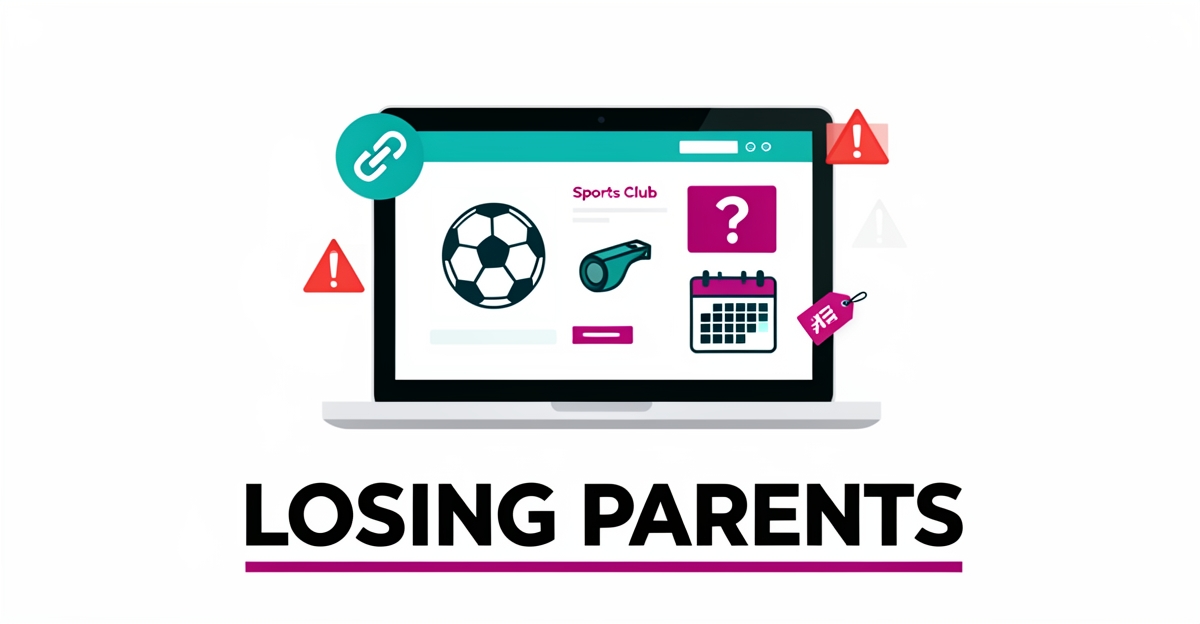
The financial stakes for youth sports families have never been higher. Average annual spending per child has reached nearly $1,500 — a 46% increase since 2019 that runs twice the rate of inflation. When parents land on a club website, they aren't browsing casually; they're evaluating a major household expense against a 10-point checklist covering cost, schedule, safety, and coach quality. Every buried detail — practice times hidden in a PDF, pricing that requires a phone call, coach credentials nowhere to be found — forces a time-pressed parent to choose between digging deeper or moving to the next club.
Parents already spend 3+ hours daily managing their child's sports logistics. They don't have bandwidth to navigate complex menus or decode vague program descriptions. A 58% participation rate means more families are searching, but the industry still struggles to convert casual interest into committed registration. Friction points that seem minor to club administrators — an extra click, a missing FAQ, a schedule that only appears after account creation — compound into lost enrollments at scale.
- Schedules buried in downloadable files instead of displayed on program pages
- Pricing that omits uniforms, equipment, travel, and tournament fees
- Coach certifications and safety protocols hidden behind generic bios
- Program type (community vs. travel) and weekly time commitment left undefined
- No instant way to get answers — parents wait days for an email reply
These gaps mirror exactly what parents interrogate when they use Project Play's evaluation frameworks. A modern website from AI Business Sites eliminates this friction by organizing critical information clearly and deploying an interactive AI assistant that answers questions instantly — "What's the all-in cost for U12 soccer?" or "When are practices for my 9-year-old?" — then guides parents directly to the right registration page. The result: fewer abandoned visits, better-fit families, and higher enrollment rates without adding administrative burden.
Decoding Parent Decision-Making: Insights from Youth Sports Research
Parents evaluating youth sports programs aren't browsing casually — they're making high-stakes decisions under serious time and financial pressure. With families spending nearly $1,500 per child annually — a 46% increase since 2019 that doubles the inflation rate — every unanswered question on a club website becomes a reason to keep looking. Parents already dedicate 3+ hours daily to their child's sports logistics, so they approach program research with a checklist mindset, not curiosity.
Research from the Aspen Institute's Project Play confirms this behavior: parents use structured 10-point checklists per age group that demand clarity on coach training, safety protocols, total cost, time commitment, and program philosophy. They're not guessing what matters — they're systematically comparing programs against frameworks built by 300+ expert contributors. When a website buries the practice schedule in a PDF, hides the all-in price behind a "contact us" form, or lists coach bios without certifications, it fails the very criteria parents are scoring.
- Coach credentials and background-check status visible on program pages
- All-in pricing tables that include uniforms, equipment estimates, and travel fees
- Practice days, game windows, and season dates above the fold — not in downloads
- Clear program-type labels (community rec vs. travel) with weekly hour commitments
- Safety protocols (concussion policy, emergency action plan) one click from the homepage
This is where a modern website from AI Business Sites changes the dynamic. Instead of forcing parents to hunt through navigation menus, an AI assistant trained on the club's actual schedules, pricing, coach bios, and policies answers questions instantly — "What's the total cost for U12 soccer?" or "Are all coaches SafeSport certified?" — and guides the parent directly to the right registration form. The same assistant captures after-hours inquiries, follows up automatically, and ensures no lead slips away because a question went unanswered at 9 p.m. on a Sunday.
The participation data underscores why this matters: 58% of youth played sports in 2024, yet CORE (committed) participation remains below 2019 levels across most team sports. Parents are visiting. They're evaluating. The clubs that convert them are the ones that answer the checklist before the parent has to ask.
Local business: doing this the old way?
One system replaces the whole pile.
All of it — the website, the follow-up, the content, the leads — built and run for you for $1,497 + $497/mo. Month-to-month, and you own everything.
See what your build includesStreamlining to Success: 5 Data-Driven Website Adjustments
Parents don't abandon youth sports club websites because they're uninterested — they leave because the information they need to make a $1,500 decision is buried, vague, or missing entirely. With participation at 58% in 2024 and average annual spend per child nearing $1,500 — a 46% jump since 2019 — families are scrutinizing every detail before they commit.
- Surface schedules above the fold — not in PDFs. Parents spend 3+ hours daily on sports logistics and need practice days, game windows, and season dates instantly scannable on program pages.
- Publish all-in pricing — registration, uniforms, equipment estimates, travel, and tournament fees in one table. Sticker shock kills conversions when hidden costs appear at checkout.
- Display coach credentials and safety protocols directly on bios. Parents use structured checklists demanding proof of background checks, SafeSport certification, and concussion protocols before they trust a program.
- Label program type and commitment level clearly — "Community Rec: 1 practice + 1 game/week, local travel" vs. "Travel: 2–3 practices, regional tournaments, tryout required." With 53% of participation on community teams and only 15% on elite clubs, clarity attracts the right families.
- Deploy an AI assistant trained on your club's actual knowledge base to answer questions 24/7 and guide parents to the correct registration form — "Based on your child's age (8) and interest (low-travel soccer), here's the U9 Community schedule, cost, and sign-up link."
These adjustments mirror how parents already evaluate programs: through structured checklists, expert validation, and a need for speed. A modern website from AI Business Sites organizes this information natively and uses an interactive AI assistant to turn questions into registrations — capturing the leads that slip away when no one's watching.
Frequently Asked Questions
What are the most common reasons parents abandon a youth sports club website before registering?
How much do families typically spend on youth sports per child each year?
Why is schedule transparency so important for youth sports club websites?
What information do parents look for when evaluating a youth sports program online?
How can an AI assistant on a youth sports club website improve registration rates?
Is it better to label youth sports programs as 'community' or 'travel' on a club website?
Turn Website Friction into Registration Momentum
When parents visit your youth sports club website, they're not just browsing — they're weighing a significant investment of time and money against a detailed checklist of what matters most: clear schedules, transparent pricing, verified coach credentials, and program fit. Every buried detail or unanswered question pushes them toward the next option. By surfacing critical information upfront and using an AI assistant trained on your club’s actual data to answer questions instantly and guide families to registration, you remove friction, build trust, and convert more visitors into committed participants. The result isn’t just higher enrollment — it’s better-matched families and less administrative strain. Ready to see how a smarter website can work for your club? Explore what AI Business Sites can build for you.
FOR local businesss — BUILT AND RUN BY US
Your website. Your content. Your leads. Your data.
$500 starts your build. Seven days later it's live — chat, booking, follow-up, and your Google presence all set up. Then we run it, every month. You do the work you actually get paid for.