
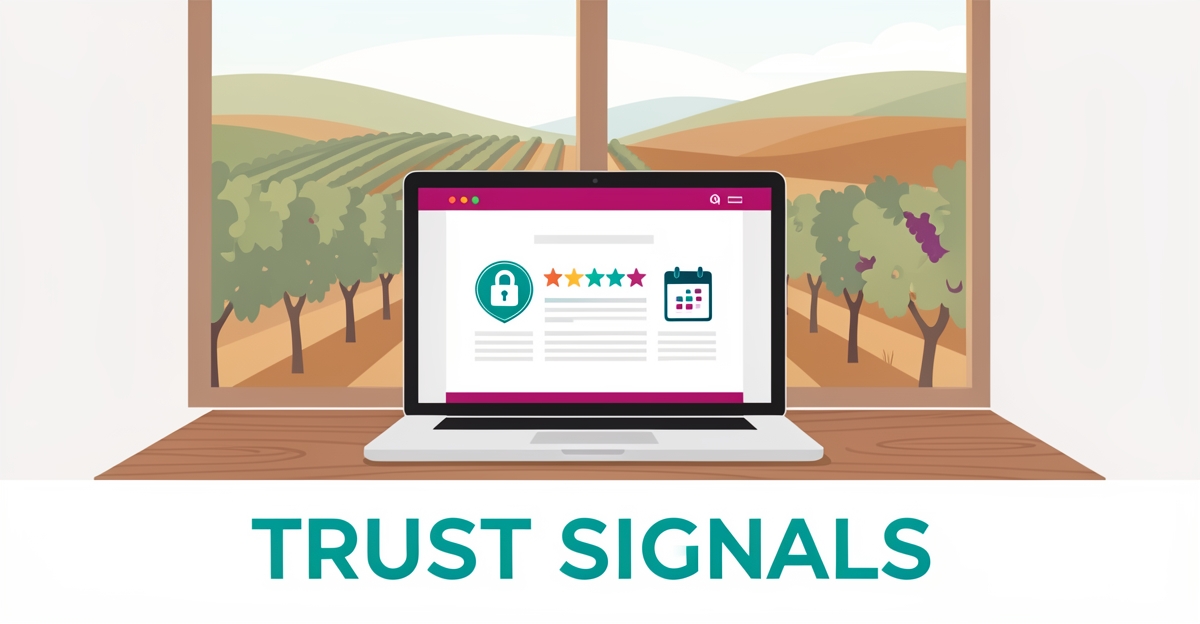
Key facts
- 71% of consumers read online reviews for local businesses before making a decision according to Best Version Media
- 85% of shoppers avoid unencrypted websites entirely per PageCloud research
- 60% of users will not trust a company without mobile optimization according to Best Version Media
- 32% increase in bounce likelihood occurs with just a 1-3 second page load delay per TrustSignals data
- 75% of website visitors trust brands with .com domains more according to TrustSignals
- Outdated content signals operational illegitimacy — aim for at least one new piece weekly per Orientation Agency
- Trust progression is hierarchical — skipping levels causes visitors to leave before reaching booking forms according to Nielsen Norman Group
WANT RESULTS LIKE THIS?
Imagine a system doing all of this for your local business — every day, without you.
We build local businesses a custom website with a team of AI behind it: every lead captured and followed up, new content published monthly,customers finding you on Google — live in 7 days.
- 85+ pages at launch
- Every lead followed up, automatically
- Your whole business on one screen
Why Vineyard Visitors Hesitate to Book
A potential guest lands on your vineyard website, intrigued by the promise of a weekend tasting, but something holds them back. They cannot find when harvest begins, there is no story about the family behind the vines, and the booking page lacks the small details that signal a real, operating business. That hesitation is not unique — it is the trust gap that stops bookings before they start.
Research shows that 71% of consumers read online reviews for local businesses before making a decision, and 85% of shoppers avoid unencrypted sites entirely. For vineyards, where the experience is personal and the purchase is often planned weeks in advance, those baseline trust signals are only the beginning. Visitors also look for harvest schedules that prove the vineyard is active, origin stories that create emotional connection, and transparent operational details like tour times, group limits, and cancellation policies. When those elements are missing, the site feels like a brochure rather than a living business.
- No current harvest or crush schedule posted
- Generic "About Us" page with no family or founder story
- Booking forms that do not explain what happens after submission
- Outdated event listings or blog content older than six months
- Missing photos of the actual tasting room, vineyard rows, or staff
These gaps create uncertainty, and uncertainty kills conversions. The Nielsen Norman Group notes that trust progression is hierarchical — skipping levels causes visitors to leave. AI Business Sites helps vineyards close those gaps by weaving authentic, locally rooted narratives into the website through an AI content engine that researches, writes, and publishes fresh harvest updates, vineyard stories, and educational pieces every month. The result is a site that feels alive, trustworthy, and worth booking.
The 5 Trust Signals Your Vineyard Site Is Missing
Most vineyard websites don't lack beauty — they lack believability. Visitors arrive curious and leave unconvinced because the site never answers the quiet questions: Is this place real? Is it open? Do people actually enjoy it?
Trust builds in layers. Nielsen Norman Group research shows that trust progression is hierarchical — skipping levels causes visitors to leave before they ever reach a booking form. The gaps below are the ones vineyard sites miss most often.
- Absent harvest schedules and seasonal transparency — no clear calendar of picking, pressing, or release dates
- Missing authentic vineyard narratives — no founding story, no winemaker voice, no sense of place
- Lack of social proof — zero reviews, testimonials, or guest photos despite 71% of consumers reading online reviews for local businesses
- Poor mobile experience — 60% of users will not trust a company without mobile optimization
- Outdated content signaling operational illegitimacy — aim for at least one new piece of content weekly to show the vineyard is alive
Each gap compounds the next. A beautiful desktop site that breaks on mobile loses credibility instantly. A site with no harvest calendar feels like a hobby, not a destination. And without reviews or fresh content, visitors assume the experience isn't worth their time — or worse, that the business isn't operating at all.
AI Business Sites builds vineyard websites that close these gaps by design. The platform generates seasonal content automatically, structures authentic narratives around your actual harvest calendar, and surfaces social proof where it matters most — so your site doesn't just look trustworthy, it proves it.
Local business: doing this the old way?
One system replaces the whole pile.
All of it — the website, the follow-up, the content, the leads — built and run for you for $1,497 + $497/mo. Month-to-month, and you own everything.
See what your build includesHow Authentic Narratives Build Emotional Connection
How Authentic Narratives Build Emotional Connection
Visiting a vineyard's website is often the first step in a potential customer's journey, but for many, it's also the last due to a lack of trust signals. Among these trust signals, authentic narratives stand out as a pivotal element in building emotional connections with visitors. However, before delving into the depths of storytelling, a website must first establish baseline trust through security and mobile optimization.
Laying the Foundation: Baseline Trust
- Security First: Ensuring a vineyard website is HTTPS encrypted is fundamental, as 85% of shoppers avoid unencrypted sites source. This foundational trust signal is non-negotiable in today's digital landscape.
- Mobile Optimization: With 60% of users less likely to trust a company without mobile optimization source, vineyards must prioritize responsive design to cater to the majority of their audience.
Ascending the Trust Hierarchy: Authentic Narratives
Once the foundation is set, authentic narratives can begin to weave their magic:
- Vineyard Stories and Family History: Sharing the vineyard's origins, challenges, and successes humanizes the brand. Trust signals like these reduce visitor uncertainty source, encouraging deeper engagement.
- Harvest Transparency: Regularly updated harvest schedules and educational content (e.g., on grape varieties, sustainable practices) not only inform but also engage visitors, signaling operational legitimacy.
- AI-Generated, Locally Rooted Content: Leveraging AI content engines, vineyards can efficiently produce and update narratives, ensuring content freshness (a signal of legitimacy, as outdated content deters trust) source. AI can generate:
- Weekly harvest schedule updates
- In-depth educational pieces on winemaking processes
- Personal stories of the vineyard's family and team
The Role of AI in Scaling Authenticity
- Efficiency Without Sacrificing Authenticity: AI content engines can research and publish locally rooted narratives at scale, maintaining the personal touch that resonates with visitors.
- Dynamic Content Strategy: By integrating AI-generated content into a broader strategy, vineyards ensure a consistent flow of fresh, engaging narratives, further bolstering trust and emotional connection.
Key Takeaways for Vineyard Websites
- Embed Authentic, AI-Generated Narratives to build emotional connections.
- Ensure Baseline Trust through HTTPS and mobile optimization.
- Keep Content Fresh with at least one new piece of content weekly to signal operational legitimacy.
By understanding and implementing this hierarchical approach to trust building, vineyards can transform their websites from mere informational hubs into engaging, trustworthy platforms that foster lasting connections with their audience.
From Trust Signals to Booked Tours: Implementation Roadmap
Trust gaps don't close themselves — they require a systematic approach that moves from audit to automation. Start by mapping your current site against the five trust signals: security, mobile experience, social proof, fresh content, and authentic storytelling. Research shows 85% of shoppers avoid unencrypted sites, making HTTPS and mobile optimization the non-negotiable foundation before any content strategy can take hold https://www.pagecloud.com/blog/build-trust-with-your-website. Without this baseline, even compelling vineyard stories struggle to convert.
- Audit current pages against all five trust signals and document every gap
- Implement HTTPS site-wide and verify mobile responsiveness across devices
- Set up automated review collection with prominent display on tour and booking pages
- Build a content calendar anchored to harvest schedules, vineyard stories, and seasonal events
- Configure automated content updates so the site never signals abandonment
Each step ties directly to measurable conversion improvements. With 71% of consumers reading online reviews for local businesses, integrating review collection and display creates immediate social proof on high-intent pages https://www.bestversionmedia.com/why-trust-signals-are-the-missing-link-on-most-local-business-websites/. A content calendar built around harvest schedules and vineyard stories addresses the trust signal that visitors crave most — authenticity that signals operational legitimacy. Research from Nielsen Norman Group confirms trust progression is hierarchical; skipping levels causes visitors to leave before they ever reach a booking form https://www.orientation.agency/insights/20-ways-to-build-trust-with-your-website-visitors.
The final piece is automation that sustains the system. Outdated content signals operational illegitimacy — aim for at least one new piece of content weekly to maintain trust momentum https://www.orientation.agency/insights/20-ways-to-build-trust-with-your-website-visitors. AI Business Sites builds this automation into the website itself, so harvest updates, event announcements, and vineyard stories publish on schedule without manual effort. The result: a site that continuously earns trust and converts visitors into booked tours, not because of a one-time fix, but because the system never stops reinforcing credibility.
Frequently Asked Questions
Why do visitors leave my vineyard website without booking a tour?
What trust signals matter most for a vineyard website?
How does outdated content hurt my vineyard's credibility?
Can AI-generated content feel authentic for our vineyard's story?
Do I need reviews on my vineyard website if we have a beautiful site?
Is mobile optimization really that important for vineyard bookings?
Your Vineyard's Next Harvest Starts Online
Trust isn't built with a single page — it's earned through seasonal transparency, authentic stories, and the quiet proof that your vineyard is alive and welcoming guests today. The five gaps we covered — missing harvest calendars, generic narratives, absent reviews, broken mobile experiences, and stale content — each chip away at the confidence a visitor needs to book. Research from Nielsen Norman Group confirms that trust progresses in layers; skip one, and the booking never happens. But every gap is fixable, and the vineyards that close them don't just look more credible — they fill their tasting rooms. Start by auditing your site against those five signals, then build a content rhythm anchored to your actual harvest schedule and guest stories. 71% of consumers read online reviews for local businesses before deciding — make sure yours are visible, current, and impossible to miss. AI Business Sites builds websites that keep that rhythm going automatically, so your site stays as alive as the vines outside. Ready to turn trust into booked tours? Let's talk about what your website should be doing for you.
FOR local businesss — BUILT AND RUN BY US
Your website. Your content. Your leads. Your data.
$500 starts your build. Seven days later it's live — chat, booking, follow-up, and your Google presence all set up. Then we run it, every month. You do the work you actually get paid for.