
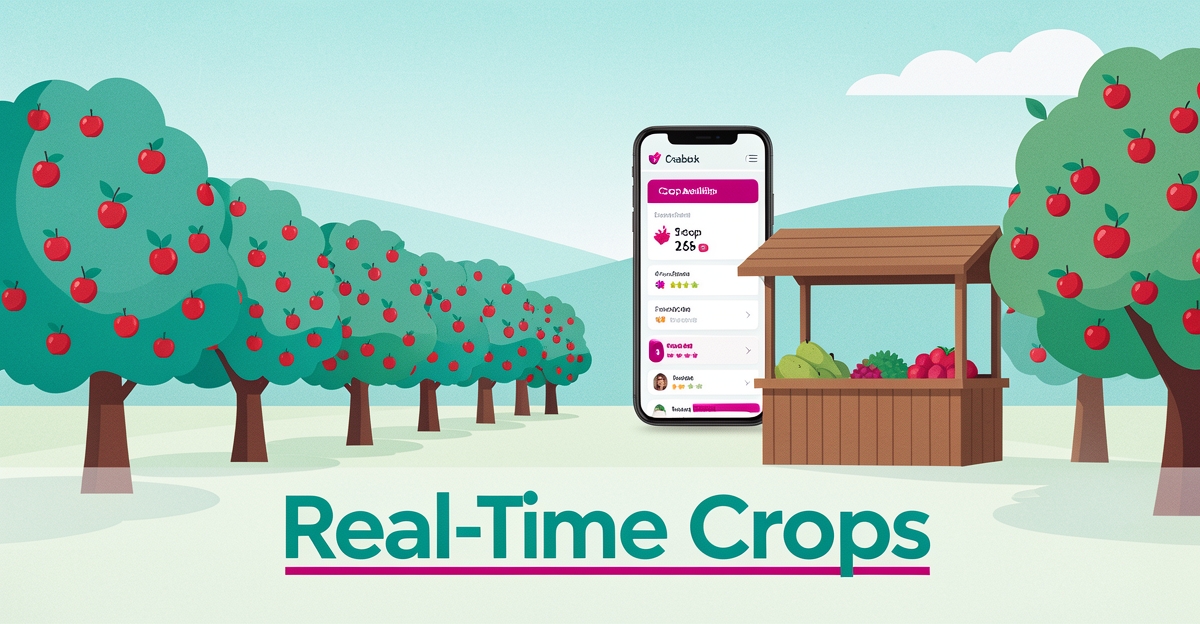
Key facts
- Only 5% of US apple orchards offer U-Pick operations, revealing vast untapped potential according to FoodPrint.org
- Fishkill Farms fills all 144 daily reservation slots within two weeks of opening, demonstrating high demand for clear availability per FoodPrint.org
- Weekday traffic at Tom's Farm Market became "busier than usual" due to pandemic-related shifts in customer behavior as reported by FoodPrint.org
- Strawberries go to waste if not picked within days, creating urgent timing pressures for U-Pick farms per Tom's Farm Market's Deanna Reeves
- Cedar Circle Farm's manual updates via Facebook or calls are "not scalable" for larger operations with multiple crops per FoodPrint.org
- Fishkill Farms had to stop people from entering due to overcrowding, even with a 144-slot reservation system per FoodPrint.org
- Cold chain excursion alerts require 1-minute latency to prevent irreversible product degradation in agriculture per IntelliFabric AI
WANT RESULTS LIKE THIS?
Imagine a system doing all of this for your local business — every day, without you.
We build local businesses a custom website with a team of AI behind it: every lead captured and followed up, new content published monthly,customers finding you on Google — live in 7 days.
- 85+ pages at launch
- Every lead followed up, automatically
- Your whole business on one screen
Customers Are Calling Instead of Checking Your Website (Because It’s Outdated)
Customers Are Calling Instead of Checking Your Website (Because It’s Outdated)
Imagine a customer eager to visit your U-Pick farm, only to find themselves on the phone, inquiring about the day's crop availability - a scenario all too familiar for farms like Cedar Circle Farm, which directs visitors to "check Facebook or call" for updates, an approach deemed "not scalable" for larger operations with multiple crops (FoodPrint.org). This reliance on static websites and manual communication channels forces customers into a cumbersome information-seeking process, leading to bottlenecks and missed opportunities.
The Static Website Conundrum
- Inefficient Communication: Farms like Fishkill Farms, with its 144 daily, 30-minute staggered reservation slots, still face the challenge of last-minute adjustments due to the inability of their system to dynamically update customers on crop availability in real-time (FoodPrint.org).
- Customer Frustration: Weekday traffic surges, as seen at Tom's Farm Market, highlight how static content fails to adapt to shifting customer behaviors, driving phone calls instead of website checks (FoodPrint.org).
- Scalability Issues: As Cedar Circle Farm's approach illustrates, manual updates via Facebook or phone calls are unsustainable for growing operations, leading to overcrowding and disappointed customers (FoodPrint.org).
The Numbers Speak
- Only 5% of US apple orchards offer U-Pick operations, suggesting a vast, untapped potential for those who adapt (FoodPrint.org).
- Daily Slot Fill Rates: Fishkill Farms' fully booked daily slots within two weeks of opening underscore the demand for clear, real-time communication to manage expectations (FoodPrint.org).
- Weekday Surge: Tom's Farm Market's unusual weekday busyness due to pandemic-induced behavioral shifts emphasizes the need for dynamic website updates to match fluctuating demand (FoodPrint.org).
Breaking the Cycle with Real-Time Updates
To alleviate these challenges, consider the following strategies:
- Implement AI-Generated Dynamic Crop Displays to provide percentage-based availability updates (e.g., "Only 30% of strawberries left!"), reducing overcrowding and boosting trust.
- Integrate Real-Time Weather Impact Alerts with crop updates to preempt last-minute changes, ensuring customers are always informed.
- Deploy Automated Perishability-Driven Urgency Notifications for time-sensitive crops like strawberries to prevent waste and encourage timely picking.
The Path Forward
By transitioning from static to dynamic, AI-driven website content, U-Pick farms can significantly reduce the influx of informational calls, streamline customer communication, and enhance the overall picking experience. As the IntelliFabric Team aptly puts it, "Real-time only creates value if it drives an alert or action" (IntelliFabric AI), emphasizing the need for farms to embrace technology that matches the perishable nature of their products.
AI Business Sites, with its capability to generate and publish real-time updates automatically, offers a tailored solution for U-Pick farms to keep customers engaged without the operational overhead, ensuring that every customer inquiry meets with timely, accurate information - on the website, not on the phone.
Your Website Can’t Handle Sudden Demand Shifts (Like Busy Weekdays or Peak Harvest)
Your Website Can’t Handle Sudden Demand Shifts (Like Busy Weekdays or Peak Harvest)
A sudden influx of visitors on a weekday or during peak harvest season can overwhelm a static U-Pick farm website, leading to frustrated customers and lost opportunities. According to FoodPrint.org, the COVID-19 pandemic has shifted customer behaviors, making weekdays "busier than usual" for farms like Tom's Farm Market, where manual communication channels struggle to keep up. This phenomenon highlights the inadequacy of static websites in adapting to fluctuating demand patterns.
The Static Website Bottleneck
Farms relying on manual updates, such as directing visitors to "check Facebook or call" for daily picking conditions (as seen with Cedar Circle Farm), face scalability issues. These methods cannot respond in real-time to demand surges or crop availability changes, often resulting in overcrowding or disappointed customers. For instance, Fishkill Farms' reservation system, despite offering 144 daily slots, still required last-minute adjustments due to simultaneous crop ripening, underscoring the need for more dynamic systems.
The Need for Automated, Scalable Solutions
To mitigate these issues, U-Pick farms require websites equipped with automated systems that can dynamically scale communication. This involves integrating AI-generated real-time crop updates, weather impact alerts, and perishability-driven notifications. Such systems can notify customers of availability changes instantly, manage demand fluctuations, and prevent crop waste. For example, integrating real-time updates could have helped Fishkill Farms avoid last-minute switches to "pick-your-own package" arrangements.
Key Statistics Highlighting the Challenge:
- Weekday Surge: Weekdays have become unexpectedly busy for U-Pick farms due to pandemic-related behavior shifts (FoodPrint.org).
- Scalability Limitation: Manual communication methods (e.g., Facebook updates, phone calls) are identified as "not scalable" for larger operations with multiple crops (FoodPrint.org).
- Perishability Pressure: Strawberries, for example, "go to waste if people don't pick them" (FoodPrint.org), emphasizing the urgency of timely updates.
Implementing Dynamic Solutions
To address these challenges, consider the following:
- AI-Driven Crop Updates: Automatically reflect crop availability and encourage visits during less busy periods.
- Integrated Weather Alerts: Notify customers of weather impacts on crop picking in real-time.
- Scalable Communication Systems: Replace manual updates with automated, dynamic systems to handle demand surges efficiently.
By embracing these solutions, U-Pick farms can transform their websites into adaptive, customer-centric platforms that thrive amidst fluctuating demand patterns, ensuring both operational efficiency and enhanced customer satisfaction. AI Business Sites, with its expertise in building custom, self-managing websites, can help U-Pick farms implement such dynamic systems, aligning technology with the unique demands of agricultural operations.
You’re Losing Crops to Waste (Because No One Knows What’s Ready to Pick)
You’re losing crops—and revenue—because customers arrive expecting ripe berries that are already gone. At Tom’s Farm Market, strawberries don’t wait for the weekend: they go to waste if not picked within days, not weeks. Deanna Reeves put it plainly: “Strawberries are perishable and if people don’t pick them, they go to waste.” That’s not just lost fruit—it’s missed sales, disappointed families, and empty weekend slots that could have been filled by visitors who turned away after seeing “Sold Out” on the website.
The problem isn’t demand. It’s timing. Fishkill Farms saw its strawberry reservations fill within two weeks of opening, and when multiple crops ripened at once, the team had to pivot to “pick-your-own packages” because individual crop reservations couldn’t keep up. Meanwhile, weekdays have quietly become the new peak as families seek outdoor activities—Tom’s Farm Market reports weekdays are now “busier than usual.” A static website can’t adapt to sudden ripeness surges or shifting demand windows, so customers arrive to find nothing ready, and farms lose both produce and trust.
Here’s what happens when your website doesn’t speak to the harvest today:
- Customers show up expecting abundance, but the field is bare. A “Last Updated: 2 Weeks Ago” banner tells visitors nothing about current ripeness, and they leave empty-handed—and empty-pocketed.
- Your picking schedule fills fast, but the website still says “Open for Picking.” By the time visitors notice the mismatch between your static page and the reality in the field, your best crops have already spoiled.
- Weather shifts ripeness overnight, but your blog post still says “Peak Season!” Sudden heat or rain can accelerate harvest by 48 hours—yet your website stays silent, leaving customers to arrive at the wrong time.
- Overcrowding becomes a safety risk when word spreads that “something is ready.” Fishkill Farms has had to “stop people from coming into the market” because the crowds overwhelmed the space—all because their reservation system couldn’t adapt to real-time demand.
- You lose repeat visitors who once loved your farm, but now assume everything is always picked clean. A website that never updates its crop status silently trains customers to assume your berries are always gone—and they stop trying.
Farms using manual updates—Facebook posts, phone trees, and “call for today’s status”—can’t keep pace. Cedar Circle Farm admits its updates “are not real-time and do not scale” for larger operations with multiple crops. The result? Customers arrive to find empty rows, and farms lose what they can’t store: fresh produce and future visits. A website that updates in real time—powered by AI that pulls harvest data, weather alerts, and ripeness trends—doesn’t just prevent waste. It preserves the customer relationship before it’s lost to silence.
Local business: doing this the old way?
One system replaces the whole pile.
All of it — the website, the follow-up, the content, the leads — built and run for you for $1,497 + $497/mo. Month-to-month, and you own everything.
See what your build includesYour Reservation System Can’t Adapt to Last-Minute Changes (Like Overcrowding or Ripening Surges)
A reservation system with 144 daily slots staggered every 30 minutes sounds precise — until nature ignores the schedule. Fishkill Farms discovered this when multiple crops ripened simultaneously, forcing them to abandon individual crop reservations and switch to "pick-your-own packages" where customers take the best of what's available that day. Their marketing manager admitted they've had to stop people from entering the market entirely because overcrowding became unmanageable, even with the reservation system in place.
The problem isn't the reservation structure — it's the disconnect between fixed time slots and living crop conditions. When strawberries are perishable and "go to waste if people don't pick them," as Tom's Farm Market noted, a static calendar can't communicate urgency. Weekday traffic surged unexpectedly as families sought outdoor activities, creating demand patterns no predetermined schedule could anticipate. Cedar Circle Farm's approach of directing visitors to "check Facebook or call" for daily conditions was explicitly called "not scalable" for operations juggling multiple crops.
Real-time crop updates bridge this gap by feeding live field data directly into the booking experience. Instead of discovering at check-in that cherries are gone but blueberries are peaking, customers see current availability before they reserve. This shifts the conversation from "your slot is confirmed" to "here's what's actually ready right now" — reducing disappointment, preventing overcrowding at exhausted patches, and moving perishable inventory before it's lost.
- Reservation systems manage people, not crop biology — they can't adapt when harvest timing shifts
- Overcrowding at picked-over fields damages both customer experience and remaining crops
- Perishable crops create revenue loss windows that static schedules can't address
- Manual updates via social media don't scale across multiple crop varieties
- Integrated real-time data lets customers self-select based on actual field conditions
AI Business Sites builds websites that connect these dots automatically — pulling real-time availability into the booking flow so your reservation system reflects what's actually happening in the field, not what you hoped would happen when you set the schedule.
Your Competitors Are Already Automating Updates (And Stealing Your Customers)
Your Competitors Are Already Automating Updates (And Stealing Your Customers)
In the highly competitive U-pick market, where only 5% of US apple orchards offer pick-your-own operations, real-time crop updates are no longer optional—they're essential for survival. Farms relying on static website content or manual Facebook posts are losing customers to competitors who automate availability alerts, weather impacts, and harvest changes. This gap creates frustration when visitors arrive expecting ripe strawberries only to find picked-over fields, damaging trust and driving them to farms with accurate, timely information.
Research shows this problem is widespread and costly. Cedar Circle Farm directs visitors to "check Facebook or call" for daily picking conditions—a method experts explicitly call "not scalable" for operations with multiple crops. Similarly, Fishkill Farms manages 144 daily reservation slots but still faces last-minute overcrowding, forcing staff to turn people away when demand exceeds capacity. These manual systems fail to match fluctuating weekday traffic, which Tom's Farm Market confirmed was "busier than usual" due to pandemic-related shifts in customer behavior.
The consequences extend beyond disappointed visitors. Perishable crops like strawberries create urgent timing pressures—Deanna Reeves of Tom's Farm Market warned that "if people don't pick them, they go to waste." Without automated triggers that signal when picking lags behind growth, farms lose revenue while customers face avoidable disappointment. IntelliFabric's analysis confirms that in agriculture, "day-old data is an inconvenience... In agribusiness, it is the difference between a decision and a post-mortem," emphasizing that real-time value only exists when it drives immediate action.
Forward-thinking farms are closing this gap with AI-powered systems that transform static websites into dynamic engagement tools. These solutions generate percentage-based availability updates (e.g., "Only 40% of blueberries left!"), integrate weather impact alerts, and scale communication across multiple crops without manual intervention. By replacing guesswork with precision, they reduce overcrowding, minimize waste, and build customer trust—turning your website from a liability into your strongest competitive advantage in a market where timely information wins loyalty.
Frequently Asked Questions
Why are customers calling my U-Pick farm instead of checking the website for crop availability?
How can real-time crop updates help reduce overcrowding at my U-Pick farm?
What happens if I don’t update my website when perishable crops like strawberries are ready to pick?
Can my current reservation system handle sudden changes in crop ripeness or demand?
Is it true that weekdays are now busier than weekends at U-Pick farms?
How do competitors using automated crop updates gain an advantage over farms with static websites?
Key Takeaways
{ "title": "Your Fields Are Ready — Is Your Website?", "content": "The signs are clear: when customers call instead of click, when weekdays surge unexpectedly, when ripe strawberries rot in the field, when reservations can't adapt to nature's schedule, and when competitors automate while you upd
FOR local businesss — BUILT AND RUN BY US
Your website. Your content. Your leads. Your data.
$500 starts your build. Seven days later it's live — chat, booking, follow-up, and your Google presence all set up. Then we run it, every month. You do the work you actually get paid for.