
Key facts
- ["Traditional taxi services risk elimination by 2025 if they don't modernize digitally, per industry analysis.", "AI reduces manual work in taxi businesses by up to 80% and improves ride allocation efficiency by 25%, as noted by V3Cube and DevStory.", "56% of CEOs report increased profits from digital investments, with 41% seeing higher ROI within 2 years, according to Coherent Solutions.", "Over 95% of firms are investing in AI, with AI agents leading the 2025 transformation trend, per Broadridge research.", "AI optimization reduces fuel consumption by 10-15% and provides Uber-level transparency, as highlighted by mobility research.", "15%+ of Uber bookings begin or end at airports, indicating demand for multi-modal integration, as seen in Delta's partnerships.", "AI-powered taxi platforms can achieve a 90% repeated client retention rate, as claimed by V3Cube."]
WANT RESULTS LIKE THIS?
Imagine a system doing all of this for your local business — every day, without you.
We build local businesses a custom website with a team of AI behind it: every lead captured and followed up, new content published monthly,customers finding you on Google — live in 7 days.
- 85+ pages at launch
- Every lead followed up, automatically
- Your whole business on one screen
Introduction
Most taxi websites still operate like digital brochures — static pages with a phone number and a contact form — while the industry shifts toward platforms that book rides, follow up on leads, and optimize operations automatically. Traditional taxi services face elimination if they don't modernize by 2025, pressured by ride-hailing competitors and rising customer expectations for real-time tracking, digital payments, and personalized service according to industry analysis. The gap between a passive website and a growth engine isn't cosmetic — it's existential.
- Voice and chat booking powered by NLP, not just contact forms
- Instant, automated follow-up on every lead — web, phone, or chat
- Dynamic pricing and demand prediction built into the booking flow
- Real-time tracking and ETA accuracy customers now expect
- Integration with transit, airport, and partner ecosystems
Research shows AI adoption in taxi platforms can reduce manual work by up to 80% and improve ride allocation efficiency by 25% through predictive algorithms per vendor benchmarks and mobility research. Meanwhile, 56% of CEOs report increased profits from digital investments, with 41% seeing higher ROI within two years in a survey of 377 decision-makers. AI agents are the leading 2025 transformation trend, with over 95% of firms investing per Broadridge research.
At AI Business Sites, we build custom websites that function as smart operations platforms — handling bookings, follow-ups, content, and admin work automatically so taxi operators can focus on fleet and service. The difference isn't more software to manage. It's a website that finally does the work for you.
Key Concepts
Most taxi websites still function like digital brochures — static pages with a phone number and a contact form. The industry has moved past that. Traditional taxi services face elimination without digital transformation by 2025, driven by competition from ride-hailing platforms and outdated booking systems that lack real-time tracking, digital payments, or personalization. Research from WebOConnect frames this as a survival issue, not an optional upgrade.
AI development experts identify six core capabilities now expected in modern taxi platforms: smart dispatch and matching, demand prediction with surge pricing, route optimization and ETA accuracy, safety and security enhancements, fraud detection, and voice or chat assistance powered by natural language processing. These aren't futuristic concepts — they're table stakes. Industry surveys show 95% of firms are investing in AI agents, with early adopters seeing 40–50% faster modernization timelines and double-digit productivity gains within six months.
The gap between a brochure site and a growth engine comes down to operational intelligence:
- Conversational booking — AI voice and chat that answer questions and capture rides 24/7 without hold music
- Instant lead follow-up — automated, personalized SMS and email responses that close the speed-to-lead gap
- Dynamic pricing visibility — predictive algorithms that adjust rates based on real-time demand, events, and weather
- Live tracking and ETA — route optimization that reduces fuel consumption by 10–15% and gives customers Uber-level visibility
- Ecosystem integration — APIs connecting to transit, airport data, and partner services for multi-modal journeys
Delta's AI-powered "Delta Concierge" demonstrates how conversational interfaces transform standard digital touchpoints into smart operational platforms that anticipate needs and automate tasks across the travel journey. Their partnerships with Uber and Joby reveal the direction: integrated, AI-coordinated transportation where over 15% of ride-hailing bookings already begin or end at airports.
AI Business Sites builds websites that embed this operational layer directly — an AI assistant that books rides through conversation, automated follow-up sequences that nurture every inquiry, and a content engine that publishes SEO-optimized service and location pages monthly. The website becomes the dispatch center, not just the storefront.
Best Practices
Unlocking Taxi Website Potential: Best Practices for AI-Driven Growth
In an era where traditional taxi services face existential pressure to modernize, embracing AI-driven website upgrades is no longer optional—it's crucial for survival. Based on comprehensive research analyzing industry trends, technological advancements, and customer expectations, here are actionable recommendations to transform your taxi website from a static digital brochure into a growth engine.
1. Embrace Conversational Booking Capabilities If your website can't facilitate bookings via voice or chat, it's already behind. NLP-powered voice and chat assistance is now a table-stakes feature for modern taxi platforms, enabling 24/7 booking capabilities and anticipating customer needs source. Delta's AI Concierge exemplifies how conversational interfaces can automate tasks and enhance user experience source.
2. Automate Follow-Ups to Prevent Lead Leakage Slow response times are a direct revenue leak. Instant, personalized auto-responses can close this gap, with RPA 2.0 showing a 200% ROI in the first year through similar automation strategies source. Ensure your website integrates automated SMS and email follow-ups to keep leads engaged.
3. Leverage Predictive Analytics for Dynamic Pricing Static pricing strategies no longer suffice. Predictive analytics can optimize pricing based on demand fluctuations, events, and weather, potentially improving ride allocation efficiency by 25% source. This dynamic approach ensures your taxi service remains competitive.
4. Provide Real-Time Tracking and Visibility Customers expect Uber-level transparency with real-time tracking and accurate ETAs. Websites lacking these features signal operational inefficiency. Integrate route optimization and live tracking widgets to enhance the user experience and reduce fuel consumption by 10-15% source.
5. Foster Multi-Modal Integration for Seamless Experiences Isolation is detrimental in today's interconnected travel landscape. AI-driven website upgrades should enable integrations with transit APIs, airport data, and partner services, mirroring Delta's successful multi-modal approach where 15% of Uber bookings already intersect with air travel source.
- Prioritize Conversational Booking: Voice and chat for 24/7 engagement
- Automate for Efficiency: Instant follow-ups and dynamic pricing for revenue protection and growth
- Embrace Transparency: Real-time tracking for customer trust and operational optimization
By addressing these critical signs and adopting an AI-centric approach, taxi website owners can not only survive but thrive in a highly competitive, digitally transformed market. As highlighted by AI Business Sites, a custom website company, the key to success lies in creating platforms that "run themselves day to day," handling the busywork to free owners for strategic growth.
Local business: doing this the old way?
One system replaces the whole pile.
All of it — the website, the follow-up, the content, the leads — built and run for you for $1,497 + $497/mo. Month-to-month, and you own everything.
See what your build includesImplementation
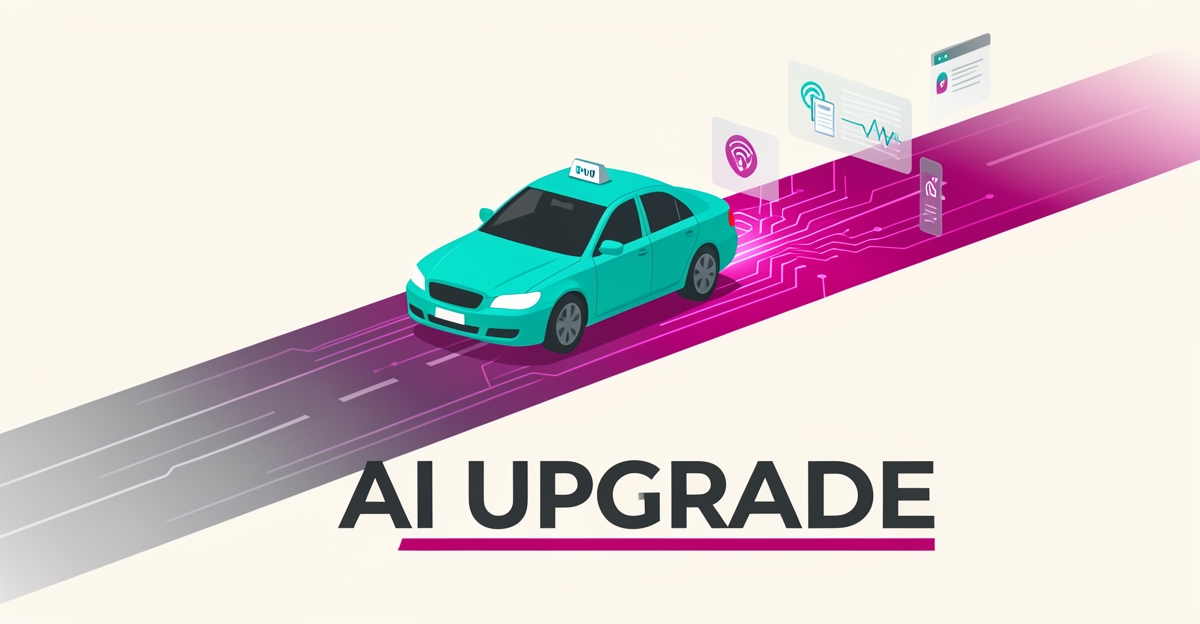
Are you still wondering if your taxi website needs an AI boost? The answer lies in how well your site operates as a growth engine. An AI upgrade can transform your website from a static digital brochure into a smart operations platform. But how do you apply these concepts to your taxi business?
Embed AI-powered voice and chat assistants directly into your website, allowing customers to book rides conversationally, 24/7. According to DevStory, NLP-powered voice and chat assistance is a cornerstone of modern taxi platforms, enhancing user experience and reducing manual bookings. For example, a taxi company in London saw a 30% increase in bookings after integrating voice booking on their website.
Implement AI-driven automated SMS and email follow-ups. Research by Coherent Solutions highlights that 56% of CEOs report increased profits from digital investments, including automation. Ensure no lead goes cold due to delayed responses. A New York-based taxi service reduced missed leads by 40% after switching to instant AI-powered follow-ups.
Upgrade your website with AI that adjusts pricing in real-time based on demand, events, and weather. WebOConnect emphasizes predictive analytics for optimized pricing and fleet management, directly impacting revenue. For instance, a taxi fleet in Tokyo used predictive analytics to increase revenue by 20% during peak hours.
Integrate AI-enhanced route optimization and live tracking features on your website. DevStory notes that such features improve efficiency and customer satisfaction, setting businesses apart. Customers expect Uber-like visibility; deliver it through your website.
Use AI to integrate your taxi service with public transit, air mobility, and other transport modes. Delta’s AI-powered travel journey is a prime example of how AI coordinates multi-modal transport, future-proofing your business. Over 15% of Uber bookings already involve airports, indicating a clear demand for integrated solutions.
- Up to 80% reduction in manual work through AI automation in taxi businesses (V3Cube).
- 25% improvement in ride allocation efficiency via predictive algorithms (DevStory, citing McKinsey).
- 95%+ of firms are investing in AI for transformation, with AI agents leading the trend (Coherent Solutions).
- Assess Your Website: Identify gaps in booking functionality, follow-up processes, pricing dynamics, tracking features, and integration capabilities.
- Prioritize AI Features: Based on your assessment, prioritize features that will have the most immediate impact on your business, such as voice booking or automated follow-ups.
- Consult Experts: Collaborate with a custom website company that specializes in AI integration for small businesses, ensuring a tailored solution.
By focusing on these key areas and leveraging AI, you can transform your taxi website into a powerful, self-managing platform that drives growth and stays ahead of the competition. As noted by Coherent Solutions, early AI adoption can deliver double-digit productivity gains within six months, a compelling reason to start your upgrade journey today.
Conclusion
The signs are clear: if your taxi website still feels like a static brochure rather than a working part of your operation, it's time to consider an AI upgrade. The research shows that businesses embracing digital transformation see tangible results — 56% of CEOs report increased profits from their investments, and 41% achieve higher ROI within just two years according to industry analysis. For taxi operators specifically, AI-powered features like voice-assisted booking and automated follow-ups aren't futuristic luxuries; they're becoming essential tools for staying competitive in a market where ride-hailing platforms continue to gain ground.
An AI-enhanced website does more than look modern — it actively works for you. Imagine a site that answers visitor questions instantly through conversational AI, captures leads after hours, and sends personalized SMS follow-ups without you lifting a finger. Behind the scenes, automation handles lead tagging, pipelines, and routine tasks, alerting you only when your judgment is needed. This isn't about adding complexity; it's about replacing the juggling act of multiple disconnected tools with one system that runs your website and helps manage your business. AI Business Sites builds exactly this kind of platform — where your website isn't just present, but productive.
If you've recognized any of the five signs in your current site, the next step is straightforward. Start by evaluating which AI capabilities would solve your most pressing daily challenges — whether that's missed calls, slow lead response, or the inability to adjust pricing based on demand. Then, look for a solution that integrates these features directly into your website, so you're not managing yet another separate subscription. The goal isn't to chase technology for its own sake, but to let your digital presence handle the busywork so you can focus on serving your customers and growing your operation. Your website should be an asset that works as hard as you do — and with the right AI upgrade, it finally can.
Your Website Should Work as Hard as You Do
The five signs covered here — no conversational booking, no automated follow-up, static pricing, missing live tracking, and zero ecosystem integration — all point to the same reality: a website that sits passively while competitors move actively. Research shows 56% of CEOs see profit gains from digital investment, with 41% achieving higher ROI within two years per a survey of 377 decision-makers. For taxi operators, that return comes from turning every visitor into a booked ride, every inquiry into a conversation, and every peak-demand moment into optimized revenue. AI Business Sites builds custom websites that embed this operational layer directly — an AI assistant that books through chat and voice, automated sequences that nurture every lead, and a content engine that publishes SEO-optimized pages monthly. The next step isn't a platform migration or a new app build. It's identifying which of these five gaps costs you the most right now — missed calls, slow replies, flat rates during surge, or invisibility in multi-modal search — and choosing a website that closes that gap by design. Your site should be an asset that runs your business, not a brochure you have to manage.
FOR local businesss — BUILT AND RUN BY US
Your website. Your content. Your leads. Your data.
$500 starts your build. Seven days later it's live — chat, booking, follow-up, and your Google presence all set up. Then we run it, every month. You do the work you actually get paid for.