
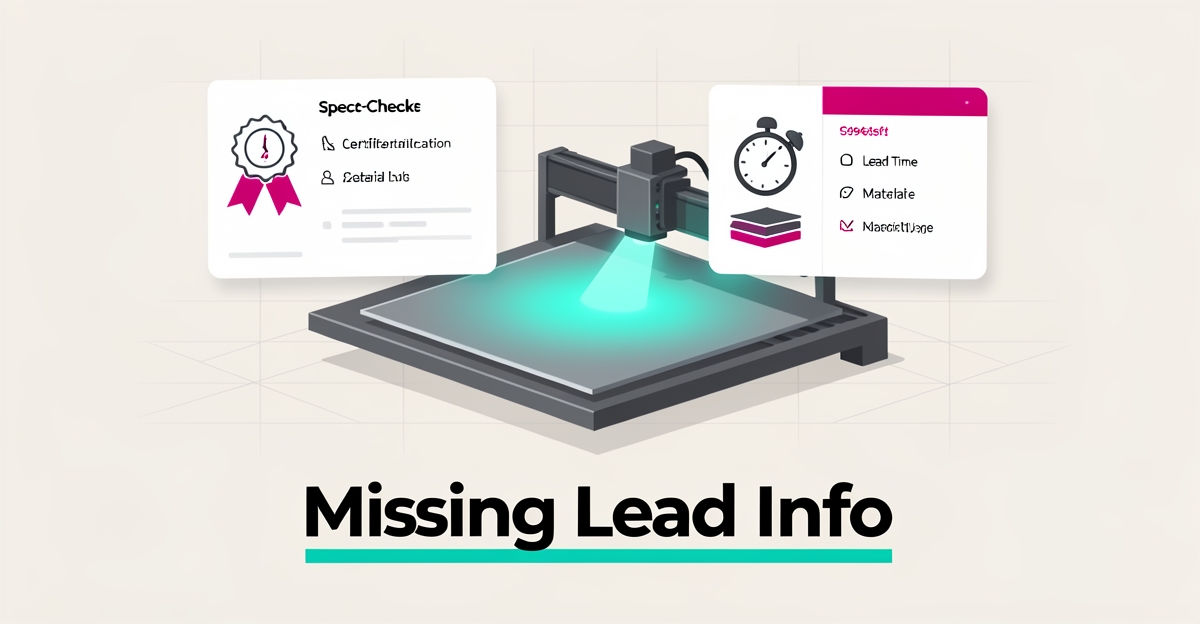
Key facts
- More than a third of marketers are already using AI according to The Fabricator.
- Larsen Manufacturing reports the metal fabrication industry is shifting decisively toward on-demand, customized fabrication in 2024 trends.
- GENEDGE emphasizes AI struggles with nuanced tasks without high-quality, accessible data in their analysis.
- Zetwerk's research highlights growing demand for transparency and data quality across the metal engineering landscape in 2024.
- Sheet Metal Industries notes the industry's shift towards digital transformation and Industry 4.0 in recent trends.
WANT RESULTS LIKE THIS?
Imagine a system doing all of this for your local business — every day, without you.
We build local businesses a custom website with a team of AI behind it: every lead captured and followed up, new content published monthly,customers finding you on Google — live in 7 days.
- 85+ pages at launch
- Every lead followed up, automatically
- Your whole business on one screen
Missing Material Types and Specifications Drives Clients Away
Missing Material Types and Specifications Drives Clients Away
In the metal fabrication industry, where customization and transparency are increasingly valued, potential clients are often left with more questions than answers when visiting generic websites. A critical oversight for many metal fabrication sites is the absence of clear material types, grades, and standard dimensions, which can drive away clients seeking specificity.
According to industry research, the shift towards on-demand, customized fabrication and digital transformation highlights the need for detailed transparency on websites source. Clients expect to see not just what materials are available but also their specifications, delivery times, and relevant certifications. Without this information, buyers are left uncertain, and the lack of direct access to this data on a website can lead to lost leads.
The Consequences of Ambiguity
- Uncertainty Leads to Abandonment: Without clear material specifications, potential clients may abandon the site in search of more informative competitors.
- Missed Customization Opportunities: The inability to easily identify available materials and their grades can hinder the customization process, a key trend in the industry source.
- Trust Erosion: Websites lacking in transparency about their offerings can erode trust with potential clients, who may question the fabricator's professionalism or capability.
The Solution: AI-Powered Transparency
AI-powered content generation can auto-populate and maintain detailed, accurate content on material types, specifications, and other critical details, directly from a business's existing data. This not only addresses the transparency gap but also keeps the website up-to-date with minimal manual intervention. For metal fabrication businesses, integrating such AI solutions can mean the difference between a lead and a lost opportunity, aligning with the industry's embrace of technology for enhanced client experience source.
Key Benefits of AI-Driven Content for Metal Fabrication Sites
- Enhanced Transparency: Clearly display material types, grades, and specifications to build trust.
- Customization Facilitation: Easily identifiable options support the industry's shift towards customized fabrication.
- Reduced Lead Loss: Provide immediate answers to common queries, reducing site abandonment.
By leveraging AI to fill the content gap, metal fabrication websites can better align with industry trends and client expectations, ultimately driving more informed leads and converting them into satisfied customers. AI Business Sites, with its capability to generate and maintain rich, SEO-optimized content, can help metal fabrication businesses bridge this critical gap, ensuring their online presence supports, rather than hinders, their growth strategy.
Lack of Delivery Timelines and Certifications Erodes Trust
When a procurement manager lands on your fabrication site at 10 p.m., they're not browsing — they're qualifying. They need to know if you can ship certified stainless components within their production window before they'll even request a quote. Research shows the industry is shifting decisively toward on-demand, customized fabrication, with sustainability and digital transformation reshaping client expectations across the board.
- Missing lead times force buyers to assume you're slow or disorganized
- Absent certifications (ISO, AWS, ASME) signal you may not meet their compliance requirements
- No shipping estimates mean they can't plan their production schedule around your delivery
- Vague material specs leave them guessing whether you stock their grade and dimension
According to industry analysis, flexibility and evolution with technology are now crucial for survival in metal fabrication. Yet most generic fabrication websites still treat certifications and delivery windows as afterthoughts — buried in PDFs or missing entirely. The Fabricator reports that more than a third of marketers are already using AI, but the real opportunity lies in using it to maintain the dynamic, trust-building information buyers actually need.
GENEDGE emphasizes that AI struggles with nuanced tasks without high-quality data — which means your website's information architecture must be structured, current, and machine-readable. An AI assistant connected to your live operations can surface real-time lead times, display current certifications with expiration dates, and calculate shipping estimates based on actual carrier data — not static copy written three years ago.
Zetwerk's research highlights the growing demand for transparency and data quality across the metal engineering landscape. When your website automatically reflects your shop's current capacity, cert status, and delivery performance, you're not just checking a box — you're answering the buyer's most critical question before they ask it.
Generic Content Fails to Answer Client-Specific Questions
Most fabrication websites list generic capabilities — "CNC machining," "welding," "laser cutting" — but leave the questions that actually determine a purchase unanswered. Buyers need to know your standard tolerances for stainless versus aluminum, which powder-coat finishes you stock, and whether you can hold a ±0.005" callout on a 48-inch part. When those details are missing, the inquiry never arrives.
The industry is shifting hard toward on-demand, customized fabrication rather than catalog-style production runs. Larsen Manufacturing notes that shops must now flex for low-volume, high-mix work, yet most websites still read like a 1990s capabilities brochure. At the same time, The Fabricator reports that more than a third of marketers are already using AI to support sales and marketing — but few are applying it to the content gaps that stop a quote request before it starts.
An AI content engine built for fabrication solves this by generating service-specific pages that anticipate the exact questions engineers and purchasing agents ask. Instead of a single "Welding" page, you get localized pages for "TIG Welding Stainless Steel Enclosures — Toronto" or "MIG Welding Structural Aluminum — Chicago," each loaded with the tolerances, material grades, certifications, and lead-time ranges that buyer needs to see.
- Material-specific tolerance tables (e.g., ±0.005" on 304 SS, ±0.010" on 6061-T6)
- Stocked finish options with thickness and color callouts
- Standard lead times by part complexity and volume tier
- Certifications held (ISO 9001, AS9100, CWB) mapped to the processes that require them
- Maximum envelope dimensions per machine so buyers self-qualify before contacting you
AI Business Sites builds this structure into every launch — hand-building 25–30 core pages around your actual equipment and service areas, then layering on 60 AI-generated SEO pages that target the long-tail searches your buyers are already typing. The content engine keeps publishing each month, so when a new alloy or finish enters your shop, the site reflects it before your competitors update their PDFs.
Local business: doing this the old way?
One system replaces the whole pile.
All of it — the website, the follow-up, the content, the leads — built and run for you for $1,497 + $497/mo. Month-to-month, and you own everything.
See what your build includesManual Updates Cause Outdated Information and Lost Leads
Manual updates are a silent lead killer. When your website still lists last year's material inventory or an expired certification, prospects assume you don't offer what they need — and they move on. Research shows the metal fabrication industry is shifting toward on-demand, customized production, yet many sites still reflect outdated mass-production models (Larsen Manufacturing). That disconnect costs you jobs before the conversation even starts.
AI systems rely on high-quality, current data to function effectively — and your website is no different. Industry experts emphasize that AI struggles with nuanced tasks like quoting and production planning without accurate, accessible information (GENEDGE). When your service pages, pricing, or capability listings go stale, you're not just showing old information; you're feeding bad data into every automated touchpoint that follows.
The problem compounds across every page. Clients expect to see specific material types, standard dimensions, delivery timelines, and current certifications — details that change regularly in a real shop. More than a third of marketers are already using AI to bridge content gaps (The Fabricator), but automation only works when the source data stays fresh. A static site can't keep up with a dynamic operation.
- Expired certifications that should be front-and-center for compliance-driven buyers
- Material inventories that don't reflect what's actually in stock
- Delivery windows based on last quarter's capacity, not this week's schedule
- Service capabilities that omit new equipment or processes you've added
AI Business Sites solves this by treating your website as a living system, not a one-time project. The platform auto-generates and maintains content like certifications, material specs, and service pages using your actual business data — so updates happen without ongoing manual effort. Your site stays accurate, your leads stay qualified, and your shop stays focused on fabrication, not content management.
AI-Powered Websites Close the Gap by Running Themselves
Generic metal fabrication websites often fall short by omitting the concrete details that serious buyers need to move forward—material grades, standard stock sizes, typical lead times, and industry certifications. According to industry research, more than a third of marketers are already using AI to enhance transparency and client communication, yet many fabrication sites still rely on static pages that don’t reflect real-time capabilities. This gap leaves potential leads questioning whether a shop can truly meet their specifications, especially when custom work and quick turnarounds are expected.
AI Business Sites closes this gap by embedding an AI-powered content engine directly into the website’s foundation, transforming it from a static brochure into a self-maintaining lead engine. The system continuously pulls from the shop’s actual inventory, equipment logs, and certification databases to auto-generate and update pages that reflect current material availability, standard dimensions, and delivery windows. As noted in industry insights, transparency and data quality are becoming critical differentiators in metal fabrication—especially as buyers shift toward on-demand, customized orders. By grounding every update in real business data, the website doesn’t just inform visitors—it builds trust by proving the shop can deliver what it promises.
Behind the scenes, automation ensures that when a new alloy is added to stock or a delivery timeline shifts due to equipment capacity, the relevant service and location pages are revised instantly—no manual edits required. This dynamic approach aligns with findings from technical analyses that emphasize AI’s role in augmenting human expertise when supported by high-quality, accessible data. Rather than replacing the fabricator’s knowledge, the platform amplifies it, ensuring the website always speaks the same language as the shop floor. The result is a digital presence that evolves with the business, capturing leads not just by being online—but by being accurate, responsive, and undeniably capable.
Frequently Asked Questions
What specific information are metal fabrication buyers looking for on a website before they request a quote?
Why do generic fabrication websites lose potential clients?
How does outdated website information hurt a fabrication shop's credibility?
Can AI really keep a fabrication website updated with current certifications, inventory, and lead times?
What's the difference between a static fabrication website and one powered by AI content generation?
How does detailed website content help with the trend toward low-volume, high-mix fabrication work?
Key Takeaways
{ "title": "Close the Lead Gap: Future-Proof Your Metal Fabrication Website", "content": "In today’s metal fabrication landscape, transparency and customization are key drivers of client satisfaction. Generic websites lacking essential details—such as material types, specifications, delivery tim
FOR local businesss — BUILT AND RUN BY US
Your website. Your content. Your leads. Your data.
$500 starts your build. Seven days later it's live — chat, booking, follow-up, and your Google presence all set up. Then we run it, every month. You do the work you actually get paid for.