
Key facts
- 60 million U.S. residents speak a non-English language at home, indicating untapped demand for multilingual SEO strategies according to BrightLocal.
- Location-based keywords yield 2–6% conversion rates on education landing pages per SEO Takeoff.
- Generic language school websites miss high-intent local traffic due to lack of neighborhood-specific SEO as noted by SEO Takeoff.
- AI-driven websites can auto-update with neighborhood-specific data, enhancing visibility and trust as highlighted by Apptegy.
- Businesses responding to all reviews see a 7% higher conversion rate according to BrightLocal.
- Authentic, location-relevant imagery and testimonials significantly impact engagement per Apptegy’s guide.
- Conversion rates for education landing pages typically range from 2–6% according to SEO Takeoff’s research.
WANT RESULTS LIKE THIS?
Imagine a system doing all of this for your local business — every day, without you.
We build local businesses a custom website with a team of AI behind it: every lead captured and followed up, new content published monthly,customers finding you on Google — live in 7 days.
- 85+ pages at launch
- Every lead followed up, automatically
- Your whole business on one screen
Your Website Speaks to Everyone — So It Reaches No One
Your Website Speaks to Everyone — So It Reaches No One
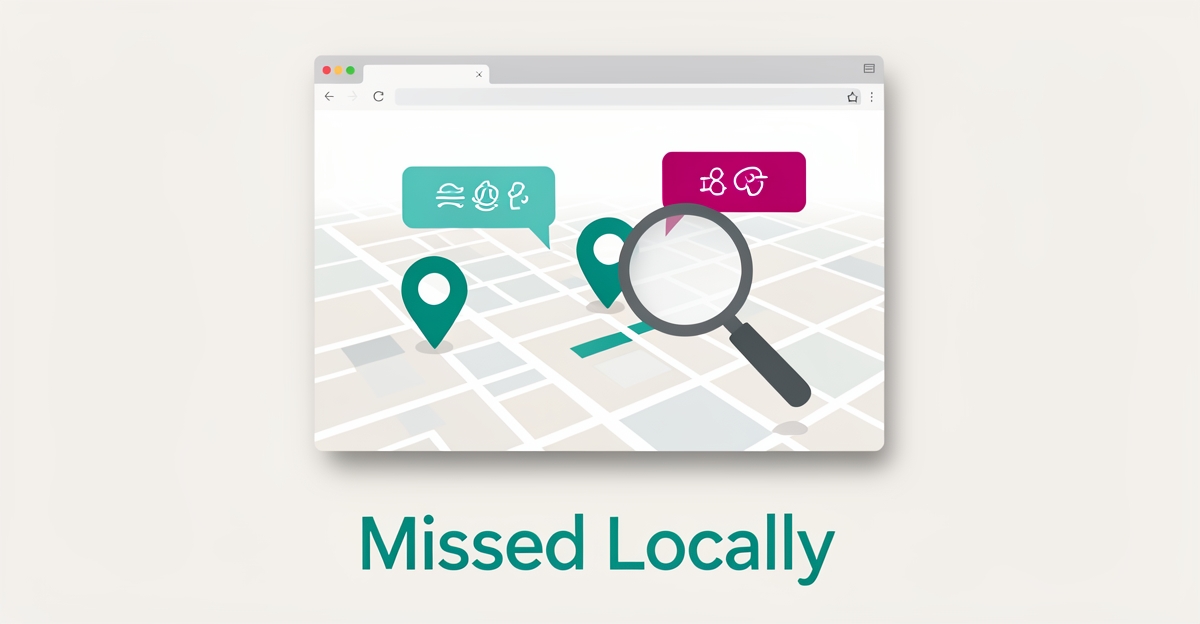
Imagine a billboard in the heart of Lincoln Park that simply reads, "Language Classes." While it might catch a few glances, it's unlikely to resonate with anyone specifically looking for "Spanish Classes in Lincoln Park." This is the plight of many language school websites — too generic, failing to speak directly to their immediate community.
A recent study highlights the critical gap in how language schools approach online visibility: broad keywords like "language classes" are overwhelmingly targeted, yet 60 million U.S. residents speak a non-English language at home, indicating a vast, untapped market for location-specific, multilingual SEO strategies (BrightLocal). Most language school sites ignore this, leaving high-intent local traffic unclaimed.
- Missed Local Intent: Families in competitive neighborhoods like Lincoln Park or Brooklyn's Bushwick specifically search for location-tagged services (e.g., "French Classes for Kids in Bushwick"). A generic approach misses these targeted queries.
- Multilingual Oversight: Neglecting to optimize for the dominant non-English languages in a neighborhood (e.g., Spanish in certain Chicago neighborhoods, Mandarin in parts of New York City) means losing out on a sizable, intent-driven audience (SEO Takeoff).
- Uniform Content Strategy: One-size-fits-all content fails to address the unique needs, preferences, or cultural nuances of different neighborhoods, leading to low engagement and poor conversion rates.
To effectively target local students, language schools should:
- Optimize for Location-Specific Keywords: Dedicated pages for "Spanish Classes in Lincoln Park" or "Mandarin Lessons in Brooklyn’s Bushwick."
- Embrace Multilingual SEO: Content and meta tags in the dominant local languages to cater to non-English speaking families (BrightLocal).
- Highlight Neighborhood-Specific Benefits: Use authentic, location-relevant imagery and testimonials to build trust with the local community (Apptegy).
AI-driven websites, like those built by AI Business Sites, can automatically update location pages with real-time, neighborhood-specific data and success stories, enhancing both visibility and trust among local families. By shifting from a broad, generic strategy to one that speaks directly to the neighborhood, language schools can significantly increase their relevance and attract the students they're currently missing out on.
No Neighborhood Pages = Invisible in Local Search
A language school without dedicated neighborhood pages doesn't just rank poorly — it effectively disappears from the map pack where parents and students actually search. Google's local algorithm treats each neighborhood as a distinct search territory, and generic "serving the greater metro area" phrasing signals irrelevance to the very searchers you want to reach.
According to SEO research for language schools, location-based keywords must replace generic phrases to capture high-intent local traffic. Schools targeting "Spanish classes downtown" or "Mandarin lessons in Lincoln Park" capture 2–6% conversion rates on education landing pages, while broad "language school cityname" pages often convert below 1%. The difference isn't semantics — it's whether your site exists in the searcher's mental map of their daily routine.
- Google Maps and local pack results pull directly from neighborhood-specific content and GBP signals
- Transit access, walking distance to landmarks, and hyperlocal class schedules drive click-through
- Competitor review analysis reveals which neighborhood terms students actually use
- Multilingual neighborhoods represent 60 million US residents searching in languages other than English
The multilingual SEO landscape makes this even sharper: direct translation fails because search intent varies by community. A parent in a Korean-speaking neighborhood searches "영어 학원 강남역" not "English academy near Gangnam station" — and Google knows the difference.
AI Business Sites solves this by auto-generating neighborhood pages that pull real-time class schedules, transit stops, and local landmarks into structured content clusters. Each page builds topical authority around the exact phrases families type into Maps, while authentic imagery and intuitive navigation keep visitors engaged once they arrive. The system updates automatically when schedules shift or new locations open — no manual rewrites, no stale data, no invisible neighborhoods.
Testimonials Don't Reflect the Families You Want
Testimonials Don't Reflect the Families You Want
When scanning your language school's website, prospective students and their families often look for one crucial element to build trust: relatable testimonials. However, if these testimonials lack specificity to your target neighborhoods or demographics, they might as well be generic placeholders. Research highlights source that authentic imagery and localized social proof are paramount in driving engagement, especially in educational contexts.
The issue with generic testimonials is twofold. First, they fail to speak directly to the concerns and experiences of families from specific neighborhoods or linguistic backgrounds. Second, they do little to differentiate your school from competitors, especially in competitive local SEO landscapes source. For instance, a testimonial from a family in a neighborhood with a high concentration of Spanish speakers would resonate more if it highlighted the school's Spanish language programs or cultural sensitivity.
The Power of Filtered, Authentic Testimonials
Implementing an automated review collection and display system, filtered by neighborhood, language, or specific programs, can revolutionize how prospective students see themselves in your current families. This targeted approach not only boosts the authenticity of your testimonials but also directly addresses the needs and preferences of your desired demographic. Conversion rates for education landing pages source typically hover between 2-6%, but personalized, localized content can significantly outperform these averages.
Consider the following strategies to enhance your testimonial section with a localized, authentic touch:
- Neighborhood Spotlight: Rotate testimonials highlighting families from different targeted neighborhoods each month.
- Language-Based Testimonials: Categorize and display testimonials by language to attract multilingual families source.
- Program-Specific Stories: Share testimonials focused on specific language programs or educational achievements to attract interested families.
AI-Driven Solution for Language Schools
An AI-driven website, like those designed by AI Business Sites, can automatically update location pages with real-time, neighborhood-specific testimonials and success stories. This not only improves visibility in local search results but also builds trust with potential students by showing them reflections of their own communities. By leveraging such technology, language schools can move beyond generic testimonials and foster a deeper connection with their target audience, ultimately driving higher conversion rates in a competitive market.
Local business: doing this the old way?
One system replaces the whole pile.
All of it — the website, the follow-up, the content, the leads — built and run for you for $1,497 + $497/mo. Month-to-month, and you own everything.
See what your build includesYour Google Business Profile Is a Ghost Town
Your Google Business Profile Is a Ghost Town
A haunting reality for many language schools is having a Google Business Profile (GBP) that's as inactive as a abandoned classroom. This neglect directly impacts visibility in coveted map-pack listings, a prime real estate for local search dominance. BrightLocal's findings emphasize that effective review management, competitor analysis, and regular updates are pivotal in boosting local rankings.
Imagine your GBP as a dynamic, always-on representative of your language school. With the right setup, it monitors reviews in real-time, analyzes competitor sentiment, and even drafts thoughtful responses on your behalf. This proactive management ensures your school appears consistently active and trustworthy across every target neighborhood—without requiring manual intervention.
Key Statistics Highlighting the Importance of an Active GBP:
- Reviews Drive Conversions: A BrightLocal study notes that businesses responding to all reviews see a 7% higher conversion rate than those responding to less than half.
- Regular Updates Matter: Google emphasizes that posting regular updates on GBP can increase engagement and visibility.
- Competitor Insight is Key: Analyzing competitors' GBP strategies can reveal gaps in your local SEO approach.
Optimizing Your GBP for Neighborhood Visibility:
- Respond Promptly to All Reviews: Showcase your school's commitment to feedback and improvement.
- Post Regular Updates: Share success stories, new programs, or community engagements to keep your profile vibrant.
- Conduct Competitor Analysis: Identify and fill the gaps in your local SEO strategy compared to competitors.
For language schools, particularly those leveraging platforms like AI Business Sites, integrating an AI-driven approach can automate these tasks. Such platforms can monitor reviews, analyze sentiment, and draft responses, ensuring your GBP remains a thriving hub of activity. This not only enhances your online presence but also attracts more local students by demonstrating your school's engagement with the community.
Actionable Takeaway: Revitalize your Google Business Profile by embracing a strategy that combines prompt review management, regular updates, and insightful competitor analysis. In doing so, you'll significantly enhance your school's visibility in local search results and map-pack listings, attracting more students from your desired neighborhoods.
Content That Ranks in One Neighborhood, Scales to Ten
Content That Ranks in One Neighborhood, Scales to Ten
Imagine having a language school website that not only attracts students from your immediate neighborhood but also scales its impact across ten surrounding areas, all without manual content updates. The key to this scalability lies in leveraging an AI content engine designed to research, write, and publish neighborhood-specific content monthly. This approach auto-links new pages to build topical authority, a strategy that Google rewards with higher rankings source.
- Neighborhood-Specific Blog Posts: AI-generated content focused on local language learning challenges and successes, enhancing relevance for search engines.
- Location Pages with Authentic Insights: Automatically updated with real-time data and student testimonials from each neighborhood, improving trust and visibility.
- Multilingual Content Generation: Catering to linguistically diverse neighborhoods, a strategy that can unlock significant untapped markets, with 60 million US residents speaking a language other than English at home source.
Example of Scalable Content Strategy:
- Monthly Neighborhood Spotlight: Highlighting a different neighborhood each month with tailored language programs and testimonials.
- Language of the Quarter: Focusing on a prevalent language in a cluster of neighborhoods, offering specialized courses and resources.
- Community Event Calendar: Automatically updated with language-related events across all targeted neighborhoods.
Traditional websites act as static brochures, failing to engage dynamically with their audience. In contrast, an AI-driven website transforms into a lead engine by:
- Automatically generating content that ranks for neighborhood-specific searches.
- Enhancing user experience with authentic imagery and intuitive navigation, which significantly impacts engagement source.
- Utilizing multilingual SEO to tap into diverse local markets, where direct translation is insufficient and native speaker research is key source.
- Automatic Internal Linking: Enhances topical authority without manual effort.
- Newsletter Repurposing: Converts blog posts into newsletter content seamlessly, reducing duplication of work.
- Multilingual Support: Automatically generates content in multiple languages, catering to diverse neighborhoods.
By shifting the focus from a static website to a dynamic, AI-powered lead engine, language schools can effectively fill classes across multiple neighborhoods, leveraging data-driven content strategies that resonate with local audiences. Conversion rates for education landing pages, though variable, highlight the importance of targeted approaches, ranging from 2-6% source.
Stronger Local Presence, Simplified Management
With an AI content engine at its core, managing a website that scales across ten neighborhoods becomes streamlined. The engine's ability to research, write, and publish without human intervention, coupled with its auto-linking feature, ensures consistent SEO improvement. This automation allows language schools to focus on what matters most—teaching and community engagement—while their website works tirelessly as a lead generation tool.
Frequently Asked Questions
Why isn't my language school showing up when parents search for classes in our specific neighborhood?
Is it worth creating content in other languages for our website, or is English enough?
Our testimonials are great but generic — do they actually help convert local families?
We have a Google Business Profile but never update it — does that really hurt our visibility?
How can we possibly create unique content for 10+ neighborhoods without a full marketing team?
What's the actual difference between a regular website and one built for local SEO from day one?
Key Takeaways
{ "title": "Speak Locally, Thrive Globally: Unlocking Your Language School’s Neighborhood Potential", "content": "In the competitive landscape of language schools, the key to attracting students from desired neighborhoods lies in speaking directly to them. By abandoning generic approaches, sch
FOR local businesss — BUILT AND RUN BY US
Your website. Your content. Your leads. Your data.
$500 starts your build. Seven days later it's live — chat, booking, follow-up, and your Google presence all set up. Then we run it, every month. You do the work you actually get paid for.