
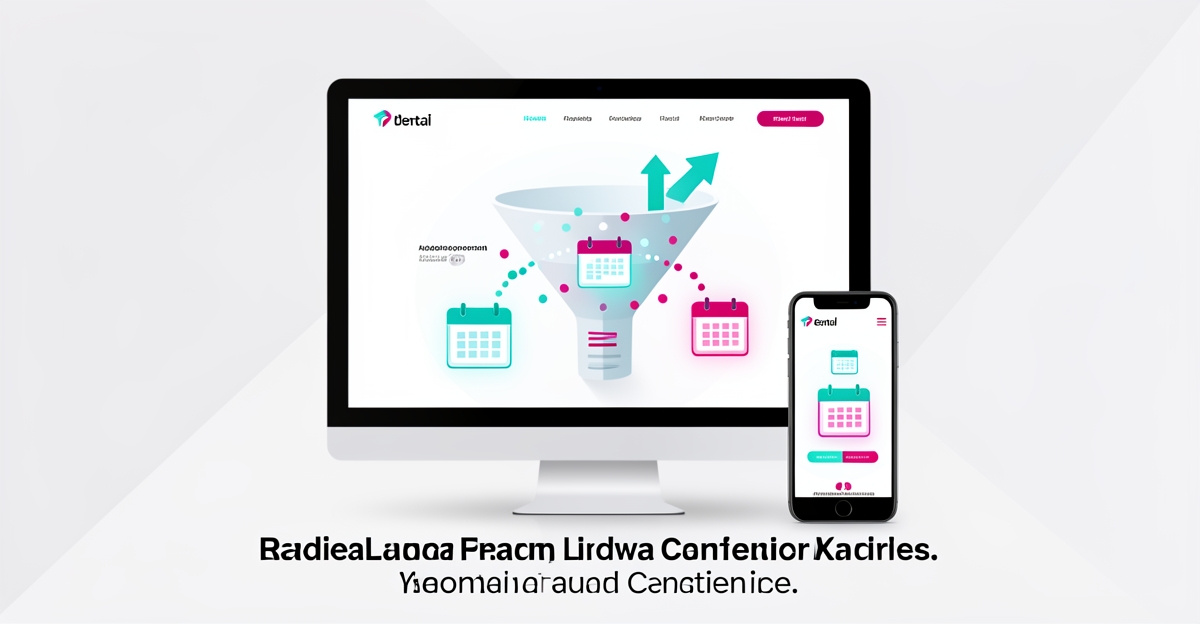
Key facts
- The average dental website converts only 3–5% of visitors, meaning 92–97% leave without booking an appointment according to Dental Marketing Guy
- Mobile pages load 87% slower than desktop, and 53% of mobile visitors abandon sites taking over 3 seconds to load per NexHealth research
- First-person CTAs like "Schedule My Appointment" outperform generic "Contact Us" buttons by 90% in click-through rates based on A/B testing data
- 40% of dental appointment requests occur outside business hours, yet practices with 24/7 AI coverage see 27% higher conversion rates reports Arini.ai
- 90% of patients check reviews before booking, and 42% won't consider a dentist with fewer than three stars found NexHealth
- AI assistants like ChatGPT and Google Gemini cannot read content hidden behind tabs, accordions, or image sliders warns Dr. Len Tau
- One practice increased conversions from 4% to 12% in 90 days, tripling monthly appointments and adding $180,000+ in annual revenue documented by Dental Marketing Guy
WANT RESULTS LIKE THIS?
Imagine a system doing all of this for your local business — every day, without you.
We build local businesses a custom website with a team of AI behind it: every lead captured and followed up, new content published monthly,customers finding you on Google — live in 7 days.
- 85+ pages at launch
- Every lead followed up, automatically
- Your whole business on one screen
The Hidden Crisis: Why 92-97% of Dental Website Visitors Don’t Convert
The numbers are stark: the average dental website converts just 3–5% of visitors into appointments, meaning 92–97% leave without taking action. That’s not a minor leak—it’s a flood of missed opportunities slipping through the cracks of underperforming sites. For a practice getting even modest traffic, this gap translates to dozens of untapped appointments each month and significant revenue left on the table.
Consider the case of Dr. Rodriguez, whose website initially converted at only 4%. After targeted improvements focused on mobile speed, clearer calls to action, and streamlined booking, the conversion rate jumped to 12% within 90 days. Monthly appointments tripled from 18 to 54, and the practice gained over $180,000 in additional annual revenue from an $8,500 optimization investment. This isn’t theoretical—it’s what happens when websites stop being digital brochures and start functioning as true patient acquisition systems.
The problem isn’t lack of traffic; it’s what happens after the click. More than half of dental website visitors arrive on mobile devices, yet those pages load 87% slower than their desktop counterparts. Over half of mobile users abandon a site if it takes longer than three seconds to load, and each additional second of delay cuts conversions by 7%. When visitors do stay, they’re often met with confusing layouts—multiple competing calls to action above the fold create choice paralysis, while passive phrasing like “Contact Us” underperforms first-person, action-driven language such as “Schedule My Appointment” by a staggering 90%.
Even trust signals, which 90% of patients check before booking, are frequently buried or missing entirely. Forty-two percent of users won’t consider a dentist with a rating below three stars, yet many sites fail to surface reviews prominently or in formats that both humans and AI assistants can easily read. Adding to the friction, “Request Appointment” forms that require staff callbacks introduce delays that push patients toward competitors offering instant, EHR-integrated scheduling—especially since 40% of booking requests occur outside business hours and 64% of patients prefer immediate responses over waiting for a callback.
These aren’t isolated flaws; they’re systemic issues that turn websites into conversion barriers rather than growth engines. The good news? Each of these gaps can be identified, measured, and fixed—turning lost visitors into booked appointments, one optimized experience at a time.
Breaking Down the Barriers: 5 Key Red Flags for Poor Conversion
Your dental website might look polished, but if visitors aren’t booking, the real problem is hidden in plain sight. Most practices assume a sleek design is enough—until they realize 92–97% of visitors leave without taking action. The difference between a 3% and 12% conversion rate isn’t just luck; it’s a series of fixable barriers that quietly sabotage every lead.
A closer look at the data reveals five red flags that even modern websites often overlook:
- Mobile abandonment is costing you half your traffic. Over 50% of dental website visitors arrive on phones, yet pages load an average of 87% slower on mobile. A delay of just three seconds drops conversions by 53%. Each additional second slices another 7% off your booking rate, turning potential new patients into frustrated exits before they even see your services.
- Too many CTAs confuse more than they convert. Multiple buttons competing above the fold create "choice paralysis," while passive language like "Contact Us" underperforms first-person action copy by 90%. A single, clear CTA—"Schedule My Appointment"—directly increases click-through rates and reduces hesitation at the critical moment.
- Trust signals are missing in plain sight. Ninety percent of patients research reviews before booking, yet 42% won’t consider a dentist with fewer than three stars. Many sites bury credentials and testimonials behind images or sliders, making them invisible to both humans and AI assistants that increasingly drive referrals.
- Booking friction turns clicks into lost calls. Forms that trigger staff callbacks convert poorly, and 31% of patients would switch dentists for true online scheduling. Many tools generate "false conversions"—high click volumes with no confirmed appointments—while real-time, EHR-integrated booking remains the gold standard.
- AI assistants can’t read what humans can’t see. When content hides behind tabs, accordions, or image-based sliders, AI assistants like ChatGPT and Google Gemini ignore it entirely. Structured, plain-text summaries of services, location, and providers are now essential to being found at all in the age of Generative Engine Optimization.
These aren’t design quirks—they’re revenue leaks. A practice improving its mobile speed from four to two seconds can regain nearly 15% of lost conversions. Consolidating CTAs and using first-person action language can lift engagement by up to 90%. Making reviews and provider credentials visible in text—not just graphics—captures the 90% of patients who check before booking.
AI Business Sites builds websites that address these gaps from the ground up. Every site is hand-crafted for speed and clarity, with mobile performance prioritized and content structured for both human visitors and AI assistants. Behind the scenes, an AI assistant answers questions instantly—even after hours—using your practice’s own knowledge base, while booking forms sync directly with your EHR to eliminate callbacks and false conversions. It’s not just a website; it’s a system that converts.
From Red Flags to Solutions: Leveraging AI for Conversion Optimization
When dental practices struggle to turn website visitors into booked appointments, the issue isn't usually design—it's friction. A 2024 analysis of 3,601 patient visits found that 92–97% of visitors leave without taking action. The fix isn't more ads or prettier pages; it's removing every barrier between a patient's need and your schedule.
AI-powered tools cut the friction by doing the routine work that most practices can't afford to staff. A virtual receptionist, for example, doesn't just answer calls—it captures every lead 24/7, eliminating the 40% of after-hours requests that vanish into a busy signal. Practices using comprehensive systems report 15–30% revenue increases with payback periods under six months. The difference isn't charm; it's coverage.
- AI chat on your site answers patient questions instantly using your practice's actual policies and procedures—not a scripted bot. It remembers returning visitors, so conversations pick up where they left off instead of starting over.
- AI voice on your phone handles booking, messages, and intake with no hold music and no missed calls. It can even update your EHR automatically, turning a voice call into a confirmed appointment before staff touch the phone.
- Instant, personalized email follow-ups land within seconds of every lead—web form, chat, voice call, or directory listing—closing the gap most practices create by being slow to reply.
- Automated tags and routing move leads through your pipeline, alerting you only when a human decision is needed. No CRM setup, no spreadsheets, no double data entry.
The result is measurable lift. Practices with 24/7 AI coverage see 27% higher conversion rates because patients get answers when they're ready—whether it's 2 p.m. or 2 a.m. That coverage replaces what would otherwise require a full-time front desk, a chat specialist, and a call center. For a practice converting 4% of visitors, turning 12% of traffic into booked appointments generated $180,000 in additional annual revenue from an $8,500 optimization investment. The math isn't about software—it's about never leaving a patient waiting.
Local business: doing this the old way?
One system replaces the whole pile.
All of it — the website, the follow-up, the content, the leads — built and run for you for $1,497 + $497/mo. Month-to-month, and you own everything.
See what your build includesAction Plan: 5 Immediate Changes for Improved Conversion
Faster mobile pages, clearer booking paths, and 24/7 AI engagement can turn your underperforming dental site into an appointment-generating machine. Here’s exactly what to change today and why these tweaks work.
Your homepage only has three seconds to impress half your visitors—because over 50% of dental website traffic now arrives on phones, and pages that take longer than three seconds to load lose 53% of mobile users before they even read the first sentence. Every one-second delay drops mobile conversions by 7%, yet the average webpage loads 87% slower on mobile than desktop. Start by compressing images, deferring non-critical scripts, and testing load speed directly on phones in your parking lot, not just in desktop simulators.
A single sticky “Schedule My Appointment” button at the top of every page replaces the paralyzing wall of five competing calls-to-action that NexHealth research found creates choice paralysis and slashes reservations. First-person CTAs like “Schedule My Appointment” outperform generic “Contact” links by 90%, pulling real numbers from A/B testing data compiled by Dental Marketing Guy. If you’re still asking patients to “Request an Appointment” and wait for a callback, expect to lose up to 31% of prospects who’d happily switch to a competitor offering true online booking. Swap the form for an EHR-integrated scheduler visible on every page, limit it to 5–7 essential fields, and watch false conversions disappear.
After-hours requests account for 40% of all appointment pings, yet most sites go silent at 5 p.m. Practices running 24/7 AI coverage convert 27% more visitors and cut missed call costs that average $200–500 in lifetime patient value. An AI assistant that answers questions instantly using your actual practice knowledge base—plus a voice agent that books while you sleep—captures leads you were losing forever. Arini.ai reports such systems deliver 15–30% revenue gains with payback in 3–6 months.
Hidden content is invisible to the AI assistants increasingly steering patient discovery. Dr. Len Tau’s team found that tabs, accordions, and image sliders obscure service details from ChatGPT, Google Gemini, and Bing Copilot, while plain-text summaries with concrete terms like “Invisalign provider in [city]” generate referrals you never knew existed. Create a dedicated “AI Training Page” with structured bullet lists of services, locations, providers, accepted insurances, and contact methods—then add video transcripts and schema markup so every word is readable by both humans and bots.
- Run a free Google PageSpeed Insights audit and target a 2–4 second mobile load time
- Replace every “Request Appointment” form with an EHR-synced online scheduler visible above the fold on desktop and sticky on mobile
- Strip down to one primary “Schedule My Appointment” CTA at the top, using first-person language proven to lift clicks
- Deploy an AI chatbot and voice receptionist that answers instantly using your practice’s real FAQs and scheduling rules
- Publish a plain-text “AI Training Page” with bulleted service lists, location pages, provider bios, and contact details—no hidden tabs or accordions
Measuring Success: What to Track and Expect After Optimization
After implementing AI-powered optimizations, the real test begins: tracking performance and setting realistic expectations. The goal isn’t just to update your site—it’s to turn it into a lead-generating machine that works even when you’re not online.
Three months of consistent tracking reveal where your website is winning and where it’s still leaking potential patients. Practices that prioritize mobile speed see the biggest wins—cutting load times from five seconds to under two can boost conversions by up to 28%, while those ignoring mobile see abandonment rates spike above 50%. Every second counts: a one-second delay on mobile cuts conversion rates by 7%, making speed a non-negotiable priority.
CTA performance often surprises even experienced practices. The difference between passive and action-driven copy is stark—first-person phrases like "Schedule My Appointment" outperform generic "Contact Us" buttons by 90%. Simplify your messaging: test one primary CTA above the fold, with sticky headers ensuring it’s always accessible. Secondary CTAs belong at decision points—not competing for attention where clarity matters most.
AI engagement stats are where the real breakthroughs happen. Practices adding AI chat and voice agents report 15–30% revenue increases with payback periods as short as three to six months. These tools don’t just answer questions—they capture leads 24/7, reducing missed calls by 64% and eliminating the 40% of appointment requests that come outside business hours. The key metric to watch? Response time to first contact. Practices using AI-powered follow-ups reach patients within minutes, not hours, directly translating into booked appointments.
Set three benchmarks to measure success:
- Conversion rate: Aim for 5–8% within 90 days; top performers hit 10%+
- Mobile load speed: Target under 2 seconds on all pages
- AI engagement: Track response rate (ideally 80%+) and appointment booking rate from AI interactions
Realistic expectations matter. The case of Dr. Rodriguez shows what’s possible: increasing conversion from 4% to 12% in 90 days tripled monthly appointments, shaving cost per lead from $250 to $83 while adding $180,000+ in annual revenue. Most practices see steady gains over three to six months—not overnight spikes—so patience with the process pays off.
The data also highlights what not to expect. Over-optimizing without testing leads to diminishing returns, and hiding critical details behind tabs or images makes your site invisible to AI assistants driving new patient referrals. Transparency wins: clear, accessible information that both humans and AI agents can parse consistently outperforms clever design. Track these metrics, stick with the changes, and your website will do more than attract visitors—it’ll convert them into lasting patients.
Frequently Asked Questions
Why do most dental websites fail to convert visitors into appointments?
How does mobile page load speed impact conversion rates?
What makes an effective Call-to-Action (CTA) for dental websites?
Why are trust signals crucial, and how should they be presented?
How can AI enhance the conversion rate of dental websites?
What is the expected outcome of optimizing a dental website with AI solutions?
Your Website Should Work as Hard as You Do
The data is clear: most dental websites are leaving 92–97% of potential appointments on the table—not because of a lack of traffic, but due to fixable friction points like slow mobile load times, confusing calls to action, buried trust signals, and booking forms that require callbacks. Addressing these five red flags isn’t just about aesthetics; it’s about turning your site into a true patient acquisition system that works around the clock. Practices that have made these shifts—like Dr. Rodriguez, who jumped from a 4% to 12% conversion rate—have seen monthly appointments triple and annual revenue increase by over $180,000 from a relatively modest investment. The good news? These improvements are measurable, repeatable, and within reach. Start by auditing your mobile speed, simplifying your primary CTA to 'Schedule My Appointment,' and ensuring your booking tool syncs directly with your EHR for instant confirmation. When your website stops being a digital brochure and starts functioning as a 24/7 front desk, every visitor becomes a real opportunity—not a missed one. Take the first step today: run a free mobile speed test and see where your site stands. See how one practice turned optimization into $180K in annual revenue.
FOR local businesss — BUILT AND RUN BY US
Your website. Your content. Your leads. Your data.
$500 starts your build. Seven days later it's live — chat, booking, follow-up, and your Google presence all set up. Then we run it, every month. You do the work you actually get paid for.