
Key facts
- 58% of yoga fans book classes online according to Snapps.ai research
- 53% of mobile users abandon websites taking longer than 3 seconds to load per Website Planet data
- Average WordPress load times hover at ~3 seconds per Backlinko benchmarks
- The US yoga industry reaches $16 billion annually with over 36 million practitioners per Yoga Alliance data
- Teacher credentials like RYT-200 and E-RYT serve as EEAT trust signals for Google per 1Digital Agency
- Automated check-in systems track retention without adding administrative burden per Koalendar analysis
- Sites built on Next.js consistently hit 98+ Lighthouse performance scores per 1Digital Agency metrics
WANT RESULTS LIKE THIS?
Imagine a system doing all of this for your local business — every day, without you.
We build local businesses a custom website with a team of AI behind it: every lead captured and followed up, new content published monthly,customers finding you on Google — live in 7 days.
- 85+ pages at launch
- Every lead followed up, automatically
- Your whole business on one screen
Why Your Yoga Studio Website is Losing Students Before They Even Walk In
Your studio's website isn't just a digital brochure — it's the first class a prospective student takes with you. Research shows 58% of yoga fans book classes online, yet most studio sites still treat the web as an afterthought rather than the primary trust-building tool it is.
53% of mobile users abandon websites taking longer than 3 seconds to load, and average WordPress load times hover right at that threshold. When a potential student lands on a slow, cluttered, or outdated site, they don't just leave — they assume the in-studio experience will be equally disorganized. Trust erodes before they ever unroll a mat.
- Missing or thin teacher bios that hide credentials like RYT-200 or E-RYT certifications
- No visible student reviews or testimonials to validate the community experience
- Stock photos instead of authentic class and studio imagery
- Booking friction — no 24/7 online scheduling or mobile-friendly forms
- Hidden pricing that forces a phone call just to learn costs
These gaps signal that a studio isn't invested in the student journey beyond the mat. As industry experts note, people pay for feelings, not just services — and a website that feels generic, slow, or opaque creates doubt instead of belonging. AI Business Sites builds custom websites that address these trust signals directly, integrating real-time review collection and automated check-in systems that track retention without adding administrative burden. The result: a site that doesn't just look professional, but actively builds the credibility that fills classes.
The 3 Trust Signals Every Yoga Website Needs to Convert Browsers to Students
The 3 Trust Signals Every Yoga Website Needs to Convert Browsers to Students
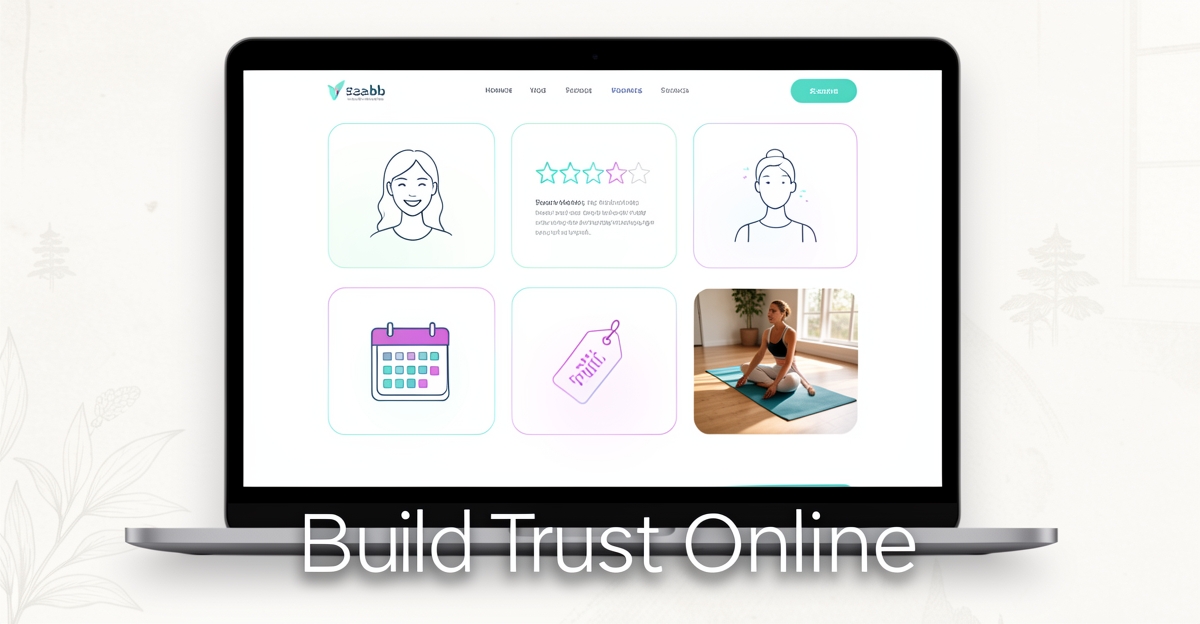
In the competitive yoga studio landscape, building trust with potential students is crucial for conversion. According to industry research, three key trust signals can significantly enhance a yoga website's credibility and attract more students: instructor bios with verifiable credentials, authentic student reviews and testimonials, and high-quality class and studio photos or videos showcasing community and results.
Highlighting instructors' qualifications, such as RYT-200, RYT-500, or E-RYT certifications, serves as a primary trust signal. A study by 1Digital Agency emphasizes the importance of these credentials as Experience, Expertise, Authoritativeness, Trustworthiness (EEAT) signals, aligning with Google's quality guidelines. Transparently displaying teaching philosophies and photos alongside certifications humanizes the instructors and establishes a personal connection with potential students.
Real-time, authentic reviews are indispensable. Snapps.ai notes that showcasing star ratings, written testimonials, and video reviews can significantly boost trust. Platforms like AI Business Sites, which automate the collection and display of real-time reviews, help maintain freshness and credibility. For example, a studio might feature a testimonial like, "This studio's community support helped me achieve my yoga goals," to illustrate the positive impact.
Visual content showcasing the studio's atmosphere, class dynamics, and student progress is vital. Yola's guide highlights the importance of authentic, high-quality visuals in building an emotional connection with visitors. Videos of classes or testimonials can demonstrate the studio's community and the results students achieve, further enhancing trust.
- 58% of yoga fans book classes online (Snapps.ai), emphasizing the need for a trustworthy online presence.
- 53% of mobile users abandon websites loading slower than 3 seconds (Website Planet data via Snapps.ai), highlighting the importance of a fast, mobile-optimized site.
- Prioritize Detailed Instructor Bios: Include credentials, photos, and teaching philosophies.
- Automate Review Collection: Use platforms to keep testimonials fresh and credible.
- Invest in Visual Content: Showcase studio life and student success through photos and videos.
By incorporating these trust signals, yoga studios can enhance their online credibility, improve conversion rates, and attract more students in a competitive market. AI Business Sites, with its capability to collect and display real-time reviews and track student retention through automated check-ins, supports these strategies seamlessly.
Turn Your Website Into a 24/7 Retention Machine with These Features
A seamless booking experience shouldn’t vanish when the studio door closes. The same 58% of yoga fans who book classes online expect to reserve a spot after hours, on mobile, and without a single click wasted.Industry research confirms that instant, mobile-friendly booking isn’t just convenient—it’s the first step in turning your website into a 24/7 retention machine.
Friction is the silent killer of repeat attendance, and automated systems remove it at every touchpoint. Real-time review collection keeps fresh testimonials on display while gently nudging satisfied students to share their experience.Leading retention tools now auto-trigger emails that celebrate milestones and invite feedback before a student drifts away. Pair that with mobile-optimized check-ins that load in under three seconds, and you’ve built a system that works while you sleep.Data shows that more than half of mobile users abandon sites that lag past three seconds, yet the fastest yoga demo sites hit a 98 performance score without extra effort.
- Instant booking calendars on every page—no dead ends or “call for availability” dead zones
- One-tap mobile checkout with saved preferences and quick pay options
- Automated check-in emails that arrive the day before class and include a single-click update link
- Real-time review prompts sent 30 minutes after class ends when the experience is fresh
- Smart follow-ups that re-engage absent members with a gentle “We miss you” offer
Behind the scenes, your website’s AI assistant handles the busywork so staff never miss a cue. It tags returning visitors, routes low-friction questions to self-service, and escalates concerns only when human attention is needed.EEAT signals like instructor bios and class photos stay front and center, while automated systems quietly track attendance and churn. The result is a website that doesn’t just attract—it retains, converts, and grows your community around the clock.
Local business: doing this the old way?
One system replaces the whole pile.
All of it — the website, the follow-up, the content, the leads — built and run for you for $1,497 + $497/mo. Month-to-month, and you own everything.
See what your build includesWhat to Look for in a Yoga Studio Website Builder (Beyond Just Looks)
Choosing the right website builder for your yoga studio isn’t just about picking the prettiest template—it’s about finding a platform that grows with your business, protects your data, and keeps your site running smoothly. The yoga industry is booming, with over 36 million Americans practicing yoga, and studios are increasingly relying on digital tools to build trust and retain students. Yet, many platforms force you into rigid all-in-one systems that lock in your content or leave you piecing together separate tools—adding friction where you need ease.
Some builders promise everything in one place: scheduling, payments, memberships, and analytics. But that convenience often comes with hidden costs. Platforms like Wix may simplify setup, but they complicate migration risks, making it harder to move your website later. Others, like WordPress, offer flexibility but require constant maintenance and technical know-how. Meanwhile, tools built specifically for yoga studios, such as Walla or Mindbody, can handle advanced features like retention analytics and branded apps—but often at premium prices or with opaque pricing structures that make budgeting a guessing game.
For studios that value ownership and speed, the best approach balances power with simplicity. A custom-built site using modern technology like Next.js ensures fast load times—a critical factor, as 53% of mobile users abandon sites slower than three seconds. And since 58% of yoga fans prefer booking classes online, your platform should handle booking, payments, and follow-ups without requiring manual oversight. The ideal solution also consolidates tools you’d otherwise patch together: CRM, analytics, content generation, and even AI-powered assistants—all under one roof, not scattered across subscriptions.
What sets a truly effective yoga studio website builder apart? Three things: ownership, speed, and SEO strength. Owning your code, content, and data means no vendor lock-in, no sudden price hikes, and full control over your brand. Speed isn’t just about user experience—it’s a ranking factor, and sites built on Next.js consistently hit Lighthouse scores over 98. SEO capabilities go deeper than keywords: structured schema for instructor credentials, optimized local listings, and automated content that adapts to search trends keep your studio visible when students are looking.
- Avoid platforms that rent your website—you should own your domain, code, and data from day one.
- Prioritize load times under three seconds; slow sites lose students before they even see your schedule.
- Look for built-in tools that handle the busywork: automated follow-ups, review collection, and content updates.
- Skip all-in-one gimmicks that force you into a one-size-fits-none ecosystem.
- Choose a platform that scales from solo instructors to multi-studio teams without adding complexity.
The yoga industry thrives on community and trust—your website should reflect that. The right builder doesn’t just look good; it helps you attract, engage, and retain students effortlessly.
Steal This Yoga Website Checklist: 10 Features That Actually Work
You've nailed the teacher bios and review widgets. Now what about the technical foundation that makes visitors stay long enough to see them? Research shows 53% of mobile users abandon sites taking longer than three seconds to load, yet the average WordPress site hovers right at that threshold. Meanwhile, 58% of yoga fans book classes online — so a clunky booking flow doesn't just frustrate; it directly costs revenue.
Use this checklist to audit or build a site that converts trust into retention:
- Sub-3-second mobile load time — Test with PageSpeed Insights; optimize images, enable caching, and choose a Next.js/React stack built for speed
- Real-time review integration — Embed Google Business Profile reviews that update automatically, not static screenshots that age poorly
- Teacher bios with verifiable credentials — Display RYT-200, RYT-500, or E-RYT certifications alongside teaching philosophy and photos for EEAT signals
- 24/7 online booking with waitlist management — Eliminate phone-tag friction for the majority who book digitally
- Automated check-in sequences — Trigger personalized emails after first visit, 10-class milestones, and 14-day absences to catch churn early
- Community content hub — Feature student progress stories, donation-night photos, and teacher Q&A videos that prove the studio lives its values
- Transparent pricing with no-hidden-fees guarantee — List drop-in, package, and membership rates clearly; link directly to purchase
- Retention analytics dashboard — Track attendance frequency, churn risk scores, and lifetime value per student segment
- Branded mobile experience — Whether a PWA or native app, let students book, check schedules, and receive push reminders without leaving your ecosystem
- Schema markup for local SEO — Structured data for classes, instructors, and reviews so Google displays rich results in Maps and search
AI Business Sites builds these features into every custom yoga studio website — from the technical SEO foundation that earns 98+ Lighthouse scores to the automated review collection and retention tracking that runs behind the scenes. The result: a site that doesn't just look trustworthy but operates that way every day.
Frequently Asked Questions
What are the most important trust signals I should include on my yoga studio's website to attract new students?
How can I make sure my yoga website loads fast enough to keep visitors from leaving?
Is it really necessary to have online booking on my yoga website?
How can I encourage students to leave reviews for my yoga studio?
What should I include in my yoga instructor bios to build trust?
Are stock photos okay to use on my yoga studio website?
Your Website, Your Studio’s First Impression
Your yoga studio’s website isn’t just a digital front door, your first class, and the trust signals it sends—from instructor bios and authentic reviews to fast load times and seamless booking—directly shape whether a visitor becomes a student. When these elements work together, your site doesn’t just attract attention; it builds credibility, reduces friction, and supports retention long after the mat is rolled up. The good news? You don’t need to juggle multiple tools or guess what works. Take the next step by auditing your current site against the checklist we’ve shared, focusing on speed, transparency, and community proof. If you’re ready to replace complexity with a custom-built website that runs itself—answering questions, collecting reviews, and tracking engagement—explore how AI Business Sites helps studios like yours turn online trust into real-world impact. See how top studios are optimizing for speed and trust to start filling more classes, naturally.
FOR local businesss — BUILT AND RUN BY US
Your website. Your content. Your leads. Your data.
$500 starts your build. Seven days later it's live — chat, booking, follow-up, and your Google presence all set up. Then we run it, every month. You do the work you actually get paid for.