
Key facts
- Nearly 80% of enterprises struggle to integrate AI with existing tech stacks per workflow automation research.
- Poor data quality costs organizations an average of $15 million annually in lost productivity according to data quality impact studies.
- 65% of companies still clean data manually in Excel instead of using automated solutions reports a 2024 customer insight study.
- Human error causes 95% of data breaches, with 8% of staff responsible for 80% of incidents based on cybersecurity research.
- The average business juggles 8–10 separate subscriptions that don’t integrate with each other, creating operational chaos.
- Service businesses lose leads primarily because they’re too slow to respond—automated follow-ups can reclaim those missed opportunities instantly.
- AI Business Sites consolidates what would otherwise require 8–10 separate tools into one unified platform that runs automatically behind the scenes.
WANT RESULTS LIKE THIS?
Imagine a system doing all of this for your local business — every day, without you.
We build local businesses a custom website with a team of AI behind it: every lead captured and followed up, new content published monthly,customers finding you on Google — live in 7 days.
- 85+ pages at launch
- Every lead followed up, automatically
- Your whole business on one screen
The Hidden Pitfalls: Common Data Analytics Mistakes in Service Businesses
Most service businesses don't ignore analytics because they don't care — they ignore it because the data lives in too many places to be useful. A booking system here, a chat tool there, a spreadsheet for follow-ups. The result isn't a strategy. It's a mess.
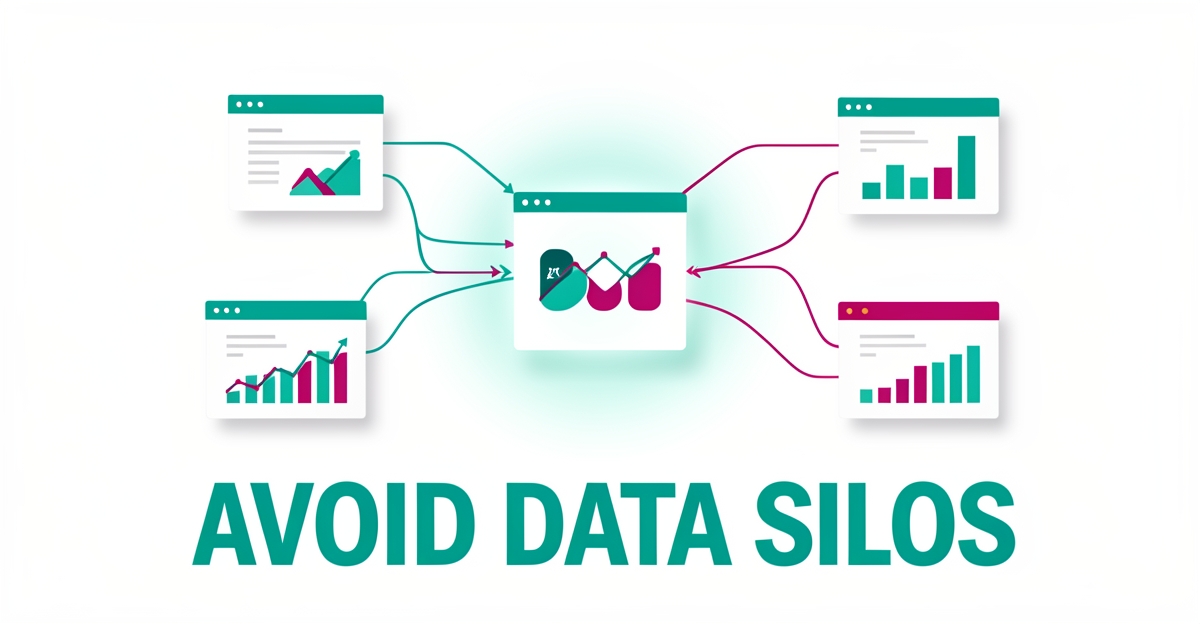
Data silos are the starting point for almost every analytics failure. When customer information sits in disconnected systems, you can't see the full journey — only fragments. Nearly 80% of enterprises struggle to integrate AI with their current tech stacks, and 65% of companies report difficulties matching records across systems according to workflow automation research. The insight you need is there. It's just scattered.
- Reactive data quality: 65% of companies still clean data manually in Excel, fixing problems only after they break something per a 2024 data quality report
- Human error: 95% of data breaches trace back to human mistakes, and 8% of staff cause 80% of incidents based on cybersecurity research
- Fragmented tools: The average business juggles 8–10 separate subscriptions that don't talk to each other
- No closed loop: Insights sit in dashboards instead of triggering action
Poor data quality alone costs organizations an average of $15 million annually in lost productivity and downstream impacts. Yet most businesses treat it as a cleanup project, not a design requirement.
AI Business Sites approaches this differently. The platform syncs data across chat, booking, and follow-up systems by design — so every interaction feeds a single customer view. Automated email and notification sequences then respond to customer behavior with intelligent, data-backed messages. No manual stitching. No spreadsheets. The analytics don't just sit there. They drive the next action automatically.
Breaking the Cycle: Evidence-Based Solutions for Effective Analytics
Breaking the Cycle: Evidence-Based Solutions for Effective Analytics
As service businesses navigate the complexities of data analytics, a common obstacle is the inability to translate insights into tangible actions. This disconnect often stems from five critical mistakes: data silos, poor integration, reactive data quality management, human error, and fragmented tool stacks.
Unified Platforms: The Foundation of Effective Analytics A key solution lies in implementing unified data platforms that synchronize information across all customer touchpoints, such as chat, booking, and follow-up systems. This approach, exemplified by AI Business Sites' integrated website and operations platform, eliminates data silos and provides a single, actionable view of customer behavior. For instance, by syncing data across these systems, businesses can automatically respond to customer inquiries and behaviors with intelligent, data-driven messages, ensuring no interaction falls through the cracks.
Automated Data Quality: Proactive Over Reactive The cost of poor data quality is stark, with organizations losing an average of $15 million annually source. To mitigate this, service businesses should prioritize automated, proactive data quality management. By continuously monitoring and addressing data issues before they escalate, companies can break the cycle of reactive cleanup, a challenge faced by the 65% of companies still reliant on manual Excel-based data cleaning source.
Closed-Loop Workflows: Turning Insights into Actions To overcome the lack of actionability, closed-loop workflows are essential. These workflows connect analytics directly to automated business responses, ensuring insights drive immediate operational changes. For example, anomaly detection can automatically create tickets, or KPI thresholds can pause underperforming campaigns, as highlighted in Domo's analysis of effective automation platforms source.
Error Reduction by Design and All-in-One Solutions Given that human error contributes to 95% of data breaches source, system design must prioritize error reduction. Intuitive interfaces and automated processes can significantly minimize error opportunities. Furthermore, adopting all-in-one platforms like AI Business Sites, which integrates website, CRM, automation, content generation, and more, can eliminate the complexity of managing multiple tools. This approach not only streamlines operations but also ensures that every component works in harmony to support business outcomes, such as never missing a lead due to slow response times or missed calls.
Key Actionable Strategies:
- Migrate to Unified Platforms for synchronized customer data across all touchpoints.
- Automate Data Quality Processes to prevent rather than react to data crises.
- Implement Closed-Loop Workflows to turn analytics into automated business actions.
By embracing these evidence-based solutions, service businesses can break free from the common pitfalls of data analytics implementation and harness the full potential of their data to drive growth and efficiency. AI Business Sites' approach, for example, demonstrates how integrated systems can reduce manual labor, enhance customer engagement, and ensure that every interaction, whether through chat, phone, or email, contributes to a unified understanding of the customer.
Statistics Highlighting the Need for Change:
Local business: doing this the old way?
One system replaces the whole pile.
All of it — the website, the follow-up, the content, the leads — built and run for you for $1,497 + $497/mo. Month-to-month, and you own everything.
See what your build includesPutting it into Practice: Implementation Strategies for Service Businesses
Putting it into Practice: Implementation Strategies for Service Businesses
Service businesses can overcome common data analytics pitfalls by adopting a unified approach that connects customer touchpoints and automates key workflows. Start by consolidating data from chat, booking, and follow-up systems into a single source of truth, which directly addresses the integration struggles faced by nearly 80% of enterprises trying to connect AI with their current tech stacks. This eliminates silos that prevent a complete view of customer behavior and lays the foundation for reliable analytics.
Next, implement automated data quality management to break the cycle of reactive cleanup. Since 65% of companies still rely on manual Excel-based data cleaning and poor data quality costs organizations an average of $15 million annually, proactive monitoring is essential. Set up continuous validation rules that catch inconsistencies at entry—such as mismatched customer records or incomplete service details—before they corrupt your datasets. This shifts focus from fixing errors after they impact operations to preventing them entirely.
Finally, deploy closed-loop workflows that turn insights into immediate actions. Use triggers like booking frequency drops or support ticket spikes to automatically initiate personalized follow-up sequences or alert your team. For example, AI Business Sites enables this by syncing data across customer interactions and using intelligent, booking history, service preferences, and communication patterns to generate targeted email or SMS responses without manual intervention. This ensures analytics don’t just sit in reports but actively improve customer retention and lead conversion.
- Audit existing tools to identify data silos between communication, scheduling, and follow-up systems
- Choose a platform with native integration across customer touchpoints to maintain data consistency
- Configure automated data quality checks for real-time validation of incoming lead and service data
- Design trigger-based workflows that convert analytics insights into automated customer actions
- Review and refine automation rules quarterly based on performance metrics and changing business needs
Frequently Asked Questions
Why do most service businesses struggle to get real value from their analytics?
Is manual data cleaning in Excel really that common — and expensive?
How much of a risk is human error in data security for service businesses?
What's the difference between having analytics dashboards and actually using data to grow?
Can an all-in-one platform really replace the 8–10 tools we're currently juggling?
How do I know if our current setup is costing us leads without realizing it?
From Data Chaos to Customer Clarity: Your Next Move
Service businesses don’t fail at analytics because they lack data—they fail because their data is scattered, reactive, and disconnected from action. The five mistakes we’ve covered—data silos, manual cleanup, insight-to-action gaps, human error, and tool sprawl—aren’t just technical hiccups; they’re profit leaks. Every hour spent stitching spreadsheets or chasing missed follow-ups is time not spent growing your business. The fix isn’t more tools—it’s smarter integration. Platforms like AI Business Sites eliminate the noise by syncing chat, booking, and follow-up data into one living system, where insights trigger automated responses and poor data quality gets caught before it causes harm. If you’re ready to stop managing data and start letting it work for you, begin by auditing where your customer information lives today. Then, choose a solution that unifies it—not another dashboard, but a website that runs your business with you. See how poor data quality costs businesses $15 million yearly—and why fixing it at the source changes everything.
FOR local businesss — BUILT AND RUN BY US
Your website. Your content. Your leads. Your data.
$500 starts your build. Seven days later it's live — chat, booking, follow-up, and your Google presence all set up. Then we run it, every month. You do the work you actually get paid for.